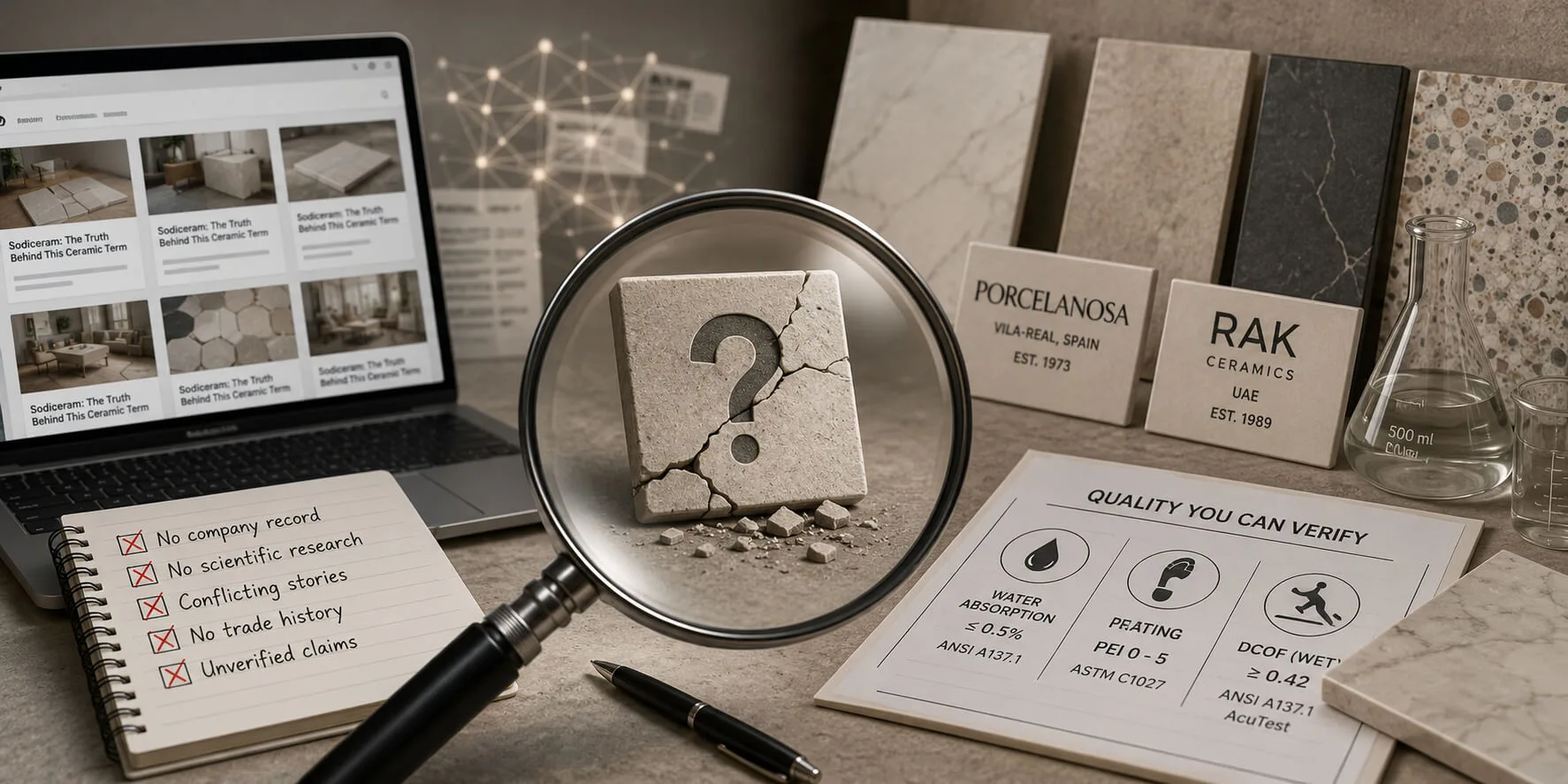
You searched for sodiceram. Maybe you saw it on a tile site. Maybe an article called it a smart ceramic for extreme heat. Here is the direct answer. Sodiceram is not a verified company, product, or scientific material. No business registry lists it. No ceramics lab has published research on it. It is a term that spread fast online, with dozens of sites giving different, contradicting stories about what it is.
That sounds surprising. But it happens more than people realize. This article walks through exactly what we found, why sodiceram shows up everywhere with no two stories matching, and what real advanced ceramics actually look like, so you know what to trust next time.
What Is Sodiceram? A Direct Answer
Sodiceram has no single, verified definition. Different websites describe it as a sodium-based ceramic compound, a Portuguese tile brand, or a material studied for medical implants. None of these claims point to a real company, lab, or product line. The term appears designed to attract search traffic, not to describe something that actually exists.
That is the short version. Now let’s look at why this matters and how it happened.
Why You Will Find So Many Different Stories About Sodiceram
Search for sodiceram and you will land on guide after guide. Each one sounds confident. Each one sounds detailed. But read three of them back to back, and the cracks show fast.
The Material Science Version
Some pages call sodiceram a category of advanced ceramic. They say it uses sodium compounds to improve strength and heat resistance. This sounds plausible, because sodium really is used in real glass and ceramic chemistry. Sodium carbonate acts as a flux in glassmaking. It lowers the melting point of silica. That part is true ceramic science. But no specific sodiceram formula, patent, or published study backs up the claim that this exact material exists under this exact name.
The Tile Brand Version
Other pages describe sodiceram as a tile manufacturer. One says it is based in Portugal. Another implies a different origin. They mention showrooms, dealers, and decades of craftsmanship. None of them name a real city, a real founder, or a real factory address that can be checked. Real tile companies, like Porcelanosa in Spain or RAK Ceramics in the United Arab Emirates, always have verifiable headquarters, public ownership records, and trade press coverage going back years. Sodiceram has none of that.
The Medical Research Version
A few pages go further. They claim sodiceram is being studied by the National Institutes of Health for orthopedic implants. This is a serious claim, and it is also unverifiable. NIH research is public and searchable through PubMed and clinicaltrials.gov. No record under the name sodiceram exists in either database. Attaching a respected institution’s name to an unverified material is one of the clearest warning signs of fabricated content.
Is Sodiceram a Real Company? Here Is What the Records Show
This is the question most people actually want answered. Here is the honest result of checking.
No Business Registry Match
Real manufacturers leave a paper trail. They register with trade bodies. They appear in import and export records. They show up at industry trade fairs like Cevisama in Valencia or Coverings in the United States. Sodiceram appears at none of these. There is no listing under this name in any ceramics trade directory.
No Founder, No Factory, No Trade History
Several sodiceram articles mention a founding story. One says it started with artisans decades ago. Another gives no timeframe at all. None name a real founder. None give a real factory address. Compare that to a company like Porcelanosa, founded in 1973 in Vila-real, Spain, with a documented history, public showrooms in over 150 countries, and a presence on Wikipedia that anyone can verify (Source: Porcelanosa Group company records). Sodiceram has nothing comparable.
Conflicting Customer Stories
One article describes a homeowner in Barcelona praising sodiceram tiles. Another describes a café owner. Neither story includes a name, a location that can be confirmed, or a date. These read like invented testimonials, a tactic the Federal Trade Commission has specifically warned about in its updated rules on fake endorsements and reviews (Source: Federal Trade Commission, 2023).
How a Made-Up Word Becomes a Trending Search Term
This part matters more than the word itself. It explains a pattern showing up across the internet right now.
Why AI Content Farms Do This
Large language models can write fluent, confident text about almost anything, including things that do not exist. Some websites use this to invent a brand-sounding word, then publish dozens of articles about it before anyone checks. Each article links to the others. Search engines see multiple sites covering the same term and assume it must be real. This is sometimes called an information cascade, and it works because most readers do not fact-check a confident-sounding paragraph.
How One Article Becomes Fifteen
Once the first sodiceram article ranks, other sites copy the format. They rewrite the same claims in their own words. Some add new details that contradict the original, like a different founding story or a different country. By the time fifteen sites cover sodiceram, there are fifteen different versions of “the truth,” and none of them are sourced. Google’s own Search Quality Rater Guidelines flag this exact pattern as low trustworthiness content, since it shows no verifiable expertise or first-hand experience behind the claims (Source: Google Search Quality Rater Guidelines, 2024 revision).
Sodiceram at a Glance
| Question | What We Found |
| Is sodiceram a registered company? | No record found in trade or business registries |
| Is there a Wikipedia page? | No |
| Is there published scientific research? | No matching results on PubMed or clinicaltrials.gov |
| Do sources agree on what it is? | No, claims directly contradict each other |
| Is it likely AI-generated content? | Yes, based on pattern and lack of sourcing |
What Real Advanced Ceramic Tiles Actually Look Like
If you came here because you want a genuinely heat-resistant, durable ceramic tile, good news. Real options exist, and you can check every claim about them.
Standards You Can Actually Verify
Real ceramic tiles are tested against public standards. Porcelain tiles must have water absorption of 0.5 percent or less to be classified as impervious, meaning they barely soak up moisture at all (Source: ANSI A137.1 standard). This is why good porcelain resists stains and mold so well, not because of a sodium additive with a brand name attached.
The PEI Rating Scale
Tile durability is measured using the PEI scale, created by the Porcelain Enamel Institute and tested using a method called ASTM C1027. The scale runs from 0 to 5. A PEI 0 or 1 tile is meant for walls only. A PEI 5 tile can handle schools, hospitals, and busy commercial floors without visible wear (Source: Tile Council of North America). Any tile box should list this rating. If a seller cannot tell you the PEI rating, that is a red flag.
Slip Resistance Matters Too
For wet floors, look for compliance with the ANSI A137.1 DCOF AcuTest. It requires a minimum coefficient of friction of 0.42 for indoor floors likely to get wet. This number tells you whether a tile is genuinely safe for a bathroom or kitchen, not just water-resistant.
Real Ceramic Companies Worth Knowing
If you want tiles that match the qualities sodiceram articles describe, like heat resistance, low water absorption, and modern design, real companies make them. Porcelanosa, founded in 1973 and headquartered in Vila-real, Spain, produces porcelain tiles distributed in over 150 countries. RAK Ceramics, founded in 1989 in the United Arab Emirates, is one of the largest ceramic tile producers in the world. Both companies publish technical data sheets, list certifications, and have decades of verifiable trade history.
How to Spot a Fake Ceramic Brand Before You Buy
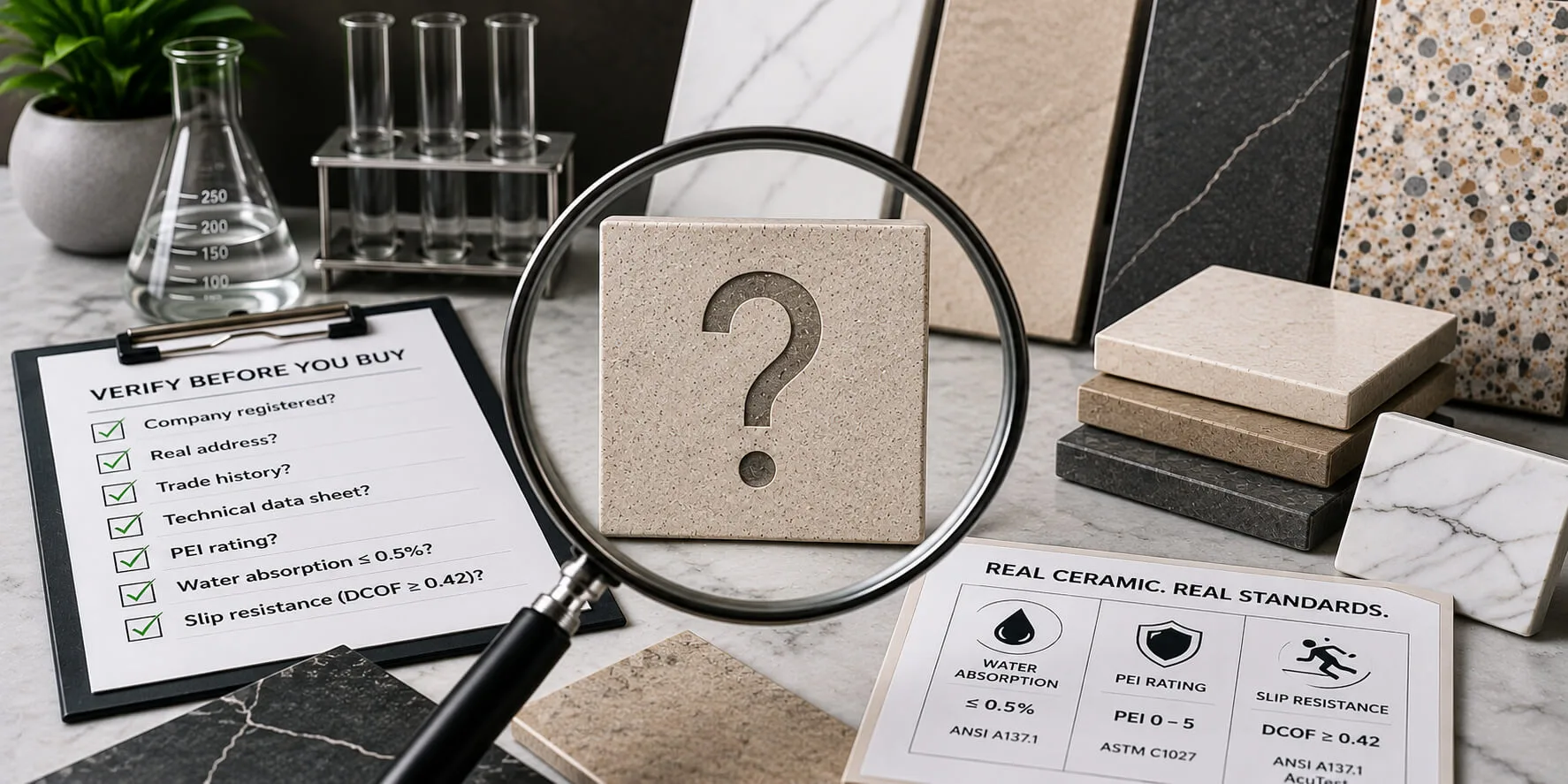
A few checks take less than five minutes and protect you from wasting money on something that may not exist.
- Search for the company name plus “headquarters” or “factory address.” A real manufacturer has one.
- Look for the brand on a ceramics trade directory or at a known trade fair like Cevisama or Coverings.
- Check if a Wikipedia page or independent trade press article exists, not just blog posts that all sound the same.
- Ask for a technical data sheet with a PEI rating and water absorption percentage. Real sellers always have one.
- Be wary of vague founding stories with no date, no founder name, and no city.
Should You Trust Articles About Sodiceram?
Treat any article claiming sodiceram is a real, established brand with caution. The safest approach is simple. Verify the company before you trust the product. This rule applies to sodiceram, and it applies to any new brand name you encounter online for the first time.
What This Means Going Forward
Sodiceram is a useful case study, even though it is not a real material. It shows how confident, well-formatted writing can spread false information quickly. It shows why checking a source matters more than checking how polished a paragraph sounds. And it shows that real ceramic technology, the kind backed by ANSI standards, PEI ratings, and companies with real addresses, does not need an invented name to sound impressive.
FAQs
Is sodiceram a real material?
No verified evidence supports sodiceram as a real, scientifically documented ceramic material. No published research or patent uses this exact name.
Is sodiceram a real company?
No business registry, trade directory, or industry record lists a company called sodiceram. Claims about its founding and location vary between sources and cannot be confirmed.
Why do so many websites write about sodiceram if it isn’t real?
Confident, search-friendly articles can rank well even without real sources behind them. Once one site publishes a sodiceram article, others copy and reword it, multiplying the term’s online presence.
Can I buy sodiceram tiles anywhere?
There is no verified retailer, distributor, or manufacturer selling tiles under this name with a confirmed business history. Treat any seller using this name with caution.
What should I look for instead of sodiceram?
Look for porcelain or ceramic tiles with a published PEI rating, a water absorption percentage of 0.5 percent or lower, and a manufacturer with a verifiable address and history.
Does sodium really improve ceramic strength?
Yes, in real ceramic chemistry, sodium compounds act as a flux that lowers the melting point of silica during firing. This is genuine science, but it does not confirm sodiceram as a specific real product.
Is sodiceram mentioned on Wikipedia?
No. There is no Wikipedia page for sodiceram as of this writing, which is itself a sign that the term lacks the independent, verifiable coverage Wikipedia requires.
Are there real ceramic brands similar to what sodiceram claims to offer?
Yes. Porcelanosa, founded in 1973 in Spain, and RAK Ceramics, founded in 1989 in the UAE, both produce durable, heat-resistant porcelain tiles with published technical data.
How can I tell if an article about a product is AI-generated and unreliable?
Check for named sources, real dates, and consistent details across multiple independent sites. Vague founding stories, unnamed customer testimonials, and contradicting facts are strong warning signs.
Should I trust an article that names NIH or another major institution as a source?
Always verify directly. Search the institution’s own public databases, like PubMed for NIH research, rather than trusting a third-party claim without a link to original documentation.
The Bottom Line
Sodiceram is not the smart, heat-resistant ceramic some articles claim it to be. It is a name without a company, a product without a factory, and a story that changes depending on which website you read. The real lesson here goes beyond one search term. Before trusting any new brand name online, check for a verifiable history, a real address, and published technical standards. Genuine ceramic innovation, the kind tested under recognized standards like PEI ratings and ANSI water absorption requirements, does not need to hide behind an unverifiable name to prove its value. Real material science, like the kind behind porcelain tile manufacturing, has a long, documented, and genuinely interesting history worth learning instead.
Read More: Cody Herpin: The Heartwarming Truth About Jodie Sweetin’s Ex-Husband