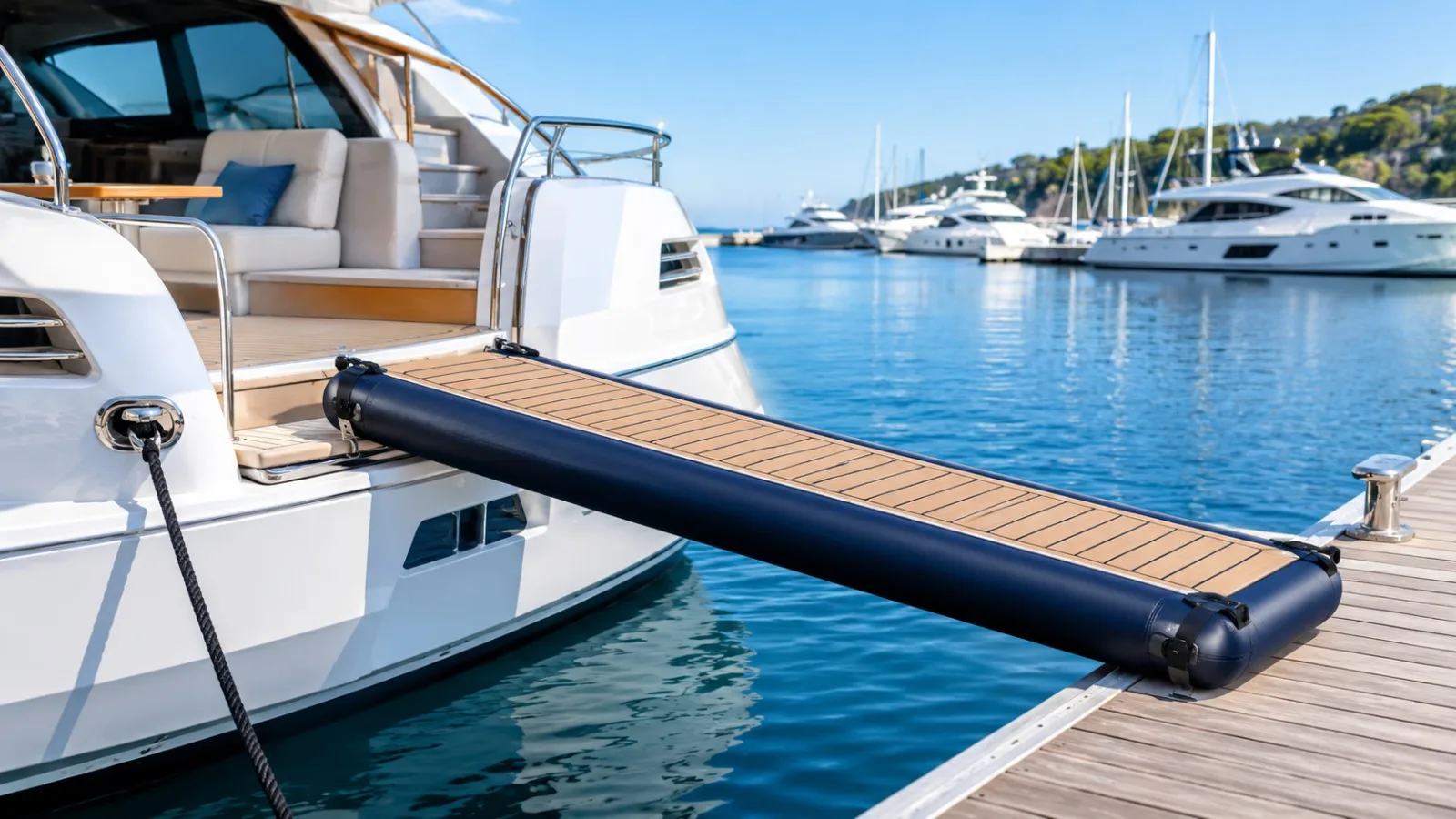
Nautoo is a name that appears in marine product listings, particularly in connection with inflatable boat gangways and compact inflatable tenders. These products are designed for practical boating situations where equipment needs to be portable, easy to store, and suitable for use around recreational vessels. For boat owners, understanding the difference between a boarding gangway and an inflatable tender is important because each product serves a different purpose.
The interest in Nautoo comes from its association with marine accessories that address everyday challenges on the water. An inflatable gangway can provide a temporary boarding surface between a boat and a suitable dock, while a tender can help transport people or equipment over short distances. Both types of equipment have specific requirements involving dimensions, load limits, storage, maintenance, and safe operation.
However, product descriptions should not be confused with independent performance testing. Specifications can differ between models, retailers may update their listings, and a product that suits one vessel may not be appropriate for another. This guide explains what is publicly listed about Nautoo products, how inflatable gangways and tenders work, what buyers should compare, and which safety considerations deserve attention before making a purchase.
What Is Nautoo?
Nautoo is a name used in specialist marine retail listings for boating equipment, including inflatable gangways and inflatable boat tenders. The available product catalogue provides a useful starting point for understanding the range, although publicly available information about the brand’s wider corporate history and manufacturing background is limited. It is therefore more accurate to discuss Nautoo through its identifiable product listings rather than make unsupported claims about its founders, establishment date, headquarters, or company history.
One of the retailers listing Nautoo products is Magellano Store, which presents inflatable boarding gangways, Brezza tenders, Burrasca tenders, and other marine accessories under the Nautoo name. The catalogue helps buyers identify the product families and compare available versions, but a retailer listing is not the same as independent product certification or a complete manufacturer technical manual.
The most useful way to understand Nautoo is to look at the equipment associated with the name. Inflatable gangways are intended to help with temporary access between a vessel and a suitable boarding point, while inflatable tenders are small boats that can be used alongside a larger vessel. These products address different boating needs, even though both are designed with portability and storage in mind.
People researching Nautoo should also pay attention to spelling. Nautoo should not automatically be confused with NautiBuoy, a separately presented marine-platform brand, or Nauto, a name associated with automotive technology. Similar-looking names can lead to unrelated search results, so checking the exact product and retailer information is important before making a decision.
Nautoo Product Range: Gangways, Tenders and Marine Accessories
The available retail catalogue associates Nautoo with more than one type of boating product. The two main product groups that attract attention are inflatable gangways and inflatable tenders, each designed for a different practical purpose. Understanding these categories makes it easier to compare products according to the needs of a particular vessel.
An inflatable gangway provides a temporary route between a boat and an appropriate landing point, such as a pontoon or quay. Its purpose is to make boarding more manageable when the vessel and the dock are positioned at a suitable distance and height. An inflatable tender, by contrast, is a small craft that can carry passengers or equipment when used within its approved operating limits.
The retailer’s Nautoo catalogue includes products from the Brezza and Burrasca tender families, along with inflatable gangway models in different sizes and colour combinations. Product availability, pricing, and specifications can change, so buyers should check the exact listing rather than assume that every version has identical features.
Nautoo Inflatable Gangways
Inflatable gangways are an alternative to certain conventional rigid boarding walkways. Their main attraction is that they can be deflated and stored when they are not required, which may be useful on boats where storage space is limited. A rigid gangway can be practical in some situations, but its shape and construction may require a dedicated storage area.
Nautoo inflatable gangway listings include versions measuring 200 centimetres and 230 centimetres in length. The catalogue also shows different colour combinations, including black and teak-style finishes and white-based options. Buyers should check the exact product page for dimensions, weight, included accessories, and current availability before selecting a model.
A listed 200-centimetre version is described as having a width of 50 centimetres and a thickness of 15 centimetres. The retailer also lists a weight of approximately four kilograms and a stated load capacity of 90 kilograms for that particular version. These are model-specific retail specifications, not universal limits for every Nautoo product or every inflatable gangway.
The gangway descriptions also refer to a non-slip walking surface and stainless-steel D-rings used as attachment points. These features may support practical use, but they do not remove the need for suitable securing arrangements, stable support, and regular inspection. A slip-resistant surface cannot guarantee safe boarding when a boat is moving or the walkway is incorrectly positioned.
Nautoo Inflatable Boat Tenders
A tender is a small boat used alongside a larger vessel. It may be used to move passengers between an anchored boat and shore, carry equipment, or provide short-distance transport in suitable conditions. Unlike a gangway, which creates a walking route, a tender is a separate craft that must be operated according to its own passenger, engine, and load limitations.
Nautoo retail listings identify two product families called Brezza and Burrasca. The listed Brezza versions include the Brezza 185, Brezza 210, and Brezza 240, while the Burrasca family includes versions such as the Burrasca 200, Burrasca 230, and Burrasca 249. The numbers are part of the model names and should not be treated as a complete specification without checking the individual product details.
The available catalogue describes Brezza models as having slatted floors and Burrasca models as having inflatable floors. These construction differences can affect handling, portability, setup, and the type of use for which a particular tender may be suitable. Buyers should compare the actual model specifications rather than assuming that all inflatable tenders perform in the same way.
Other Marine Accessories
The Nautoo category on the retailer’s website also displays other marine-related products, including fender covers and an inflatable lifejacket listing. These accessories serve different purposes from gangways and tenders, so they should be evaluated according to their own product descriptions and safety requirements.
For example, a fender cover is associated with protecting or covering a boat fender, while a lifejacket is personal safety equipment. A product listing alone does not establish that a lifejacket meets a particular regulatory standard or is suitable for every boating activity. Buyers should check the relevant certification, instructions, size, and intended use before relying on safety equipment.
How Does a Nautoo Inflatable Gangway Work?
An inflatable gangway uses air pressure to create a structure intended to provide a temporary walking surface. The product is inflated before use and positioned between a suitable part of the vessel and an appropriate landing point. Once boarding is complete, it can be deflated and stored according to the product instructions.
The process begins with checking the equipment and confirming that the selected location is suitable. The user should inspect the surface, seams, valves, attachment points, and any visible signs of damage before inflation. The gangway should then be inflated using compatible equipment and the pressure specified for the exact model.
A listed Nautoo 200-centimetre model has a maximum inflation pressure of 0.9 bar in the retailer information. That value must not be transferred to other inflatable products, including different gangway models or tenders. Users should follow the relevant product documentation and should never guess the correct pressure based on appearance or another model’s instructions.
After inflation, the gangway needs to be positioned and secured using an approved arrangement. The amount of overlap at each end, the support available, the height difference, and the movement of the vessel all influence whether the setup is appropriate. A walkway that appears long enough in a product photograph may not provide sufficient safe support in a real docking situation.
Once the equipment is no longer needed, it should be deflated and prepared for storage according to the manufacturer’s instructions. Cleaning and drying may also be necessary, particularly after exposure to saltwater. These steps help owners monitor the condition of the material and identify potential problems before the next use.
Nautoo Gangway Specifications: What Do the Numbers Mean?
Specifications are among the most important details to review before buying marine equipment. They help buyers understand whether a product may fit their vessel and whether its stated limits are compatible with the intended use. However, specifications should always be checked against the exact model and current product documentation.
The retailer lists one Nautoo inflatable gangway at 200 centimetres long, 50 centimetres wide, and 15 centimetres thick. It also describes this version as weighing approximately four kilograms, with a stated maximum load capacity of 90 kilograms and a maximum inflation pressure of 0.9 bar. These details are specific to the listed model and should not be applied to the longer version or other products without confirmation.
| Specification | Listed 200 cm model |
|---|---|
| Product type | Inflatable boat gangway |
| Length | 200 cm |
| Width | 50 cm |
| Thickness | 15 cm |
| Listed weight | Approximately 4 kg |
| Stated maximum load | 90 kg |
| Listed maximum pressure | 0.9 bar |
| Walking surface | Described as non-slip |
| Attachment points | Stainless-steel D-rings |
| Inflation pump | Check the individual package listing |
The dimensions indicate the physical size of the listed model, but they do not establish whether it will work with every boat. A suitable boarding arrangement also depends on the gap between the vessel and landing point, the height difference, the available support, and the securing method. Buyers should measure their actual setup before deciding whether a particular length is appropriate.
The stated load capacity deserves particular attention because it is a limit associated with the listed product. It should not be interpreted as permission to carry additional luggage or equipment beyond the stated limit. Users should follow the product instructions and seek clarification if the documentation does not explain how the load limit applies to the intended arrangement.
Nautoo Brezza and Burrasca: Understanding the Difference
Brezza and Burrasca are two tender product families identified in Nautoo retail listings. Their names are useful when comparing the available range, but the most important distinction is the floor construction described by the retailer. Brezza models are listed with slatted floors, while Burrasca models are presented with inflatable-floor construction.
A slatted-floor tender uses separate floor sections rather than a fully inflatable floor structure. This type of design may appeal to buyers who want a relatively straightforward arrangement, but the actual portability and setup requirements depend on the individual model. The number of floor sections, materials, overall dimensions, and intended operating conditions should be checked in the product documentation.
An inflatable-floor tender uses an air-filled floor structure. The retailer’s Burrasca listings describe inflatable-floor models, with some product information referring to an inflatable V-shaped keel and drop-stitch construction. These descriptions should be verified against the exact version being considered because features can vary between model sizes and product updates.
Brezza Models
The retailer lists Brezza 185, Brezza 210, and Brezza 240 models. These model names indicate different size options within the product family, but buyers should not assume that passenger capacity, weight, or engine limits can be calculated from the number alone. The current product listing should provide the details needed to compare the available versions.
A slatted-floor design may be relevant for people prioritising a particular combination of portability and straightforward storage. However, it is not automatically better or worse than an inflatable floor. The intended activity, number of passengers, combined load, available storage, and operating conditions should guide the choice.
Burrasca Models
The Burrasca family includes listed versions such as the 200, 230, and 249. The retailer describes these as inflatable-floor tenders, but each model needs to be checked separately for dimensions, weight, passenger capacity, engine rating, and other operating limits.
One listed Burrasca 200 description includes a size of 200 by 133 centimetres, a weight of approximately 24 kilograms, and seating for two people. The same listing refers to a maximum engine rating of four horsepower. These figures are retailer-listed details for that model, not specifications that should be applied to every Burrasca tender.
The most sensible comparison is therefore based on the exact product page rather than the product-family name. Buyers should request current technical information if any important specification is missing or unclear.
Why Portability and Storage Matter in Marine Equipment
Storage is a practical concern on many recreational boats. Space may already be occupied by safety equipment, ropes, fenders, maintenance tools, personal belongings, and other essential items. Equipment that can be packed away when not in use may help owners manage limited storage more effectively.
An inflatable gangway can offer a different storage arrangement from a rigid walkway because it can be deflated after use. This may make it easier to place in a suitable locker or storage compartment, provided the product is folded and stored according to its instructions. The actual packed size should be checked before buying because it can vary with the model and storage method.
Inflatable tenders also require storage planning. A buyer should consider where the tender will be kept, how it will be transported, and whether the main vessel has enough space for the packed product and its accessories. A tender that looks compact in a catalogue may still require more room than expected once its pump and other equipment are included.
Portability should not be the only deciding factor. The equipment still needs to be appropriate for its intended purpose, and it must be handled in a way that avoids unnecessary damage. Sharp objects, unsuitable folding, prolonged exposure to harsh conditions, and careless handling can affect inflatable materials over time.
Nautoo Marine Equipment: Safety Considerations Before Use
Marine equipment should be selected and used with safety as the first priority. A gangway is not simply a portable board placed between two surfaces; it forms part of a boarding arrangement that needs suitable support, positioning, and maintenance. The vessel, dock, water conditions, and people using the equipment all influence the level of risk.
The UK Health and Safety Executive provides guidance on access to vessels, including the importance of safe access arrangements and suitable conditions around small craft. Although the guidance covers broader vessel-access situations, its basic principle is relevant: access equipment needs to be appropriate, maintained, and safely positioned.
Check the Boarding Gap
Before using a gangway, assess the distance between the boat and the landing point. A gap that changes with tide, wind, or vessel movement may affect the suitability of the arrangement. The walkway must be used only in a configuration approved for the product and the vessel.
Confirm Support and Attachment
The ends of the gangway need appropriate support, and any attachment points must be used according to the product instructions. A D-ring should not be treated as proof that any improvised rope arrangement is safe. Buyers should confirm the intended securing method before using the equipment.
Respect the Load Limit
A stated load limit should never be exceeded. The 90-kilogram figure associated with one listed Nautoo gangway model applies to that particular listing and should not be treated as a general limit for other versions. If the intended user, equipment, or boarding arrangement raises questions, obtain clarification before use.
Check Weather and Water Conditions
Wind, waves, passing vessels, and changing water levels can alter the relationship between a boat and a dock. A setup that appeared stable earlier may become unsuitable as conditions change. Users should reassess the boarding arrangement whenever the surrounding conditions or vessel position change.
Avoid Carrying Loads That Affect Balance
Carrying bulky equipment while crossing a narrow or moving walkway can make balance more difficult. Where possible, keep hands free, avoid rushing, and use appropriate assistance. The exact precautions depend on the vessel, the boarding arrangement, and the product instructions.
Do Not Use Damaged Equipment
Visible damage, unexpected pressure loss, loose attachment points, or problems with the walking surface should be treated seriously. The equipment should not be used until it has been inspected and the problem resolved using an approved repair or replacement method.
Safety Considerations for Nautoo Inflatable Tenders
Inflatable tenders have different safety requirements from inflatable gangways because they operate as small boats. Buyers should check passenger capacity, maximum load, engine rating, and any other restrictions for the exact model. These limits should not be estimated from the tender’s length or appearance.
The combined weight of passengers, personal equipment, and carried supplies needs to remain within the product’s stated limits. Engine selection should also follow the approved rating because using an unsuitable engine may affect handling and safety. A small tender should never be assumed suitable for rough water or every type of journey.
Before launching, users should inspect the hull material, seams, valves, floor, transom, and other relevant components. The inflation procedure and pressure requirements must follow the product documentation. If a tender has been stored for a long period, a careful inspection before use is particularly important.
Personal flotation equipment should be available and used in accordance with applicable requirements and the conditions of the trip. Users should also consider weather, visibility, water temperature, distance from shore, and the experience of the people operating the tender. A compact inflatable craft can be convenient, but it does not remove the need for proper boating preparation.
For broader access and boating-safety context, the UK Health and Safety Executive’s vessel-access guidance is a useful reference. The specific operating instructions supplied with the tender remain essential because general safety guidance cannot replace model-specific requirements.
Cleaning, Inspection and Maintenance of Nautoo Products
Regular maintenance helps owners identify potential problems before equipment is needed. Inflatable marine products are exposed to water, sunlight, temperature changes, salt deposits, and physical contact with other equipment. Their condition can be affected by how they are used, cleaned, dried, folded, and stored.
After exposure to saltwater, follow the manufacturer’s recommendations for rinsing and cleaning. Freshwater rinsing may be appropriate for many marine materials, but the cleaning method should be compatible with the product’s construction. Avoid using harsh chemicals or abrasive tools unless the manufacturer specifically approves them.
Before storage, allow the equipment to dry as directed. Storing an inflatable product while it is still damp may contribute to unpleasant odours or material problems, particularly when it remains folded for an extended period. The storage location should also be suitable for the product and should protect it from sharp objects and unnecessary pressure.
Inspect Seams and Valves
Seams and valves are important parts of an inflatable product. Check for visible damage, unusual wear, dirt, or signs of leakage. If the product loses pressure unexpectedly, it should not be used until the issue has been assessed and corrected.
Examine Attachment Points
Gangway attachment points should be checked for damage, corrosion, loose fittings, or other signs of deterioration. These components may be involved in securing the equipment, so their condition should not be overlooked during routine checks.
Protect the Walking Surface
The walking surface should be kept clean and inspected for visible wear. Sand, dirt, sharp debris, and other materials may affect the surface or contribute to damage during storage. Use cleaning methods recommended for the product rather than assuming that every household cleaner is suitable.
Store the Equipment Correctly
Follow the manufacturer’s instructions for deflation, folding, and storage. Avoid forcing the product into a container that is too small or placing heavy items on top of it if this could damage the material. The storage location should also protect the equipment from unnecessary exposure to heat and sharp edges.
Understand the Limits of a Repair Kit
A repair kit may help with certain minor punctures, depending on the materials and instructions supplied. It should not be treated as a solution for every type of damage. Structural problems, damaged seams, faulty valves, or uncertain repairs may require professional assessment or replacement.
How to Choose the Right Nautoo Product
The right product depends on the task it needs to perform. Someone who wants temporary boarding access needs to compare gangway length, width, load capacity, inflation requirements, and attachment arrangements. Someone looking for a small craft needs to consider passenger capacity, engine limits, overall weight, floor design, and storage requirements.
Start by measuring the actual space and conditions in which the equipment will be used. For a gangway, consider the distance between the boat and dock, the height difference, and the support available at both ends. For a tender, consider where it will be launched, how it will be transported, and whether its operating limits suit the intended journey.
Next, review the technical information for the exact model. Do not rely only on the product-family name or a photograph. Ask the seller for a specification sheet or manufacturer documentation if important details are missing, particularly when those details relate to safety or compatibility.
Price should be considered alongside the complete cost of ownership. The purchase price may not include a pump, storage accessories, delivery, maintenance supplies, or other equipment required for use. Warranty coverage, returns, spare parts, and after-sales support can also influence whether a product is a suitable purchase.
Finally, compare the product with the alternatives available for the same task. A rigid gangway may be more appropriate for some docking arrangements, while an inflatable option may appeal to owners who prioritise compact storage. The best choice is the one that meets the actual requirements without relying on assumptions about performance.
Nautoo vs Traditional Marine Gangways: What Should Buyers Compare?
Traditional gangways and inflatable gangways solve a similar boarding problem, but their construction and storage arrangements differ. A conventional gangway may use materials such as aluminium, timber, or composite components. These structures can provide a rigid walking surface, but they may require more dedicated storage space and suitable mounting arrangements.
An inflatable gangway is designed around portability and the ability to deflate the product when it is not required. This can be attractive for owners of smaller vessels, but the product still needs suitable inflation, support, and securing. The fact that it can be deflated does not automatically make it suitable for every vessel or boarding situation.
When comparing the two, consider the frequency of use and the environment. A boat that requires regular access in a fixed marina arrangement may have different needs from a vessel that uses temporary docking locations. The expected load, boarding height, available storage, and conditions around the berth should all be part of the decision.
The UK government’s Merchant Shipping (Means of Access) Regulations 1988 set out requirements for safe means of access in the contexts covered by the regulations. These rules should not be assumed to apply identically to every recreational boating situation, but they illustrate why safe positioning, securing, maintenance, and appropriate equipment matter.
Is Nautoo the Same as NautiBuoy or Nauto?
No. Nautoo, NautiBuoy, and Nauto should not be treated as interchangeable names. They appear in different product or business contexts, and confusing them can lead to inaccurate information being attached to the wrong company or equipment.
Nautoo appears in marine retail listings for inflatable gangways and inflatable tenders, including the Brezza and Burrasca product families. The available evidence discussed in this guide comes from those retail listings, which provide product information but do not establish every detail of the brand’s corporate history.
NautiBuoy Marine is a separately presented marine-platform brand. Its official website describes inflatable platforms and a modular connection system called Air Toggle. Those products and their features should not be attributed to Nautoo simply because the names look similar.
Nauto, without the additional letters, is associated with automotive technology and driver-safety products. It is a different subject from marine boarding equipment. Readers should check spelling carefully when searching online because similar names can produce unrelated results.
What Buyers Should Verify Before Purchasing Nautoo Equipment
Before placing an order, buyers should confirm that the product listing refers to the exact model they intend to purchase. Model numbers, dimensions, included accessories, and technical limits can differ even within the same product family. A description for one version should never be used as a substitute for the documentation of another.
Check whether the listed price is current and whether the product is actually available. Promotional prices can change, and a retailer may show multiple colour or size variants with different prices. Buyers should also confirm shipping costs, delivery arrangements, return conditions, and warranty coverage before completing an order.
For gangways, pay particular attention to the maximum load, inflation pressure, dimensions, attachment arrangements, and approved use. For tenders, check passenger capacity, maximum load, engine rating, weight, floor construction, and the conditions under which the product may be operated. If the seller cannot provide clear answers to important safety questions, it is sensible to seek clarification before purchasing.
It is also worth checking whether the pump and other accessories are included. A product may be advertised as compatible with manual or electric inflation equipment while requiring the pump to be purchased separately. The total purchase cost should therefore include the items necessary for the intended setup.
Finally, avoid relying on broad marketing descriptions such as superior durability, universal compatibility, or guaranteed safety unless those statements are supported by suitable documentation. Product-specific evidence is more useful than general promotional language when selecting marine equipment.
Frequently Asked Questions About Nautoo
1. What Is Nautoo Mainly Known For?
Nautoo appears in specialist marine retail listings for inflatable boat gangways, compact inflatable tenders, and related boating products. The gangways are designed for temporary boarding access, while the tenders are small boats used alongside larger vessels. Buyers should check the exact product listing because specifications and intended uses differ between models.
2. What Is a Nautoo Inflatable Gangway?
A Nautoo inflatable gangway is a portable marine walkway listed for use between a boat and a suitable boarding point. Its inflatable construction allows it to be deflated and stored when not in use. Safe use depends on correct inflation, suitable support, approved securing arrangements, and compliance with the model’s stated load limits.
3. How Much Weight Can a Nautoo Gangway Support?
A retailer lists a maximum load of 90 kilograms for one Nautoo 200-centimetre inflatable gangway model. This is a model-specific figure and should not be applied to other versions. Users should check the current product documentation and never exceed the stated limit.
4. What Is the Inflation Pressure of the Nautoo 200 cm Gangway?
The retailer lists a maximum inflation pressure of 0.9 bar for one 200-centimetre model. This figure should be checked against the latest instructions for the exact product before inflation. It must not be transferred to other inflatable products, including different gangway sizes or tenders.
5. Does a Nautoo Inflatable Gangway Come With a Pump?
The retailer listing indicates that an inflation pump may need to be purchased separately. Buyers should confirm the contents of the exact package before ordering and check which pump types are compatible. They should also follow the product’s pressure instructions rather than estimating inflation by appearance.
6. What Is the Difference Between Nautoo Brezza and Burrasca?
Retail listings describe Brezza models as having slatted floors and Burrasca models as having inflatable floors. Both are inflatable tender families, but their construction, dimensions, weight, and operating limits can differ. Buyers should compare the specifications of the exact model rather than choosing based only on the family name.
7. Are Nautoo Inflatable Gangways Suitable for All Boats?
No. Suitability depends on the vessel’s size and boarding arrangement, the distance to the landing point, the height difference, available support, and the manufacturer’s approved installation method. A product that suits one boat may not be appropriate for another, even if the dimensions appear similar.
8. Can a Nautoo Inflatable Gangway Be Used as a Platform?
Some retailer descriptions refer to platform-related applications, but the approved configuration and securing requirements must be confirmed for the exact model. The presence of attachment points does not automatically make a gangway suitable for every platform arrangement. Users should obtain manufacturer guidance before using it outside its intended boarding purpose.
9. Are Nautoo Inflatable Products Resistant to Saltwater?
Retail descriptions advertise marine-oriented materials and resistance to exposure such as sunlight and saltwater. These descriptions should be checked against the relevant product documentation and should not be interpreted as meaning that maintenance is unnecessary. Cleaning, inspection, drying, and appropriate storage remain important.
10. How Should an Inflatable Gangway Be Maintained?
Follow the manufacturer’s cleaning and storage instructions. Inspect the seams, valves, attachment points, and walking surface for visible damage, and clean the product using materials approved for its construction. Allow it to dry as directed before extended storage, and do not use it if it loses pressure unexpectedly or shows signs of structural damage.
11. Is a Nautoo Tender Suitable for Long-Distance Travel?
A compact inflatable tender should not automatically be considered suitable for long-distance travel. Its intended use depends on its construction, passenger capacity, engine rating, load limits, and operating conditions. Buyers should follow the exact model’s instructions and assess weather, water conditions, distance, and safety equipment before use.
12. Where Can Buyers Find Nautoo Product Information?
The Magellano Store Nautoo catalogue lists several products associated with the name, including inflatable gangways and Brezza and Burrasca tenders. Buyers should use the individual product pages to check current availability, prices, dimensions, and other specifications. For safety-critical information, they should request the relevant technical documentation.
13. Is Nautoo the Same as NautiBuoy?
No. Nautoo and NautiBuoy are different names associated with separate marine product references. Nautoo appears in retail listings for inflatable gangways and tenders, while NautiBuoy Marine presents inflatable platforms and modular marine products. Their specifications and product descriptions should not be mixed.
14. What Should Buyers Check Before Ordering a Nautoo Product?
Buyers should confirm the exact model, dimensions, load limits, inflation requirements, included accessories, warranty, delivery terms, and return policy. For a gangway, the boarding arrangement and securing method are particularly important. For a tender, passenger capacity, engine rating, and operating limits should be reviewed before purchase.
Final Thoughts
Nautoo is a name associated with marine retail listings for inflatable gangways, compact tenders, and related boating products. Its inflatable gangways address the practical need for temporary boarding access, while the Brezza and Burrasca tender families offer different floor-construction options for recreational boating. These products may interest owners who want equipment that can be stored when it is not required, but portability alone does not establish suitability.
The most important part of choosing marine equipment is matching the exact product to the intended use. Dimensions, load limits, inflation pressure, passenger capacity, engine ratings, and storage requirements all need to be checked against current product documentation. Buyers should also consider the complete cost, including any pump or accessories that may be sold separately.
Safety should remain central throughout the buying and use process. A gangway needs suitable support and securing, while a tender requires attention to its operating limits, condition, and surrounding water conditions. Regular inspection and correct maintenance can help identify problems before equipment is used.
For readers researching Nautoo, the best approach is to compare the individual listings, verify important specifications with the seller, and follow the instructions supplied for the exact model. This provides a more dependable basis for a purchase than relying on broad claims or assuming that every product in a range has identical features.
Read More: What Is Labarty? Meaning, Labarty.com, Features and Verified Facts