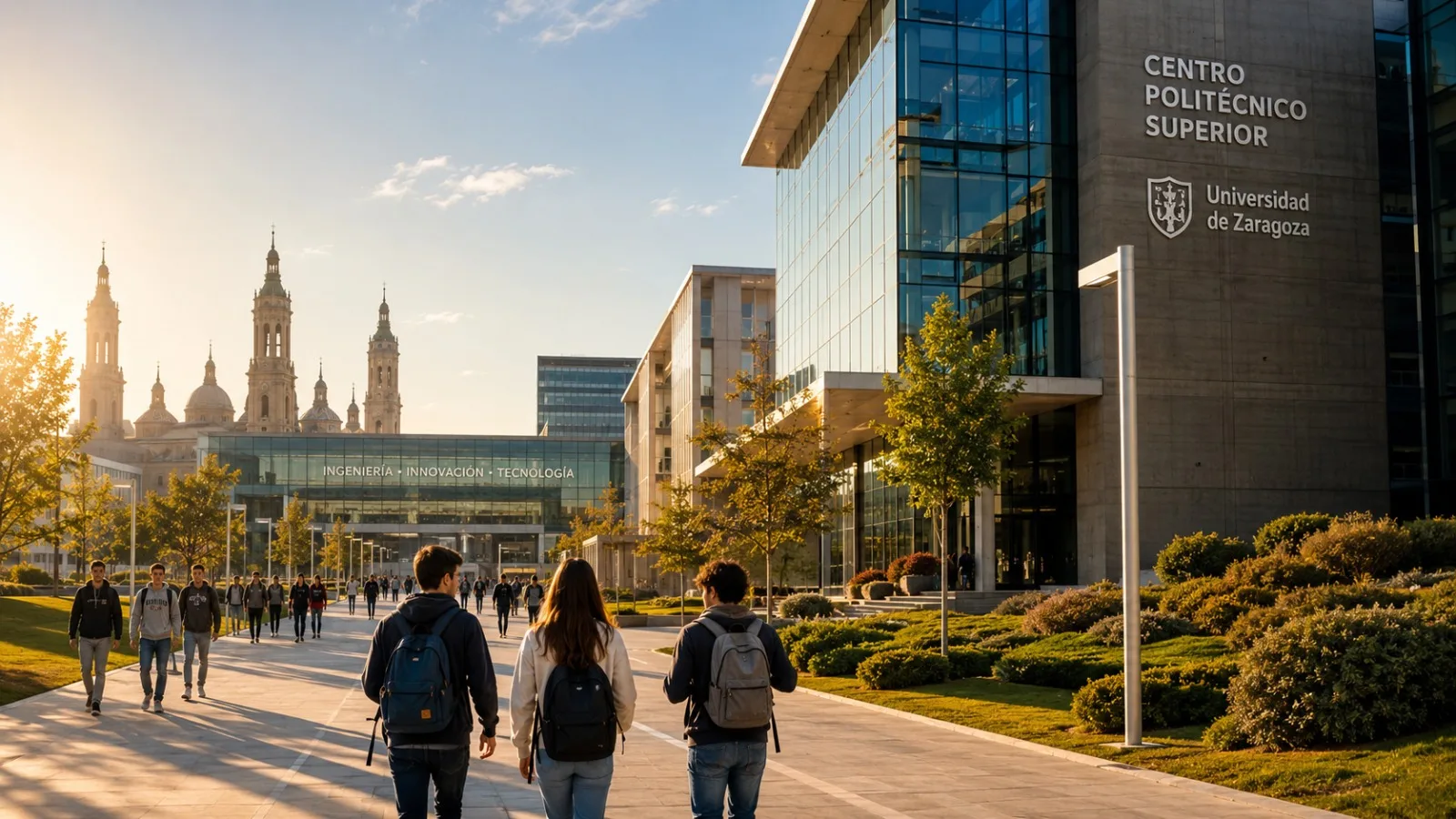
The Centro Politécnico Superior (CPS) was an important engineering education centre associated with the University of Zaragoza in Spain. Located in Zaragoza, it became known for bringing several areas of technical and scientific education together, including industrial engineering, telecommunications, computer engineering, chemical engineering, and architecture. Its development reflected the growing importance of specialised technical education and the changing needs of industry, research, and society.
Although the Centro Politécnico Superior is no longer a separate university centre, its history remains closely connected to engineering education in Aragón. In 2011, it became part of the Escuela de Ingeniería y Arquitectura (EINA), following its integration with the former Escuela Universitaria de Ingeniería Técnica Industrial de Zaragoza. This change created a broader academic institution under the University of Zaragoza.
Understanding CPS therefore involves looking at two periods: its years as an independent centre and the academic structure that followed its integration into EINA. This guide explains its origins, development, engineering programmes, campus, educational role, and present-day successor. It also clarifies which information relates to the former CPS and which details belong to the current institution, helping readers avoid confusion when researching the university today.
What Was Centro Politécnico Superior?
Centro Politécnico Superior was a higher education centre of the University of Zaragoza that specialised in engineering and related technical disciplines. It developed from the Escuela Técnica Superior de Ingenieros Industriales de Zaragoza, which began its activities in 1974. The institution expanded its academic scope over time, adding new engineering disciplines and eventually architecture. Its purpose was to provide university-level technical education and prepare students for professional and research-oriented careers in different engineering fields.
The name Centro Politécnico Superior became associated with the institution in 1989, when the former industrial engineering school was transformed into a broader centre. This development was significant because it created an academic structure that could accommodate more than one engineering specialisation. Rather than focusing exclusively on traditional industrial engineering, CPS gradually introduced programmes in telecommunications, computer science, chemical engineering, and architecture. These additions reflected the increasing range of technical knowledge required in modern industries.
CPS formed part of the University of Zaragoza, a public university in Spain with a long academic history. Its work contributed to the university’s technical and scientific education, particularly in areas connected to industrial development, digital technologies, communications, and applied science. Students and academic staff were part of a wider university environment that included teaching, research, practical training, and cooperation with professional sectors.
The institution is now best understood as a historical predecessor of the current Escuela de Ingeniería y Arquitectura. Anyone searching for CPS to find current courses, admission details, or university contacts should consult EINA’s official website rather than assume that the former centre still operates independently.
History of Centro Politécnico Superior
The history of CPS is connected to the development of technical education in Zaragoza. Its direct institutional predecessor was the Escuela Técnica Superior de Ingenieros Industriales de Zaragoza, established in 1974. However, the wider history of engineering and technical teaching at the University of Zaragoza reaches further back through earlier schools and educational institutions. These developments show how technical education gradually evolved to meet the needs of a changing industrial and professional environment.
The Beginning of Higher Industrial Engineering Education in 1974
The Escuela Técnica Superior de Ingenieros Industriales de Zaragoza began operating in 1974. Its initial engineering studies included industrial engineering specialisations in electrical and mechanical areas. At that time, the school began its academic activity in the Interfacultades building at the university’s San Francisco campus. This early phase established the foundation for a dedicated higher education institution focused on industrial engineering.
The development of industrial engineering education was important for the region because technical professionals were needed in manufacturing, energy, infrastructure, production, and other industrial sectors. University-level engineering programmes provided students with a structured academic route into these fields. The early school also created a foundation for future expansion into additional technical disciplines.
In 1986, the industrial engineering school moved to the Actur area of Zaragoza. The relocation was part of the institution’s physical and academic development, providing a new setting for its growing educational activities. The later transformation into CPS would build on this institutional foundation and extend the range of subjects offered.
The Institution Became CPS in 1989
In 1989, the Escuela Técnica Superior de Ingenieros Industriales was transformed into the Centro Politécnico Superior. This change gave the institution a broader identity and provided a framework for expanding beyond its original industrial engineering focus. The University of Zaragoza’s official historical account identifies 1989 as the year when the centre adopted the CPS name.
The transformation was not simply a change in wording. It marked a stage in the development of technical education at the university, as new academic areas were introduced over the following years. Engineering was becoming increasingly connected with computing, telecommunications, chemical processes, and other specialised fields. A wider polytechnic structure could accommodate these developments more effectively.
The institution subsequently became associated with several important academic milestones. These included the introduction of telecommunications engineering in 1990, computer engineering in 1992, chemical engineering in 1994, and architecture in 2008. These dates help explain why CPS became an important part of the University of Zaragoza’s technical education history.
Expansion Into New Engineering Disciplines
The introduction of telecommunications engineering in 1990 represented an important step in the centre’s academic expansion. Telecommunications was becoming increasingly significant as communication networks, electronic systems, and digital infrastructure developed. University education in this field helped prepare students to understand the technical principles behind communication systems and related technologies.
Computer engineering followed in 1992, adding another major area to the institution’s academic profile. The growth of computing was changing professional environments across industry, government, education, and research. Introducing computer engineering studies allowed the university to respond to the increasing need for graduates with knowledge of software, computing systems, and related technical subjects.
Chemical engineering was added in 1994, broadening the institution’s coverage of industrial processes and applied science. This discipline connects engineering principles with chemistry, materials, production systems, and process design. Its inclusion reflected the range of technical fields that could be brought together within a polytechnic university centre.
Architecture became part of the institution’s academic offering in 2008. This addition expanded the centre’s profile beyond conventional engineering and brought another design-oriented discipline into its academic environment. By this stage, CPS had developed into a centre covering several areas of technical and professional education.
The 2011 Integration That Created EINA
A major institutional change took place in 2011. The Centro Politécnico Superior and the Escuela Universitaria de Ingeniería Técnica Industrial de Zaragoza were integrated to create the Escuela de Ingeniería y Arquitectura, commonly known as EINA. The relevant authorisation was published in the Boletín Oficial de Aragón on 14 April 2011, according to the university’s official history.
The integration brought together two established educational structures with different but complementary engineering traditions. CPS had developed a broad range of higher engineering and architecture studies, while the former engineering technical school had its own history in applied industrial engineering education. Combining them created a larger institution with a wider academic structure.
This transition was also connected to the adaptation of university degrees to the European Higher Education Area. The new EINA structure became responsible for the relevant degree and master’s programmes designed under the updated European framework. The change therefore involved both institutional organisation and the development of modern university qualifications.
For this reason, CPS should not be described as a currently independent school. Its historical identity remains relevant, but EINA is the institution that succeeded it within the University of Zaragoza.
Engineering Programmes Associated With Centro Politécnico Superior
One of the most important parts of CPS history is the expansion of its academic programmes. The centre began with industrial engineering and gradually added subjects that reflected new developments in technology and applied science. These programmes helped establish its identity as a multidisciplinary technical education institution.
It is important to distinguish historical CPS programmes from the current degree catalogue. The names, structure, and availability of university qualifications can change over time, particularly when institutions adopt new degree systems. The following sections explain the academic areas associated with the former centre rather than presenting them as a current CPS admissions list.
Industrial Engineering
Industrial engineering was the foundation of the institution’s development. The original Escuela Técnica Superior de Ingenieros Industriales began teaching in 1974, with studies that included electrical and mechanical specialisations. These areas provided students with a technical understanding of industrial systems, machinery, energy, production, and engineering design.
Industrial engineering connects several disciplines, including mathematics, physics, materials, manufacturing, and systems analysis. It can involve designing equipment, improving production processes, evaluating energy use, and understanding how complex industrial operations function. The subject has remained important because engineering knowledge is used across many sectors of the economy.
The early industrial engineering school created the academic base from which CPS later expanded. Its development illustrates how a specialised institution can grow into a broader technical centre while retaining its original engineering foundation.
Telecommunications Engineering
Telecommunications engineering became part of the centre’s academic offering in 1990. This field focuses on the systems and technologies that allow information to travel between people, devices, and networks. It includes areas such as signal transmission, electronic communication systems, network infrastructure, and related technical principles.
The expansion of telecommunications has changed how organisations communicate and exchange information. Mobile networks, internet infrastructure, digital broadcasting, and connected systems all rely on engineering knowledge. Academic study in this field provides a foundation for understanding the hardware, software, and network principles behind communication technologies.
The University of Zaragoza’s current EINA continues to offer a degree in telecommunications technologies and services. However, prospective students should consult the current official programme information for course structure, entry requirements, and available study options.
Computer Engineering
Computer engineering was introduced at CPS in 1992. This development came at a time when computing was becoming increasingly important in professional and academic environments. The subject connects computer systems, programming, digital technology, and engineering methods to solve technical problems.
Computer engineering education can cover programming, computer architecture, operating systems, networks, data management, and software development. The exact curriculum depends on the qualification and the academic regulations in place at a particular time. These subjects provide the technical foundation required to understand how computing systems are designed, developed, and maintained.
The introduction of this programme also reflects the changing role of computers in society. Computing gradually became essential to business operations, scientific research, communications, manufacturing, and public services. The academic expansion at CPS was part of a wider shift toward more technology-focused higher education.
Chemical Engineering
Chemical engineering became part of the centre’s academic offering in 1994. This discipline applies engineering principles to the design and operation of processes that transform raw materials into useful products. It combines chemistry, mathematics, physics, materials science, and process engineering.
Chemical engineers may work in sectors such as manufacturing, energy, pharmaceuticals, food processing, environmental management, and materials production. Their work can involve process design, safety assessment, quality control, resource efficiency, and the management of industrial systems. The exact responsibilities depend on the industry and professional role.
Adding chemical engineering expanded the academic range of CPS and strengthened its connection with applied scientific and industrial activity. It also demonstrated the institution’s development beyond its original electrical and mechanical engineering focus.
Architecture
Architecture was added to the centre’s academic offering in 2008. Although it is a distinct discipline from engineering, architecture shares important connections with technology, construction, materials, design, environmental performance, and the built environment. Its inclusion added another dimension to the institution’s multidisciplinary structure.
Architecture education can involve architectural design, building technology, construction systems, urban planning, representation, and the relationship between buildings and their surroundings. Students typically develop both creative and technical skills, although the exact academic structure depends on the qualification.
The addition of architecture helped broaden the centre’s profile and eventually became part of the combined identity of the Escuela de Ingeniería y Arquitectura. Today, EINA remains associated with both engineering and architecture education at the University of Zaragoza.
Centro Politécnico Superior and the University of Zaragoza
The Centro Politécnico Superior was part of the University of Zaragoza, a public institution based in Aragón, Spain. Its academic activities were connected with the university’s wider educational and research environment. This relationship provided an institutional framework for engineering programmes, academic departments, student services, and research activity.
The University of Zaragoza has a long history of higher education, with faculties and schools covering a broad range of subjects. CPS contributed to its technical and scientific profile by developing engineering programmes and expanding into additional disciplines. Its role became particularly important as computing, telecommunications, and other specialist fields gained greater relevance in higher education.
The relationship with the university also matters when researching historical records. Official university pages, academic documents, and government publications provide more reliable information about the institution than websites that repeat unsourced descriptions. For example, the Spanish government’s official bulletin records the publication of study plans for qualifications taught at CPS, including computer engineering and telecommunications engineering.
Readers interested in the university’s wider academic structure can consult the University of Zaragoza’s official website. For current engineering and architecture education, the relevant institution is EINA, whose official website provides programme and administrative information.
Where Was Centro Politécnico Superior Located?
Centro Politécnico Superior was associated with the Campus Río Ebro in Zaragoza, Spain. The former centre’s campus environment became part of the wider setting used by the successor Escuela de Ingeniería y Arquitectura. The current EINA address is listed as Calle María de Luna, 3, 50018 Zaragoza, Spain.
The Campus Río Ebro is an important university environment for engineering, architecture, and other technical and academic activities. It includes university buildings and facilities used for teaching, administration, and related work. The campus is located in the Actur area of Zaragoza, which became a significant location for the university’s technical education.
Campus Río Ebro
Campus Río Ebro provides the physical setting for EINA and several other university-related activities. The campus includes buildings associated with engineering and architecture education, including Torres Quevedo, Ada Byron, and Agustín de Betancourt. These buildings support different academic and institutional functions within the university environment.
The campus location is useful for students and visitors who need to attend classes, administrative appointments, academic events, or other university activities. However, visitors should confirm the exact building and office before travelling because different departments and services may operate from separate locations.
The official EINA location page provides the current address and information about reaching the school. It also lists public transport options and access details for the campus.
Public Transport and Accessibility
The current EINA location page identifies Zaragoza’s Tram Line 1 as a public transport option serving Campus Río Ebro. It connects the campus with other parts of the city, while urban bus lines 43 and 44 are also listed as routes serving the area. These details can help students and visitors plan their journey.
The university also provides information about access by car and bicycle. Campus visitors should check current transport schedules and local travel information before making a journey, as routes, timetables, and service arrangements may change.
For accessibility information, visitors with specific mobility or access requirements should contact the relevant university office in advance. Confirming the destination building and available facilities can help avoid difficulties when attending an appointment or event.
What Is EINA and How Is It Connected to CPS?
The Escuela de Ingeniería y Arquitectura, commonly called EINA, is the successor institution created through the 2011 integration of CPS and the former Escuela Universitaria de Ingeniería Técnica Industrial de Zaragoza. It operates within the University of Zaragoza and is responsible for education in engineering and architecture. Its creation brought together academic structures that had developed separately over many decades.
EINA is not simply another name for the former CPS. It is a successor institution with a broader organisational structure and a modern degree framework. The integration allowed the university to organise engineering and architecture education within one school, supporting a wider range of qualifications and academic activities.
The university’s official history explains that the current school inherited a long tradition of technical education in Zaragoza. This history includes the earlier schools that preceded both CPS and the former engineering technical school. Therefore, EINA’s background extends beyond its formal creation in 2011.
For students searching for current courses, admissions, or academic information, EINA is the appropriate institution to research. The official EINA website provides information about its programmes, departments, academic activities, and institutional updates.
What Can Students Study at EINA Today?
The current Escuela de Ingeniería y Arquitectura offers programmes across several engineering and architecture areas. The University of Zaragoza’s institutional page lists undergraduate degrees including electrical engineering, industrial technologies, computer engineering, architecture studies, industrial design and product development, biomedical engineering, telecommunications technologies, mechanical engineering, and chemical engineering. A joint Mathematics and Computer Engineering programme is also listed.
This current programme information is different from the historical list of subjects associated with CPS. Degree titles, curricula, admission rules, and programme availability may change, so prospective students should always check the official university catalogue for the academic year in which they intend to apply.
Engineering Degrees
EINA’s undergraduate engineering areas cover several technical disciplines. These include electrical, mechanical, chemical, computer, industrial technologies, biomedical, and telecommunications-related studies. Each programme has its own academic focus and may prepare students for different professional and research pathways.
For example, electrical engineering is connected with electrical systems, energy generation, distribution, and efficient use. Mechanical engineering focuses on machines, mechanical systems, materials, and design. Computer engineering covers computing systems and software-related technical subjects, while chemical engineering connects scientific principles with industrial processes.
The variety of programmes allows students to explore different branches of engineering within the same school. Applicants should compare course plans, admission requirements, language information, and professional outcomes before selecting a degree.
Architecture and Product Design
EINA also includes architecture studies and industrial design and product development. These areas combine technical knowledge with design thinking, planning, and the development of solutions for practical needs. Architecture focuses on buildings and the built environment, while product design considers the development, function, appearance, and usability of products.
Although these subjects have different professional identities, they share connections with materials, technology, manufacturing, sustainability, and human needs. Their presence within the same school supports a multidisciplinary academic environment.
Students interested in these areas should review the official course information carefully. Programme names alone do not explain the full curriculum, studio requirements, practical work, or professional pathways associated with a qualification.
Master’s and Postgraduate Studies
The university also offers postgraduate education through EINA. Master’s programmes may provide more specialised study in areas such as industrial engineering, computer engineering, robotics, renewable energy, biomedical engineering, and other technical disciplines. The availability and exact names of programmes should be checked against the current official catalogue.
A master’s degree may be relevant for graduates who want to deepen their knowledge, specialise in a particular engineering field, or pursue further academic work. However, admission requirements differ between programmes and may depend on the applicant’s previous qualification, academic background, and other criteria.
Students considering postgraduate study should read the official programme pages rather than relying on old CPS references. These pages provide the most relevant information about entry conditions, course structure, credits, teaching arrangements, and application procedures.
Research, Laboratories, and Practical Engineering Education
Engineering education involves more than classroom teaching. Students need opportunities to apply theoretical knowledge, work with technical equipment, analyse problems, and understand how engineering principles operate in real situations. University laboratories and research facilities can support these learning activities by connecting academic concepts with practical applications.
The current EINA environment includes technical facilities and laboratories used for teaching and related academic work. The school’s strategic documentation describes facilities and equipment intended to support practical education in engineering and architecture. The exact resources available depend on the department, degree programme, and research area.
Practical work may involve experiments, computer-based modelling, testing, design exercises, measurements, and project development. These activities help students understand the relationship between theoretical concepts and technical applications. They also provide opportunities to develop problem-solving, analytical, and teamwork skills.
The wider University of Zaragoza research environment includes specialised institutes and departments. One example is the Aragon Institute for Engineering Research (I3A), which describes research activity in areas including biomedical engineering, information and communication technologies, processes and recycling, and industrial technologies. It is a university research institute and should not be confused with the former CPS itself.
Why Centro Politécnico Superior Was Important for Engineering Education
The importance of CPS can be understood through its contribution to the development of technical education in Zaragoza. It began with industrial engineering and expanded into several additional disciplines as technology and professional requirements changed. This development created a broader academic environment for students interested in different engineering fields.
It Expanded the Range of Technical Studies
The introduction of telecommunications, computer engineering, chemical engineering, and architecture broadened the institution’s academic identity. These additions reflected changes in technology, industry, and professional education. They also demonstrated the importance of offering specialised study options within a university environment.
It Connected Engineering With Changing Technology
The development of computer and telecommunications programmes was particularly relevant as digital systems and communication networks became more important. Engineering education needed to respond to these changes by preparing students to understand emerging technical systems and their applications.
It Contributed to the University’s Technical Profile
CPS became part of the University of Zaragoza’s wider technical and scientific education structure. Its development helped strengthen the university’s range of engineering disciplines and contributed to the academic history inherited by EINA.
It Helped Establish a Broader Successor Institution
The 2011 integration brought CPS together with the former engineering technical school. This created a successor institution with a wider academic structure and a shared identity for engineering and architecture education. The current EINA continues that institutional history.
Difference Between Centro Politécnico Superior and EINA
The names Centro Politécnico Superior and Escuela de Ingeniería y Arquitectura are closely connected, but they refer to different institutional periods. CPS was the earlier centre, while EINA is the successor school established in 2011. Understanding this difference is important for students, researchers, and anyone searching for historical university information.
| Centro Politécnico Superior | Escuela de Ingeniería y Arquitectura |
|---|---|
| Historical university centre | Current successor school |
| Adopted the CPS name in 1989 | Created in 2011 |
| Developed from the industrial engineering school | Formed by integrating CPS and the former EUITI |
| Associated with historical engineering programmes | Responsible for current engineering and architecture programmes |
| No longer a separate centre | Part of the University of Zaragoza today |
The main distinction is institutional status. CPS is relevant when discussing the history of engineering education at the University of Zaragoza, while EINA is the correct name to use for current academic programmes and administrative information.
This difference also matters for online research. Older documents may mention CPS because they refer to a period before 2011. Current university pages generally use EINA, and students should rely on those pages when checking present-day courses or admission details.
How to Find Official Information About the Former CPS and Current EINA
People searching for Centro Politécnico Superior may have different reasons for visiting the university’s online resources. Some may be researching its history, while others may be looking for current degrees, campus information, or academic records. Choosing the right official source makes it easier to find accurate information.
For Institutional History
The official EINA history page explains the development of the former technical schools, the creation of CPS, the introduction of additional engineering subjects, and the 2011 integration. It is a useful starting point for understanding the institution’s background and its connection to the current school.
For Current Degree Programmes
Students should use the University of Zaragoza’s official academic information and the EINA website to check current qualifications. These resources are more appropriate than historical CPS documents when researching admission requirements, programme structure, course plans, and academic calendars.
For Campus and Contact Information
The EINA location page provides its current address and transport information. It is the appropriate source for people planning to visit the school or contact its administrative offices. Confirming the building and department in advance is useful because the campus contains several university facilities.
For Historical Study Plans and Government Records
The Spanish government’s Boletín Oficial del Estado contains official documents relating to university study plans. Historical records can help verify that particular qualifications were approved for teaching at CPS during specific periods. These records are useful for academic research, but they should not be interpreted as proof that the same degree structure is still offered today.
Is Centro Politécnico Superior Still Open?
Centro Politécnico Superior no longer operates as a separate university centre under its former institutional identity. In 2011, it was integrated with the Escuela Universitaria de Ingeniería Técnica Industrial de Zaragoza to create the Escuela de Ingeniería y Arquitectura. The current successor is part of the University of Zaragoza.
This does not mean that engineering and architecture education ended. Instead, the academic structure was reorganised under EINA, which continues to provide university education in these areas. Students interested in studying engineering or architecture in Zaragoza should therefore look at EINA’s current degree catalogue.
It is also important not to confuse the continued use of historical buildings or references to CPS with the legal and administrative status of the former centre. Historical university documents may still use the CPS name because they describe qualifications, research, or activities from before the 2011 integration.
Frequently Asked Questions About Centro Politécnico Superior
1. What was Centro Politécnico Superior?
Centro Politécnico Superior was a technical and engineering education centre associated with the University of Zaragoza in Spain. It developed from the Escuela Técnica Superior de Ingenieros Industriales de Zaragoza and adopted the CPS name in 1989. Its academic areas included industrial engineering, telecommunications, computer engineering, chemical engineering, and architecture.
2. Where was Centro Politécnico Superior located?
The former centre was associated with the university’s technical campus in Zaragoza, particularly the area that became part of Campus Río Ebro. The current Escuela de Ingeniería y Arquitectura is located at Calle María de Luna, 3, 50018 Zaragoza, Spain. Visitors should check EINA’s official location page for current directions and building information.
3. Is Centro Politécnico Superior still operating?
No, not as a separate institution under its former name. In 2011, CPS was integrated with the former Escuela Universitaria de Ingeniería Técnica Industrial de Zaragoza to create the Escuela de Ingeniería y Arquitectura (EINA). EINA is the current successor institution within the University of Zaragoza.
4. What does CPS stand for in Zaragoza?
CPS stands for Centro Politécnico Superior. It was the name of the University of Zaragoza’s engineering and technical education centre from 1989 until its integration into EINA in 2011.
5. When was Centro Politécnico Superior established?
The Centro Politécnico Superior name dates from 1989, when the Escuela Técnica Superior de Ingenieros Industriales de Zaragoza was transformed into the new centre. The predecessor industrial engineering school had begun its activities in 1974.
6. Which courses were associated with Centro Politécnico Superior?
The centre’s academic development included industrial engineering, telecommunications engineering, computer engineering, chemical engineering, and architecture. These subjects were introduced over several years, with architecture added in 2008. This is a historical overview, not a current admissions list.
7. What happened to Centro Politécnico Superior in 2011?
In 2011, CPS was integrated with the Escuela Universitaria de Ingeniería Técnica Industrial de Zaragoza. The combination created the Escuela de Ingeniería y Arquitectura, known as EINA. The change was authorised through an official regional government order published in April 2011.
8. What is EINA at the University of Zaragoza?
EINA is the Escuela de Ingeniería y Arquitectura of the University of Zaragoza. It is the successor institution formed through the 2011 integration of CPS and the former engineering technical school. It provides education in engineering and architecture and maintains the academic history of its predecessor institutions.
9. Can students apply to Centro Politécnico Superior today?
Students cannot apply to CPS as a separate current institution under its former name. Those interested in engineering or architecture studies at the University of Zaragoza should consult EINA’s official website and the university’s current admissions information.
10. What is the difference between CPS and EINA?
CPS was the former engineering centre that operated under its own institutional identity from 1989 until 2011. EINA is the successor school created by integrating CPS with the former Escuela Universitaria de Ingeniería Técnica Industrial de Zaragoza. EINA is the relevant institution for current programmes and university information.
11. Does EINA offer computer engineering?
Yes. The University of Zaragoza lists a current Grado en Ingeniería Informática among EINA’s undergraduate study options. Applicants should consult the official programme page for current admission requirements, curriculum details, and study arrangements.
12. Does EINA offer architecture studies?
Yes. The University of Zaragoza lists a Grado en Estudios en Arquitectura among the programmes associated with EINA. Students should check the official university catalogue for the latest information about the programme and any related postgraduate qualifications.
13. How can visitors reach EINA in Zaragoza?
The current EINA location page lists Campus Río Ebro at Calle María de Luna, 3, Zaragoza. It identifies Tram Line 1 and urban bus lines 43 and 44 as public transport options serving the campus. Visitors should confirm current schedules and the correct building before travelling.
14. Is Centro Politécnico Superior part of the University of Zaragoza?
Historically, yes. CPS was a centre of the University of Zaragoza. After its integration in 2011, its successor became the Escuela de Ingeniería y Arquitectura, which remains part of the same university.
15. Where can I find reliable information about Centro Politécnico Superior?
The most useful sources include the official EINA history page, the University of Zaragoza’s institutional website, and official Spanish government records. These sources help distinguish historical CPS information from current EINA programmes, campus details, and administrative arrangements.
Final Thoughts
Centro Politécnico Superior played an important role in the development of engineering and technical education at the University of Zaragoza. Its history began with the industrial engineering school established in 1974, continued with the adoption of the CPS name in 1989, and expanded through the introduction of telecommunications, computer engineering, chemical engineering, and architecture.
The most significant institutional change came in 2011, when CPS was integrated with the former Escuela Universitaria de Ingeniería Técnica Industrial de Zaragoza. This created the Escuela de Ingeniería y Arquitectura, which is now the university’s successor institution for engineering and architecture education.
For historical research, the name Centro Politécnico Superior remains relevant. For current degree programmes, admissions, campus details, and university contacts, EINA is the correct place to begin. Keeping this distinction clear makes it easier to understand the institution’s development and find accurate information from official sources.
Readers interested in related technology and digital education topics can also explore Zents Magazine’s guides to how AI agents work and what AI agents are. These articles cover modern technology subjects that connect with the wider evolution of computing and engineering.