Every great institution leaves a fingerprint on the city it calls home. In Zaragoza, Spain, that fingerprint belongs to Centro Politécnico Superior. For decades, this engineering powerhouse shaped the minds of thousands of technical professionals who went on to build bridges, design software systems, and drive industrial innovation across Europe.
Even today, the name carries extraordinary weight, appearing in academic records, alumni conversations, and search engines across the world. If you want to understand what Centro Politécnico Superior truly was, what it became, and why it still matters in 2026, this is the most complete guide you will find anywhere.
What Was Centro Politécnico Superior, and Why Does It Still Matter?
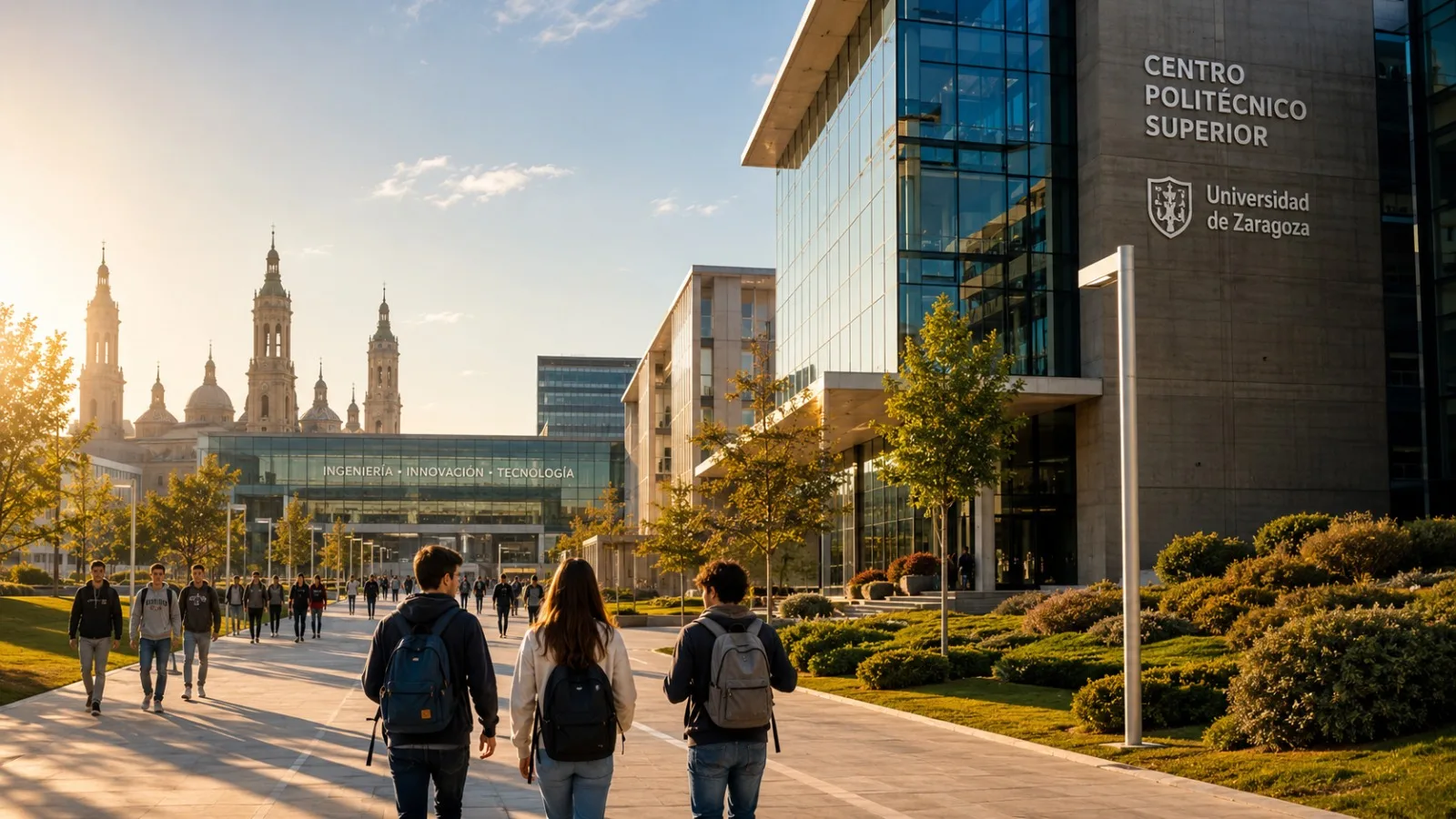
Centro Politécnico Superior, commonly abbreviated as CPS, was a leading higher engineering and technical education institution operating within the University of Zaragoza, one of Spain’s oldest public universities with roots dating back to the 16th century. Situated on the Río Ebro Campus in the Actur district of Zaragoza, CPS served as the central hub for engineering, architecture, computer science, telecommunications, and applied technical disciplines throughout its operational years.
The institution no longer exists under that exact name. In 2011, Centro Politécnico Superior merged with the Escuela Universitaria de Ingeniería Técnica Industrial (EUITI) to form the current Escuela de Ingeniería y Arquitectura (EINA). However, the CPS legacy remains deeply embedded in the campus culture, research groups, laboratory infrastructure, and teaching philosophy that EINA carries forward today.
People still search for Centro Politécnico Superior because academic papers, alumni records, professional biographies, and older university directories still reference it by name. Understanding CPS is essential to understanding how engineering education in northeastern Spain evolved.
The Remarkable History of Centro Politécnico Superior
From Arts and Crafts School to Polytechnic Powerhouse
The story of Centro Politécnico Superior does not begin in 1989. It reaches back to 1894, when a School of Arts and Crafts was established in Zaragoza by Royal Decree. That early institution planted the first seeds of technical education in the region. Over the following decades, formal engineering programs began taking shape within the University of Zaragoza.
The next major milestone came in 1972 with the creation of the University School of Industrial Technical Engineering. Two years later, in 1974, the Higher Technical School of Industrial Engineers (Escuela Técnica Superior de Ingenieros Industriales de Zaragoza, known as ETSIIZ) was officially approved and began its activities on the San Francisco campus in central Zaragoza.
The 1989 Transformation That Changed Everything
By the late 1980s, Spain was modernizing rapidly. The country had joined the European Community in 1986, opening doors to cross-border academic collaboration and Erasmus exchange funding. Industrial growth in the Aragón region demanded a broader, more flexible engineering faculty. In the summer of 1989, the ETSIIZ was formally transformed and rebranded as Centro Politécnico Superior.
This was not just a name change. It was a deliberate expansion of academic identity. CPS moved beyond traditional industrial engineering to embrace computer science, telecommunications, and chemical engineering under one unified polytechnic structure. The institution relocated to the purpose-built Río Ebro Campus in the Actur district, a modern technology-focused environment specifically designed to support collaborative research and industry engagement.
A Landmark Merger: The 2011 EINA Transition
By the early 2000s, the Bologna Process , the European framework standardizing higher education across EU member states , required Spanish universities to restructure their degrees into the now-familiar three-cycle system: bachelor’s, master’s, and doctorate. The University of Zaragoza responded by integrating CPS and EUITI into a single, stronger institution. In 2011, the Government of Aragon formally authorized the creation of the Escuela de Ingeniería y Arquitectura (EINA).
EINA absorbed CPS entirely but did not erase it. The buildings, labs, faculty research groups, and academic culture that CPS built continued operating under the new banner. Today, EINA stands as one of the largest teaching centers at the University of Zaragoza, and alumni, local professionals, and faculty members still refer to the upper engineering buildings by their familiar name: Centro Politécnico Superior.
Academic Programs Offered at Centro Politécnico Superior
Engineering Degrees That Shaped Careers
During its operational years, Centro Politécnico Superior offered a wide spectrum of degree programs carefully designed to reflect Spain’s industrial and technological needs. Students could pursue undergraduate, postgraduate, and doctoral qualifications across several engineering disciplines.
| Degree Area | Key Subjects | Industry Applications |
| Industrial Engineering | Mechanics, thermodynamics, manufacturing | Automotive, aerospace, energy |
| Telecommunications Engineering | Signal processing, networks, wireless systems | Telecoms, broadcasting, defence |
| Computer Engineering | Software development, databases, systems | IT, fintech, AI research |
| Chemical Engineering | Materials science, process engineering | Pharmaceuticals, petrochemicals |
| Electrical Engineering | Power systems, electronics, automation | Energy grids, smart cities |
| Architecture | Design, structural engineering, urbanism | Construction, urban development |
By 1999, the institution had already trained nearly 2,500 engineers, a figure that underscored the scale and impact of its academic output in just 25 years of operation. Programs followed the ECTS credit framework after Spain’s EU accession, ensuring that CPS graduates held internationally recognized qualifications competitive with those from institutions in Germany, France, and the United Kingdom.
Postgraduate and Doctoral Research Pathways
Centro Politécnico Superior was never purely an undergraduate institution. Research played a central role from the beginning. Doctoral programs gave students the opportunity to contribute to active research projects in fields like robotics, renewable energy systems, smart manufacturing, and structural materials. Faculty published regularly in Scopus and Web of Science-indexed journals, building an academic reputation that extended well beyond Zaragoza’s city limits.
The Río Ebro Campus: A Purpose-Built Technology Hub

Why the Campus Location Gave CPS a Genuine Advantage
The Río Ebro Campus in Zaragoza’s Actur district was not an accidental choice. The campus was purpose-built as a dedicated technology and engineering environment, physically separated from the university’s central humanities campus. This gave Centro Politécnico Superior something rare among Spanish academic institutions: a concentrated ecosystem where students, researchers, and industry professionals operated in close proximity.
Within walking distance of the CPS buildings, students could find research institutes, business incubators, and partner company offices. The Instituto Tecnológico de Aragón (ITAINNOVA) and the CIRCE Centre for Energy Resources and Consumption Research both operated nearby, creating a real-world network that students could access while still completing their degrees.
Campus Facilities That Supported Real Learning
Centro Politécnico Superior maintained modern laboratory infrastructure that reflected the demands of its engineering programs. Electronics labs, computer suites, mechanical workshops, and chemical processing facilities gave students hands-on access to equipment they would encounter in professional settings.
- Specialized laboratories for each engineering discipline
- 3D prototyping and fabrication facilities
- Digital library resources connected to the University of Zaragoza’s wider academic network
- Collaborative seminar spaces designed for group project work
- Research centres shared between faculty and postgraduate students
The campus environment reinforced CPS’s core philosophy: technical education only works when students can touch, test, and iterate on real systems.
Centro Politécnico Superior and Its Deep Industry Connections
How CPS Graduates Entered the Workforce Ready to Perform
One of the strongest criticisms of traditional European engineering schools in the late 20th century was the gap between academic knowledge and professional expectations. Centro Politécnico Superior worked hard to close that gap. The institution maintained structured partnerships with companies operating in Aragón’s industrial sectors, including automotive manufacturing, logistics infrastructure, and agri-food processing technology.
These partnerships delivered two concrete benefits. First, students gained internship placements that gave them real project experience before graduation. A computer engineering student might spend a semester working alongside software teams at a regional tech firm. An industrial engineering student could run quality control analysis at a manufacturing plant outside Zaragoza. Second, companies gained early access to talented graduates, which meant CPS alumni consistently enjoyed employment rates above the Spanish national average for engineering graduates.
How the Erasmus+ Program Expanded Global Reach
Spain’s 1986 entry into the European Community brought immediate benefits to Centro Politécnico Superior. Students gained access to Erasmus exchange programs that allowed them to study for a semester or more at partner institutions across Germany, France, Italy, and other EU countries. This international mobility became a significant differentiator. Graduates returned with foreign language experience, cross-cultural professional skills, and academic credentials enhanced by European study credits.
For employers operating in international markets, a CPS graduate with Erasmus experience represented genuine added value.
Research Culture: What Made Centro Politécnico Superior a Knowledge Engine

Research Areas That Defined the CPS Era
Centro Politécnico Superior was not a teaching-only institution. Research was embedded in its identity from the 1989 rebranding onward. Faculty members led projects that aligned with both regional industrial needs and broader European scientific priorities.
Key research areas during the CPS era included:
- Robotics and automated manufacturing systems
- Renewable energy technology, including solar thermal and wind systems
- Telecommunications network architecture
- Advanced materials and structural engineering
- Environmental engineering and industrial process optimization
How Student Researchers Contributed to Real Projects
Undergraduate students at CPS could engage with active research groups through final-year dissertation projects and lab assistant roles. This early exposure to genuine scientific inquiry set CPS graduates apart from those trained at institutions where research and teaching operated in separate silos. Students who worked on EU-funded research projects left the institution with published contributions and professional networks that accelerated their career progression significantly.
Several CPS graduates went on to launch startups in clean technology and digital engineering sectors, drawing directly on research developed during their time on the Río Ebro Campus.
What Happened to Centro Politécnico Superior After 2011?
Understanding the EINA Transition Clearly
The 2011 merger that created EINA did not eliminate Centro Politécnico Superior. It evolved. EINA, which stands for Escuela de Ingeniería y Arquitectura, is the current institutional home for all the programs, faculty, research groups, and physical infrastructure that CPS built over more than two decades.
| Feature | Centro Politécnico Superior (pré-2011) | EINA (post-2011) |
| Degree structure | Traditional Spanish engineering degrees | Bologna-compliant bachelor’s and master’s cycles |
| Disciplines covered | Industrial, telecoms, computer, chemical engineering | All prior disciplines plus expanded architecture programs |
| Student body | Primarily regional and national | Regional, national, and significant international intake |
| Research profile | Strong regional focus | EU-funded projects, international collaboration |
| Campus | Río Ebro Campus, Actur, Zaragoza | Same campus, modernized facilities |
The address remains María de Luna, 3, 50018 Zaragoza. The phone line at 976 761 864 still connects callers to the same campus building. The research culture, teaching philosophy, and industry partnerships established during the CPS era continue through EINA. The name changed. The institution did not.
Why Centro Politécnico Superior Still Appears in Searches Today
The Lasting Digital and Academic Footprint of CPS
Academic institutions leave trails. Research papers published between 1989 and 2011 cite Centro Politécnico Superior as their institutional affiliation. Patent applications, conference proceedings, and journal articles from that period carry the CPS name in their headers. Alumni who graduated before 2011 list Centro Politécnico Superior on their professional profiles and CVs. Academic directories that have not updated their records still return CPS as a live result.
For students researching engineering education in Spain, for professionals trying to verify a colleague’s credentials, or for historians tracing the development of technical education in Aragón, Centro Politécnico Superior is a real and important reference point. Its continued search presence is not a mistake. It is evidence of genuine and lasting institutional impact.
Why Studying Engineering at This Institution Was a Smart Decision
The Tangible Advantages CPS Students Enjoyed
Choosing Centro Politécnico Superior during its operational years gave students concrete advantages that extended well beyond the quality of lectures.
- Location in Zaragoza, a city positioned between Madrid and Barcelona with strong rail connections to both, gave students access to Spain’s two largest job markets
- The University of Zaragoza’s public university status kept tuition fees significantly lower than comparable private engineering schools in Madrid or Barcelona
- Scholarship programs and financial support mechanisms through the Spanish Ministry of Education made CPS accessible to students from diverse economic backgrounds
- The multicultural campus environment, enriched by Erasmus exchange students from across the EU, prepared graduates for international professional environments
- Strong alumni networks built during the CPS era continue to connect professionals across Spain’s engineering sectors
(FAQs) About Centro Politécnico Superior
What exactly was Centro Politécnico Superior?
Centro Politécnico Superior (CPS) was a leading engineering and technical education institution within the University of Zaragoza, Spain. It brought together programs in industrial, computer, telecommunications, and chemical engineering under one polytechnic structure. It operated from 1989 until its merger into EINA in 2011.
When was Centro Politécnico Superior founded?
The institutional roots trace back to 1894, but the specific engineering school that became CPS was formally established in 1974 as ETSIIZ. The name Centro Politécnico Superior was adopted in the summer of 1989 following a significant expansion of academic scope.
Does Centro Politécnico Superior still exist?
Not under that name. In 2011, CPS merged with EUITI to form the Escuela de Ingeniería y Arquitectura (EINA) at the University of Zaragoza. The campus, faculty, research infrastructure, and teaching philosophy continue under the EINA banner at the same Río Ebro Campus address.
Where was Centro Politécnico Superior located?
The institution was located on the Río Ebro Campus in the Actur district of Zaragoza, Spain, at Calle María de Luna, 3, 50018 Zaragoza. The campus was purpose-built as a technology and engineering hub, physically distinct from the university’s central campus.
What engineering programs did Centro Politécnico Superior offer?
CPS offered degrees in industrial engineering, telecommunications engineering, computer engineering, chemical engineering, electrical engineering, and architecture. Programs were available at undergraduate, postgraduate, and doctoral levels, all aligned with the ECTS credit framework after Spain joined the EU.
How many engineers did Centro Politécnico Superior produce?
By 1999, approximately 2,500 engineers had graduated from the institution. Over the full CPS operational period from 1989 to 2011, the institution trained thousands of technical professionals who went on to work in engineering, research, technology, and public infrastructure across Spain and internationally.
Was Centro Politécnico Superior connected to the Erasmus program?
Yes. Following Spain’s EU accession in 1986, CPS students gained access to Erasmus exchange programs, enabling study periods at partner universities across Germany, France, Italy, and other European countries. International mobility became a defining feature of the student experience.
What replaced Centro Politécnico Superior?
EINA, the Escuela de Ingeniería y Arquitectura, is the direct institutional successor. Created in 2011 under a University of Zaragoza restructuring mandated by the Bologna Process, EINA continues all of CPS’s academic programs in updated, Bologna-compliant formats.
Why do people still search for Centro Politécnico Superior today?
Academic papers, alumni professional profiles, university directories, and historical research records still reference CPS by name. Graduates who completed their degrees before 2011 legitimately cite Centro Politécnico Superior on their credentials. The institutional name has a real and lasting digital presence.
What career paths did Centro Politécnico Superior graduates typically follow?
Graduates pursued careers across engineering consultancies, telecommunications companies, software development firms, energy sector organizations, automotive manufacturers, public infrastructure agencies, and research institutions. Several went on to launch technology startups. Employment rates for CPS graduates consistently exceeded Spain’s national engineering average.
How did the Bologna Process affect Centro Politécnico Superior?
The Bologna Process required Spanish universities to transition from traditional five-year or six-year engineering degrees to the European three-cycle system of bachelor’s, master’s, and doctoral programs. This restructuring drove the 2011 merger that created EINA, allowing the University of Zaragoza to offer fully Bologna-compliant engineering and architecture degrees.
A Legacy That Refuses to Fade
Centro Politécnico Superior did not simply close its doors in 2011. It transformed into something larger, something structured to serve a broader and more internationally connected student body. But the CPS identity, its insistence on practical learning, its commitment to industry collaboration, its culture of research embedded within teaching, those qualities did not disappear.
They became EINA’s DNA.
For anyone studying the history of Spanish engineering education, planning a study journey to Zaragoza, or trying to understand a professional credential from the pre-2011 era, Centro Politécnico Superior represents one of Spain’s most consequential contributions to technical education. Thousands of engineers, architects, and researchers built their entire professional identities within its walls. The Río Ebro Campus still hums with the same spirit of applied inquiry that CPS pioneered.
That is not a small legacy. That is the kind of institutional impact that earns a permanent place in the academic record of an entire region.
For a deeper understanding of polytechnic education models across Europe, visit the relevant Wikipedia entry on polytechnic institutes.
Read More: Sydneebeeyxo: The Full Story Behind the Name Everyone Is Searching For