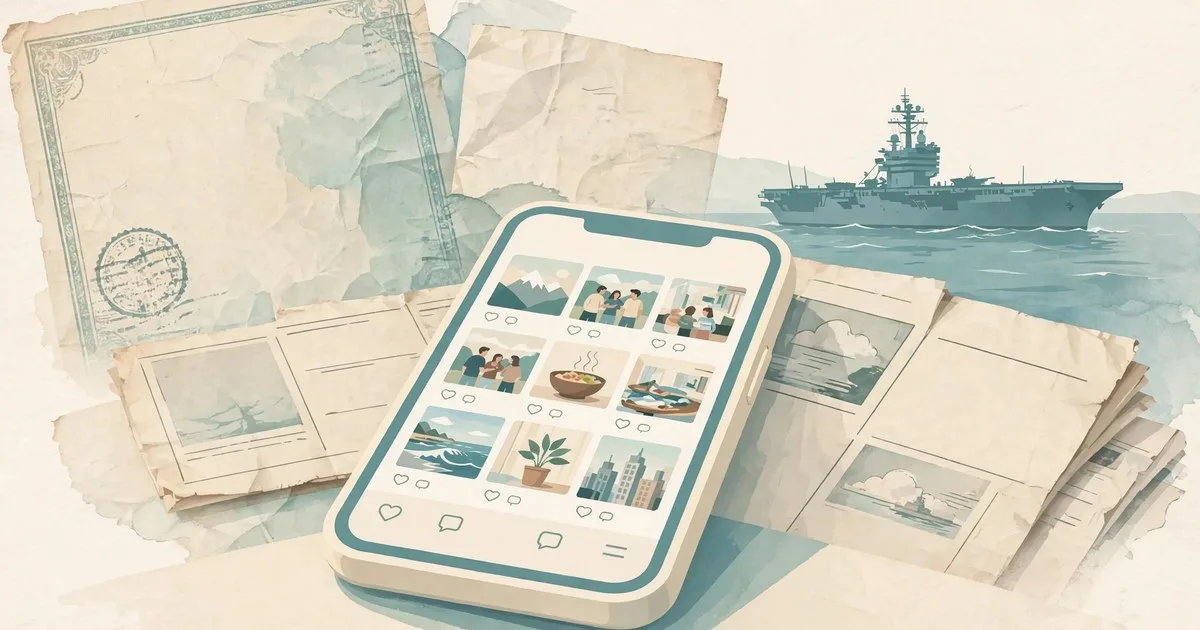
Ins is three letters long, and it has no single meaning. Type it into a search box and you could be asking about a social media app, a government agency that stopped existing in 2003, a warship, a news agency from the age of newspaper empires, or a word root that means human being. The spelling is the same in every case. The meaning is decided by the sentence around it.
That is the honest answer, and it is also the reason this article does not pick one definition and pretend the others do not exist. Most of the pages ranking for the term do exactly that. They take one use, usually the Instagram one, and write a whole guide around it as if nothing else shared the word. This article works through the real uses in the order a searcher is most likely to mean them, keeps the verified facts separate from the invented ones, and ends with a simple way to tell which ins you are reading.
What Does Ins Mean?
In everyday online use, it most often means Instagram. It is an informal short form, not an official abbreviation, and it is used in chats, captions, bios and usernames by people who want to type less. In mainland China it is the usual shorthand for the app, while in Taiwan and some other Chinese speaking regions people more often write IG. The same three letters have completely different meanings elsewhere. In American history, the initials stand for the Immigration and Naturalization Service. In India, the initials form the prefix put before the name of a naval ship. In old American journalism, the initials were the International News Service. In plain English, the word is simply the plural of in, as in the ins and outs of a subject.
None of those meanings is wrong, and none of them is the only right one. The confusion comes from the fact that the word is short, easy to type, and easy to reuse. Short words get recycled. When a new use appears, the old ones do not disappear. They sit side by side, and the reader has to work out from context which one is meant. The sections below take each use in turn, starting with the one most people are looking for.
Ins as Instagram: The Short Form Everyone Uses Online
The most common meaning of the term today is Instagram. People write it in messages like follow me on ins, my handle is, and DM me on ins. The reason is simple. Instagram is a long word to type again and again in a fast chat, and ins is the first three letters. It saves time, it is instantly understood by anyone who uses the app, and it fits the way younger users already shorten everything else they type.
It is important to be clear about one thing. The short form is not an official abbreviation. Instagram and its owner, Meta Platforms, have never announced it as one. It grew up through ordinary use, in chats and comments, the way slang usually does. That is why you will not find it in Instagram help pages or in press releases. You will find it in bios, in usernames, in comment threads, and in the kind of quick messages where every keystroke counts. Several of the blogs ranking for the term say this plainly themselves. The better ones admit the short form came from users, not from the company.
Where the Instagram Short Form Comes From
Instagram launched on 6 October 2010. It was founded by Kevin Systrom and Mike Krieger, who had started with a location based check in app called Burbn and then pivoted to photo sharing. The app launched first for iOS and expanded to Android in 2012. Stories arrived in 2016, and Reels, the short form video format, arrived in 2020. Over that time the app became one of the main places where people share photos and short videos, follow creators, and build an audience around a visual style.
A platform that big generates shorthand. Users shorten its name in the same way they shorten other long platform names. In mainland China, the short form became the standard version of that shorthand, while IG became the standard version in Taiwan and some other Chinese speaking regions. Cambridge Dictionary records the same split in its Chinese entry for the word Instagrammer, noting that Instagram is shortened to IG or ins in Chinese usage. The split is a useful clue. If you see the short form written by a Chinese speaker, or in a Chinese context, it almost certainly means Instagram.
How People Actually Use Ins in Chats and Bios
In practice, the short form shows up in a few predictable places. People put it in a bio to point followers to their Instagram profile without spelling the whole word out. They use it in a chat when they want to move a conversation to Instagram, as in add me on ins. They use it in comments under a photo to ask for the photographer’s handle. And they use it as a tag or a username element when the full word is taken or feels too long.
None of that is formal, and none of it needs to be. The short form works because the people reading it already know the app. That is also why it can confuse outsiders. An older reader, or a reader in a different field, may see the word and think of insurance, or an institute, or an agency. The blogs ranking for the term warn about exactly that mix up. The safe rule is the same as with any piece of slang. Read the sentence around it. If the sentence is about photos, followers, posts or a profile, ins means Instagram.
Ins Style: The Look China Built Around a Blocked App
The most interesting story attached to the short form does not come from the app itself. It comes from China, where Instagram has been blocked for years. That block did not stop Chinese users from following the app. Tech savvy young users who bypass the firewall share popular posts and styles on Chinese social media, and out of that second hand contact they built an aesthetic of their own. They named it Ins Style, or Ins wind in Chinese, and it became one of the most talked about style labels among Chinese Gen Z users.
The style is not one look. It is a loose collection of visual tastes borrowed from Instagram posts: clothing, home furnishing, photo filters, and a general feeling of a bright, curated, Western lifestyle. Jing Daily, which covered the trend in September 2020, reported that the hashtag InsStyle had over 79 million views and 110,000 discussion posts on Weibo, the Chinese microblogging site. The posts generally drew on styles like Parisian Chic, or on designs built around consistent colours and tones, including a monochromatic look the article calls Sexually Frigidity. For many young Chinese users, pictures of Airbnb homes, Urban Outfitters clothing and Hallmark cards were considered the best examples of the aesthetic.
The trend also attracted criticism, and that criticism is part of the story. Many Chinese netizens questioned whether followers of the style actually used the real app, and challenged the vague definition of the term itself. One common argument was that a Chinese counterpart such as Weibo Style or WeChat Style could not exist, because there is no single overarching aesthetic on those apps, given how diverse their audiences are. Others pointed out that posts in the style had started to overlap with another label, Wanghong Style, which refers to any aesthetic that becomes internet famous. Mike Golden, president of the brand strategy company Brandigo China, told Jing Daily that the Wanghong aesthetic can be used on anything with a flourish of flamingos or a hint of oversaturation, and that the label may have come to be overrated by local Chinese users and taken on a negative connotation.
China marketing consultant Xinyao Qiu offered a different reading. She pointed to a viral 2019 WeChat article which argued that the label took off because businesses started selling a fantasy, where people can live the same Western Wanghong lifestyle beneath a filter. In her view, the rise of the phrase was a sign that Gen Z users may subconsciously lack confidence in their tastes or styles. Whether that reading is right or not, it captures something real about the trend. The label is not really about the app. It is about the idea of the app, the lifestyle its photos seem to promise, seen from a country where the app itself cannot be opened. That is why the label survived and spread even though its source was blocked.
INS and the US Immigration and Naturalization Service
Outside social media, the best known meaning of the initials is a government agency, the United States Immigration and Naturalization Service. It was a federal agency that administered immigration and naturalization law in the United States for seventy years, from 1933 to 2003. It no longer exists under that name. Anyone who writes to the agency today, or searches for its offices, will be redirected to the agencies that replaced it. That fact surprises a lot of people, because the initials are still widely used in conversation and in old documents.
The agency was formed on 10 June 1933, when the Bureau of Immigration and the Bureau of Naturalization were merged into a single service. It operated under the Department of Labor from 1933 to 1940, and then under the Department of Justice from 1940 until it was dissolved. Its work covered the administration of federal immigration laws, including the Immigration and Nationality Act. It adjudicated green card applications, changes of status and naturalization requests. It also ran the Border Patrol and enforced immigration law inside the country.
What the INS Did
The agency did two kinds of work that are now done by different agencies. On one side it handled benefits, the paperwork that lets people live, work and become citizens in the United States. That meant processing visa petitions, green card applications and naturalization requests, and keeping the records behind them. On the other side it handled enforcement, the work of border security, inspections at ports of entry, and the removal of people who had no legal right to stay. Putting benefits and enforcement under one roof was the source of constant tension inside the agency, and it was one of the reasons the agency was eventually broken up.
Over seventy years the INS became a familiar name in American life. Its forms, its offices and its initials appeared in millions of immigration cases. For many immigrants and their families, the INS was the face of the American government. That familiarity is why the initials have lasted so long after the agency itself disappeared.
What Replaced the INS in 2003
The agency ceased to exist on 1 March 2003. Congress had passed the Homeland Security Act in 2002, after the September 11 attacks of 2001, and the act moved immigration functions into the newly created Department of Homeland Security. The old agency was split into three new ones. US Citizenship and Immigration Services, known as USCIS, took over immigration benefits, including visa petitions, green card applications and naturalization. US Immigration and Customs Enforcement, known as ICE, took over enforcement inside the country. US Customs and Border Protection, known as CBP, took over border protection and inspections at ports of entry.
The government now calls the old agency Legacy INS. That is the preferred term in official material. But the old initials have proved hard to kill. As early as 2011, the Murthy Law Firm noted that many people still used the initials when referring to the government body responsible for immigration enforcement and benefits, and that the official blog of USCIS had noted tens of thousands of people each month still searched for immigration information by entering the initials into search engines. The habit continues today. A search for the initials usually leads to USCIS, ICE or CBP, and the searcher has to work out which of the three does the job they need. If you are reading a document that mentions the agency in the present tense, check its date. Anything written after March 2003 that treats the INS as a live agency is out of date.
INS on the Water: Indian Naval Ship
In India, the initials are a ship prefix. They stand for Indian Naval Ship, and it is placed before the name of a vessel belonging to the Indian Navy. A reader who sees the names INS Vikrant or INS Arihant is looking at a ship, not an agency and not an app. The prefix works the same way as USS for a United States Ship or HMS for a ship of the British Royal Navy. It tells you at a glance which navy owns the vessel.
The prefix dates to 26 January 1950, the day India became a republic. Before that, Indian naval ships carried the prefix HMIS, short for His Majesty’s Indian Ship, because the armed forces were under the British Crown. After the republic was declared, the prefix became INS. The change was part of a wider renaming of Indian institutions after independence, and it has stayed in place ever since.
The most famous ship to carry the prefix is INS Vikrant, and the name has belonged to two different aircraft carriers. The first Vikrant was a Majestic class carrier bought from the United Kingdom, where it had been laid down as HMS Hercules. It was commissioned into the Indian Navy on 4 March 1961 and served until it was decommissioned on 31 January 1997. It played a major role in the 1971 war, enforcing the naval blockade of East Pakistan, and it became a symbol of national pride before it was scrapped in 2014. The second Vikrant is India’s first indigenously built aircraft carrier. It was commissioned on 2 September 2022 by Prime Minister Narendra Modi at Cochin Shipyard, where it was built. The new carrier is 262 metres long, displaces about 45,000 tonnes, and can carry 30 aircraft. It carries the old name on purpose, as a link to the first carrier. When you see the initials in a defence or naval story, this is almost always the meaning.
INS as a News Agency: The International News Service
There is a third institutional use of the initials, and it belongs to the history of American journalism. The International News Service was a US based news agency, or newswire, founded by newspaper publisher William Randolph Hearst in 1909. Its precursor, the Hearst News Service, had been established in 1904. For most of its life the service ranked as the third largest news agency in the United States, behind its larger rivals the Associated Press and United Press. Its reporters and photographers supplied news and pictures to hundreds of newspapers.
The agency ended in a merger. On 24 May 1958, United Press absorbed the International News Service and the combined company became United Press International, known as UPI. The new UPI had 6,000 employees and 5,000 subscribers, about a thousand of them newspapers. The merger was aimed at creating a stronger competitor for the Associated Press. The letter I in UPI is, in effect, the old initials, preserved inside a new name. The agency itself is long gone, but the initials survive in media history books and in the credits of old photographs. If you see the initials in a story about twentieth century newspapers or wire services, this is the meaning.
The Turkish and Arabic Root Behind Ins
There is also a linguistic root behind the word, and it is real, although the meanings built on it online are mostly invented. In Arabic, the word means mankind or human beings, as opposed to supernatural beings. The Turkish word insan, meaning human, person or humankind, comes from the Arabic insan. That is why the root turns up in discussions of humanity and human nature in Turkish and Arabic. The spelling can also look strange to English readers, because Turkish has a dotted capital letter, so the word is sometimes written with a dotted I, which is a different character from the plain I used in English.
That much is verifiable. What is not verifiable is the system of symbolic meanings that a set of low authority blogs has built on top of it. Those blogs present the word as one that represents compassion, vulnerability, individuality, identity, authenticity and human essence, and as a ready made name for brands, usernames and creative projects. One of them describes the term as a short form expression used to convey meaning efficiently in digital communication. Another claims it represents identity and authenticity, as if that were a dictionary definition. None of that is established anywhere outside those blogs. The root is real. The symbolism is the blogs’ own invention, written to rank for a short keyword that had no settled page of its own.
It is worth saying this plainly, because the blogs do not. A reader who trusts them will come away believing the word is a recognised word for human identity, with a philosophy attached to it. It is not. It is a three letter root inside a longer word, in two languages, which a handful of content sites have dressed up as a concept. The root deserves a mention in any honest article about ins. The invented philosophy does not deserve to be presented as fact.
Ins in Plain English: The Ins and Outs
Finally, the word is an ordinary English word in its own right. It is the plural of in. The phrase the ins and outs of something means its details, its intricacies, the small workings that only someone close to the subject would know. The ins, on their own, can mean the people currently in office or in power, as opposed to the outs, the people waiting to replace them. Neither use is slang, and neither is new. Both are standard English, and both predate every other meaning in this article by a long way.
The same three letters also turn up as casual shorthand in notes and chats for insurance and for institutions. That is not an official abbreviation either. It is the same habit that shortens Instagram to ins: people write less and trust the reader to fill in the rest from context. If a message about a car or a house mentions the word, it probably means insurance. If a message about a school or a company mentions it, it probably means an institution. The context does the work, as it always does with this word.
What the Ranking Blogs Get Wrong About Ins
The pages that rank for the word are, for the most part, low authority blogs writing about a keyword rather than a subject. Their articles follow a visible pattern. They open by calling the word intriguing, mysterious or quietly gaining traction. They list several possible meanings without saying which are verified. They add sections on cultural significance, branding potential, philosophy and the future of the word, all built on the same thin material. And they end by declaring the word deeply resonant and full of potential. The structure is the same from one site to the next, because the goal is the same: to own a short keyword that no authoritative page has claimed.
That is the same pattern Zents has covered before with other short strings. The article on cbybxrf dealt with a seven letter string that has no dictionary meaning at all, yet still attracted full ultimate guide articles that presented conflicting invented histories as fact. The article on edivawer dealt with a coined label that low authority blogs framed, variously, as a learning platform, a digital identity framework and a generic software system, with no verifiable company or product behind any of the framings. And the article on mansutfer dealt with another coined word that blogs split into four different meanings, none of which could be traced to a real source. In each case the honest answer was the same as it is here: the word has no settled definition, the blogs are filling a gap, and the reader should treat their claims as claims, not as facts.
The specific mistakes to watch for in articles about the word are easy to list. First, presenting the Instagram short form as official, when Instagram has never announced it. Second, presenting the Turkish and Arabic root as a full philosophy of identity and authenticity, when it is only a root inside the word for human. Third, mixing up the three institutional meanings, so that the immigration agency, the naval prefix and the news agency blur into one vague idea of an organisation known by the same initials. Fourth, writing about the style as if it were an official fashion movement, when it is a loose label applied by Chinese social media users to a set of borrowed looks. And fifth, stating user numbers, prices or dates without a source, which several of these blogs do freely. A good article about the word does the opposite on every point. It says which meanings are verified, it names the source for each one, and it leaves the gaps visible instead of filling them with invented detail.
How to Tell Which Ins You Are Reading
Most of the time, the context gives the answer in seconds. If the text is about photos, followers, profiles, posts or a bio, it means Instagram. If the text is about Chinese fashion, home decor or a filter look, and it mentions Ins Style, it means the aesthetic built around Instagram imagery. If the text is about American immigration history, green cards, visas or the Department of Homeland Security, the initials stand for the old Immigration and Naturalization Service. If the text is about an Indian warship, they stand for Indian Naval Ship. If the text is about twentieth century wire services, Hearst or UPI, they stand for the International News Service. If the text says the ins and outs of something, it is plain English.
Two checks settle the harder cases. First, look at the date. Anything that treats the immigration agency as live and was written after 1 March 2003 is out of date, and anything that treats the news service as live and was written after 24 May 1958 is out of date too. Second, look at the capitalisation and the language around it. Uppercase initials in a formal or historical text usually mean one of the institutions. Lowercase letters in a chat, a caption or a Chinese social media context usually mean Instagram. Neither check is foolproof on its own, but together they resolve almost every case you are likely to meet.
Frequently Asked Questions
What does ins mean on Instagram?
On Instagram and in chats about it, the word is an informal short form for Instagram itself. People write it in messages like follow me on ins, or use it in a bio to point to their profile. It is not an official abbreviation. Instagram and Meta have never announced it, and it grew up through ordinary use among social media users.
What is the full form of the word?
There is no single full form, because the word is not one abbreviation. In most online contexts the full form is Instagram. In American history it stands for Immigration and Naturalization Service. In India it stands for Indian Naval Ship. In old journalism it stood for International News Service. The right expansion depends on the context.
What is Ins Style?
Ins Style is an aesthetic label created by young Chinese social media users, built from Instagram imagery even though Instagram is blocked in China. It covers clothing, home furnishing and photo filters associated with a curated Western lifestyle. Jing Daily reported in 2020 that the hashtag InsStyle had over 79 million views and 110,000 discussion posts on Weibo. The label is loose and much debated, and critics say its definition is vague and that its overuse in marketing has cheapened it.
Does the INS still exist?
No. The US Immigration and Naturalization Service was dissolved on 1 March 2003. Its functions were split among three agencies inside the Department of Homeland Security: USCIS for immigration benefits, ICE for enforcement inside the country, and CBP for border protection. The government now calls the old agency Legacy INS.
What does INS mean before a ship name?
Before an Indian warship name, the initials stand for Indian Naval Ship. Indian naval ships have carried the prefix since 26 January 1950, when India became a republic. Before that they used HMIS, short for His Majesty’s Indian Ship. The best known example is INS Vikrant, the name of two Indian aircraft carriers, one commissioned in 1961 and one in 2022.
Is it a real word in Turkish?
Not on its own. The root appears inside the Turkish word insan, meaning human or person, which comes from the Arabic insan. The blogs that present the word as a Turkish word for human identity are stretching that root into a meaning it does not carry by itself. The root is real. The symbolic readings built on it are the blogs’ invention.
Why do so many articles give different meanings for the word?
Because the word has several real meanings and no single authority owns it. Short words attract new uses, and each use keeps its own audience. On top of that, low authority blogs write competing guides for the same short keyword, each presenting its own framing as the definition. The result is a set of articles that disagree with each other, and the only way through them is to check each claim against a real source.
Final Words
Ins is a small word with a large shadow. It can mean an app, a style, an agency, a ship, a news service, a word root, or the details of a subject, and it can mean all of those things without any of them being wrong. That is not a flaw in the word. It is how short words behave. They get picked up, reused, and passed between languages and fields until the spelling alone tells you almost nothing.
The useful question is never what the word means in the abstract. It is what it means in the sentence in front of you. Read that sentence, check its date, and look at the words around it, and the answer is usually clear. If the page you are reading will not let you do that, if it hides its sources, invents a philosophy, or presents one use as the only use, then the page is not explaining the word. It is competing for it, and you are better off without it.