Most words you look up online have one clear meaning, and the search results agree with each other. Stormuring is not one of those words. Type it into a search box and you get building guides, brainstorming tips, lifestyle blogs, and marketing advice, all using the same word for very different things. That kind of mess leaves most readers more confused than when they started.
There is a real answer hiding underneath all that noise, though, and it sits in a builder’s yard rather than a brainstorming session. Stormuring began life as a proper building product, a tough mortar made for walls that face cold rain and hard winters. The other meanings came later, when the word started getting passed around online. This guide sorts the real product from the newer ideas, so you know exactly what people mean when they say stormuring.
What Stormuring Actually Is
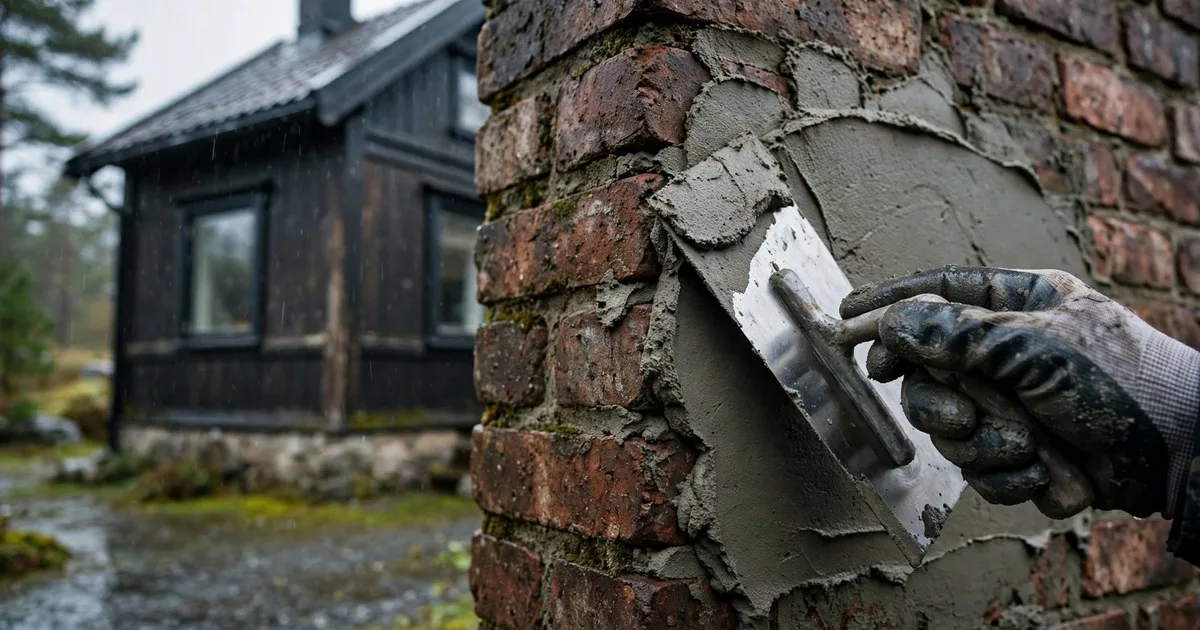
Strip away the blog posts and the trend pieces, and stormuring turns out to be something solid and practical. At its core, it is a pre-mixed dry mortar from the Heydi product line, a Norwegian brand built around waterproofing and masonry repair. Builders mix the dry powder with water on site, and the result is a cement-based mortar they can use for masonry work, rendering, and protective coatings on brick, block, and stone.
The name gives a clue about the job it was made for. Some online guides say it roughly means storm masonry in Norwegian, which fits a product designed for walls that take a beating from wind and rain. Norway is famous for long, wet winters and driving rain, so a mortar from that part of the world has to handle moisture better than an average mix. That is the whole point of stormuring, a mortar that keeps water out and stays stuck to the wall through seasons of bad weather.
What makes it different from a bag of ordinary cement is the recipe inside. Portland cement gives it strength, sand gives it body, and special binders and waterproofing agents help it resist water instead of soaking it up. Fine fibres are mixed through the dry powder as well, and those fibres are the part that helps the finished coat resist the small cracks that appear as mortar dries and as walls move a little with temperature changes. None of this is magic, and none of it is new technology in itself. It is simply a careful blend of familiar ingredients, put together for one demanding job.
Because it arrives as a dry, pre-mixed powder, a builder does not have to guess the proportions on site. The mixing work has already been done at the factory, which cuts down on the kind of errors that happen when sand and cement get measured by eye on a busy job. A bag of stormuring, mixed with clean water and applied to a sound surface, gives a consistent coat that behaves the same way from one batch to the next. For repair work on older walls, that consistency matters more than most people realise.
How the Mortar Works
A wall fails in small ways long before it fails in big ones, and water is usually the thing that starts the trouble. Rain soaks into ordinary mortar, frost turns that water to ice, and the ice pushes tiny cracks a little wider every winter. Stormuring is built to break that cycle at the first step, by keeping as much water out of the wall as it can. The waterproofing agents in the mix make the finished surface far less thirsty than a standard mortar, so rain runs off instead of sinking in.
The fibres do a quieter job, and it is easy to miss how much they matter. As any cement-based coat dries, it shrinks a little, and that shrinkage is what opens up the fine hairline cracks you see on so many rendered walls. Fibres spread through the mix act like thousands of tiny threads holding the material together while it sets. They do not make the mortar unbreakable, but they do spread the stress around, so small movements end in a surface that stays whole instead of one that splits.
Adhesion is the third piece of the puzzle. A repair mortar is useless if it peels off the wall a few months after it goes on, so stormuring is made to grip brick, block, concrete, and stone firmly. A good bond starts with the surface underneath, of course, and no mortar can save a wall that is loose, dusty, or painted over. But on a clean, sound, dampened surface, the binders in the mix help the fresh coat lock onto the old masonry and stay there through wet winters and hot summers.
Turns out, the real strength of stormuring is not one single feature. It is the way the waterproofing, the fibres, and the bond all work together on the same wall. A coat that keeps water out but cracks easily would still fail. A coat that never cracks but peels off would fail too. Stormuring earns its place on a builder’s shelf because it tries to solve all three problems at once, and on walls that face harsh weather, that combination is worth paying for.
Where Builders Use Stormuring
The most common home for this mortar is the outside of a building, where the weather does its worst. Exterior wall rendering is the classic use, a coat spread over brick or block to give the wall a smooth finish and a shield against rain. Garden walls get the same treatment, and they often need it more than house walls do, since they are exposed on both sides and a garden wall that stands under trees takes a beating from leaves, shade, and damp through the winter months.
Basements and foundations are another natural fit. Below ground level, walls sit against damp soil for years, and water finds any weak point it can. A waterproof cement coat on a basement wall or a foundation gives that wall a fighting chance, and builders often use this type of mortar as part of a wider damp-proofing job rather than as a single fix on its own. It works best when the source of the water has been dealt with first, because no surface coat can hold back water that is pushing through a wall under real pressure.
Repair work is where most homeowners will actually meet stormuring. Old mortar joints crumble, render blows off in patches, and corners chip away after years of frost. Stormuring is a sensible choice for patching those spots, because the repair has to be at least as tough as the wall around it. If a patch is weaker than the original, it becomes the next weak point, and the same crack comes back in the same place within a year or two.
Decorative finishes round out the list. Some builders use this kind of mortar as a base coat under paint or a textured top coat, and others leave a plain rendered finish as the final look. Either way, the rules stay the same, and the surface underneath has to be sound before anything goes on top of it. A pretty finish on a failing wall is just a pretty way to hide a problem for a few months.
Stormuring vs Ordinary Mortar
The easiest way to understand this product is to put it next to the ordinary mortar most people know. A standard sand and cement mix is cheap, easy to find, and fine for plenty of jobs, like laying bricks on a sheltered wall or bedding a garden path. It has done that work for generations, and nobody sensible would call it a bad material. But it soaks up water, it cracks as it dries, and it has no special help against frost, which is why it struggles on exposed walls in wet climates.
Stormuring starts from the same basic ingredients and then adds the extras that ordinary mortar leaves out. The waterproofing agents cut down how much water the finished coat absorbs, the fibres help it resist cracking, and the binders improve the grip on the wall. Those additions cost more, and the bag will usually cost more than a bag of plain cement and sand. So the honest question is never which mortar is better in the abstract, but which one fits the wall in front of you.
For a sheltered internal wall or a small patch that never sees rain, ordinary mortar is often the right call, and paying extra for waterproofing would be money spent on a problem that does not exist. For an exposed chimney, a sea-facing wall, or a basement that stays damp all winter, the tougher mix earns its price quickly. Here is where it gets interesting, because the mistake most people make is not choosing the wrong product, but choosing a good product for the wrong wall.
A good rule to keep in mind is that the mortar should match the exposure, not the budget. Cheap mortar on a harsh wall turns expensive fast, once you count the cost of doing the same repair twice. Tough mortar on a sheltered wall is simply money that could have gone somewhere else. Builders who work in cold, wet regions reach for products like stormuring because they have seen what happens to ordinary mortar after a few hard winters, and they would rather pay once than patch the same wall every spring.
How to Use It Right
Every good result with this kind of mortar starts before the bag is even opened. The wall has to be sound, clean, and free of loose material, dust, paint, and grease, because a fresh coat can only grip what is solid underneath it. Loose render should be hacked off, crumbling joints should be raked out, and the surface should be dampened so it does not suck the water out of the fresh mix before it has time to set. Skipping this step is the single most common reason a repair fails, and no product can make up for a dirty wall.
Mixing is straightforward, but it still rewards care. The dry powder goes into clean water, not the other way round, and it gets mixed until it is smooth and even, with no dry pockets left in the bucket. The manufacturer’s data sheet is the only place to find the exact water amount for the stormuring you have bought, so check it rather than guessing, and mix only as much as you can use before it starts to stiffen. A mix that has gone off in the bucket should never be brought back to life with extra water, because that weakens the finished coat.
Application itself is a matter of steady hands and thin layers. The mortar goes on with a trowel, pressed firmly into the surface so it keys into the masonry instead of sitting on top of it. Thick coats in one pass are a bad idea, and most jobs work better with a scratch coat first, left to firm up, and then a second coat to finish. Working in the shade on a hot day, or covering fresh work from heavy rain, gives the mortar time to cure properly instead of drying out too fast or washing off before it sets.
Curing is the part people rush, and it is the part that decides how long the work lasts. A fresh cement coat needs to stay damp enough to harden properly, which means protecting it from sun, wind, and frost for the first few days. In cold weather, that can mean waiting for a milder spell rather than forcing the job through, and hiring a professional company for larger repairs is often the smarter move when the wall is structural or the area is large. A small garden wall is a fine weekend job, but a whole house front is a different scale of work.
The Other Meaning of Stormuring Online
So far this guide has dealt with the real product, and that is the meaning with actual evidence behind it. But anyone who searches for stormuring will also find a second set of results, and those pages use the word for something completely different. They describe it as a mindset, a brainstorming method, a lifestyle trend, or a marketing strategy, and they often present it as if it were an established idea with a history behind it.
Readers should know that this second meaning is a recent internet coinage, not a settled term. The pages that use it this way disagree with each other about what it means, with some splitting it into storm plus murmuring, others into storm plus nurturing, and others into storm plus structuring. A few even offer a medieval German origin story, but none of them cites a dictionary, a book, or an institution that backs the claim up. One page goes further and admits the quiet part out loud, calling it an emerging framework with no single institutional owner and definitions that vary from source to source.
That does not make the online usage worthless, but it does change how you should treat it. A word that means four different things on four different websites is not a method with a track record, it is a label that writers are trying out to see if it sticks. A blog that covers new online trends can be a fun place to watch that kind of word take shape, but it is not the same as a product with a data sheet, a manufacturer, and walls that have stood up to real winters.
The practical risk here is a small one, but it is real. Someone who reads a lifestyle article about stormuring and then orders a bag of mortar will be confused, and someone who reads a building guide and then tries to run a brainstorming session with it will be just as lost. Knowing which stormuring you are looking at saves that confusion, and the quickest test is the simplest one. If the page talks about cement, fibres, and waterproofing, it means the product. If it talks about ideas, energy, and mindset, it means the new online usage.
Stormuring as a Brainstorming Idea
Put the building product to one side for a moment, and the online version of stormuring is easy enough to describe. The pages that use the word this way present it as a fast, high-energy way to generate ideas, a kind of brainstorming with the volume turned up. The usual recipe they suggest is simple, and it will sound familiar to anyone who has sat through a normal brainstorming session. Pick a problem, set a short timer, shout out ideas as fast as they come, write everything down without judging it, and sort the good from the bad only after the timer stops.
Supporters of this version say the speed is the whole point. A normal brainstorm can drift, with people second-guessing every suggestion before it is even written down. A timed burst, they argue, keeps the ideas flowing and stops the loudest person in the room from steering everything. The method gets suggested for content planning, product ideas, marketing campaigns, and team meetings, which are all jobs where a pile of rough ideas is genuinely useful at the start.
None of that is bad advice, and none of it is new either. Fast idea sessions, timed sprints, and no-criticism rules have been part of brainstorming guides for decades, under plenty of other names. What is new is only the label, and a fresh label does not turn familiar advice into a proven method. There is no published research behind stormuring as a technique, no training body behind it, and no evidence that calling a session by this name produces better ideas than calling it a brainstorm.
That is worth saying plainly, because the pages that promote it often write as if the technique had a history and a body of evidence behind it. It does not, at least not yet. If you try it in a meeting and it works for your team, then it works, and the name on the tin hardly matters. But if someone sells you a course or a book on the strength of the word alone, treat that with the same caution you would give to any new method that has not been tested in the open.
Common Mistakes and Misunderstandings
The biggest mistake people make with stormuring is mixing up the two meanings and then acting on the wrong one. A homeowner who buys mortar because a lifestyle blog made it sound like a wellness trend has wasted money, and a manager who tries to waterproof a basement with a brainstorming technique has a bigger problem. It sounds silly when it is written out like that, but the search results really do put both meanings side by side, so the confusion happens more often than you might think.
The second mistake is trusting the invented history. Claims about medieval German roots, ancient storm rituals, or a centuries-old building tradition sound impressive, and they get repeated from one low-quality page to the next until they start to look true. They are not backed by any source you can check, and the honest version of the story is much shorter. Stormuring is a modern product name from a Norwegian company, and the rest of the meanings around it are recent online inventions.
A third mistake is treating the mortar as a cure-all. A waterproof coat is a strong layer of defence, but it is not a substitute for fixing the cause of damp, and it will not hold back water that is pushing through a wall under pressure. People who slap it over a wall that is still leaking, or over paint and loose render, usually end up blaming the product for a failure that was really a preparation problem. The mortar can only do its job if the wall underneath it is ready.
The last mistake is the simplest, and it applies to both meanings at once. People take the word at face value and assume it must mean something deep, because it sounds old and weighty. Sometimes a word is just a brand name that caught on, and sometimes a trend is just a new label on an old idea. Checking what sits behind a word takes five minutes, and those five minutes will save you from building a plan on a definition that nobody agrees on.
Is Stormuring Worth Trying
For the building product, the answer depends on the wall, and that is exactly how it should be. If you have an exposed wall, a damp basement, or a repair that keeps failing in the same place, stormuring is a sensible upgrade from ordinary sand and cement. It costs more per bag, but it is still a small part of the total cost of a repair, and doing the job once beats doing it twice.
If your walls are sheltered, dry, and in good shape, you probably do not need it. Ordinary mortar will do the job, and the extra money is better spent on the things that actually protect a wall, like sound gutters, good pointing, and a roof that does not leak. The smartest buyers are the ones who match the material to the exposure, not the ones who buy the toughest product on the shelf for every job.
For the brainstorming version, the cost of trying it is nothing but a few minutes and a timer. Run a short, fast idea session with your team, see if the pace helps, and keep the parts that work. There is no harm in borrowing a good habit from a page that uses a made-up word, as long as you know the word is made up. The danger only starts when a label gets treated as proof, and a fun session gets sold as a science.
Frequently Asked Questions
By now the two meanings should be clear, but a few questions still come up again and again. The answers below stick to what can actually be checked, and they say so plainly where the honest answer is that nobody knows yet.
What is stormuring?
Stormuring is a real building product first and foremost, a pre-mixed, fibre-reinforced, waterproof cement mortar from the Heydi line, made for masonry, rendering, and repairs on walls that face harsh weather. The same word has also started appearing online as a label for a fast brainstorming method and a lifestyle trend, but those uses are recent inventions with no settled definition and no authoritative source behind them.
What is stormuring used for?
Builders use stormuring for exterior rendering, garden walls, basement waterproofing, foundation repairs, and patching damaged mortar and render. Its waterproofing and fibre reinforcement make it a good fit for exposed walls in cold, wet climates, where ordinary mortar tends to crack and soak up water. It also gets used as a base coat under paint or a textured finish.
Is stormuring the same as ordinary mortar?
No, though they start from similar ingredients. Ordinary mortar is a basic mix of cement, sand, and water, and it works fine for sheltered jobs. Stormuring adds waterproofing agents, binders, and fibres, which help it resist water, grip the wall better, and crack less as it dries. That makes it tougher on exposed walls, but it also makes it more expensive, so it is best saved for jobs where the extra toughness is actually needed.
Can a beginner use stormuring at home?
A careful beginner can handle a small job, like patching a garden wall or re-rendering a small area, as long as the surface is prepared properly and the instructions on the bag are followed. Large areas, structural walls, and anything involving serious damp are better left to a professional, because the preparation and the curing matter as much as the product itself.
Does stormuring really stop water?
It resists water far better than ordinary mortar, and a well-applied coat will keep rain out of a wall in normal weather. It is not a magic shield, though. It will not hold back water that is pushing through a wall under pressure, and it will not work on a surface that was dirty, loose, or painted when it went on. Fixing the source of the water always comes first.
Where does the word stormuring come from?
The honest answer is that the product name comes from the Heydi line of building products in Norway, and some online guides suggest it roughly means storm masonry. Beyond that, the history you will find online is mostly invented. Claims about medieval German origins or ancient traditions have no reliable source behind them, so they should not be repeated as fact.
Is the brainstorming version of stormuring a real method?
It is a real label that people are using, but it is not an established method with research or a training body behind it. The technique it describes, a short, timed burst of unfiltered idea generation, is a familiar brainstorming habit under a new name. It can work well in a meeting, but there is no evidence that the name itself makes it better than any other brainstorming session.
How do I know which meaning of stormuring a page is talking about?
Look at the words around it. If the page mentions cement, fibres, waterproofing, brick, or rendering, it means the mortar. If it mentions ideas, energy, mindset, or marketing, it means the newer online usage. When a page mixes both without explaining the difference, treat it with caution, because it may be repeating claims it has not checked.
Final Words
Stormuring turns out to be two things wearing the same name, and knowing that is half the battle. One of them is a real mortar with a real job, keeping water out of walls that face some of the worst weather in Europe. The other is a new online label for fast thinking and simple living, and it is still finding its meaning. Neither one is hard to understand once the two are pulled apart, and this guide has tried to do exactly that.
If you take one thing away, let it be this. Check the source before you trust the definition, match the product to the wall in front of you, and do not pay extra for a fancy word when a plain one would do. A wall that stays dry through a hard winter is worth more than any trend, and a good idea is worth having whatever you call the session that produced it.



One thought on “Stormuring: What It Really Is and How It Works”