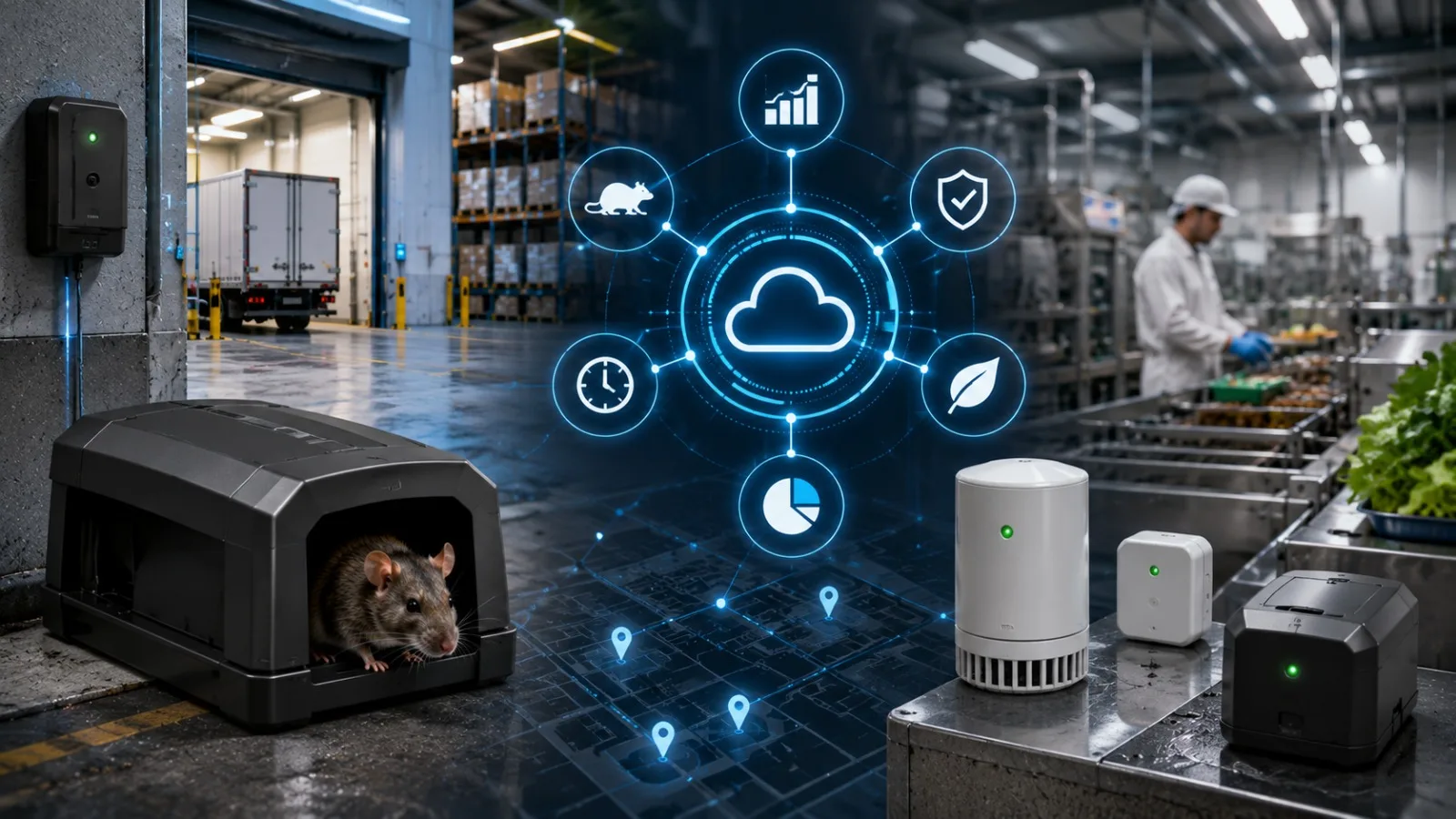
Anticimex 3D Sanidad Ambiental & WiseCon are connected through an important development in the pest-control industry: the shift from conventional inspections and treatments towards technology-supported monitoring and preventive services. Anticimex is an international pest-control and environmental hygiene group, while WiseCon was a Danish technology company specialising in electronic rodent traps and monitoring systems. Their relationship became particularly significant when Anticimex acquired WiseCon and incorporated its expertise into the group’s digital pest-control development.
The phrase Anticimex 3D Sanidad Ambiental & WiseCon Estrategia de Plataforma brings together several related subjects, including the Spanish Anticimex business, WiseCon’s technology, Anticimex SMART, and the company’s wider operating strategy. However, it is important to understand that this phrase does not identify a separately documented software product or a formally named joint platform. Instead, it provides a useful way to examine how corporate acquisitions, connected pest-control technology, and local service operations fit within Anticimex’s wider business model.
This guide explores the documented relationship between Anticimex and WiseCon, the development of digital pest management, the company’s platform-based operating structure, and its activities in Spain. It also explains how monitoring technology can support environmental hygiene services, why professional technicians remain essential, and what businesses should understand before choosing a digital pest-control solution.
What Is Anticimex 3D Sanidad Ambiental?
Anticimex 3D Sanidad Ambiental, S.A.U. is the Spanish legal business name used by Anticimex’s Spanish operation. It belongs to the wider Anticimex group, an international organisation specialising in pest control and related environmental services. The Spanish company provides services associated with pest prevention, pest management, environmental hygiene, and disinfection for different types of customers. Its activities form part of a broader business model that combines local service expertise with group-level technology and operational resources.
The term sanidad ambiental is commonly translated as environmental health or environmental hygiene. In the context of pest management, it relates to maintaining environments in which pests and other hygiene-related risks are properly identified and controlled. Services can involve inspections, prevention programmes, monitoring, treatment, and recommendations for improving conditions that encourage pest activity. The exact services required depend on the building, industry, pest type, and applicable regulations.
The word 3D appears in the company’s legal name, but it should not automatically be interpreted as referring to three-dimensional imaging, virtual reality, or a separate digital platform. In the Spanish pest-control sector, related terminology is often associated with disinfection, disinsection, and deratisation services. Nevertheless, the company’s current identity and service descriptions should be taken from its official documentation rather than assumptions based on the letters in its name.
According to its official legal notice, the company’s registered name is ANTICIMEX 3D SANIDAD AMBIENTAL, SAU, and its registered office is in Sant Cugat del Vallès, Barcelona. Its Spanish website describes the business as a specialist in pest control, environmental hygiene, and disinfection. Readers can consult the official Anticimex Spain website for current information about its services and local operations.
What Was WiseCon and Why Is It Important to Anticimex?
WiseCon was a Danish technology company known for developing electronic rodent traps and monitoring systems. Its work focused on using electronic equipment to identify and manage rodent activity, particularly in locations where conventional monitoring could require frequent physical inspections. These capabilities were relevant to commercial buildings, warehouses, sewer systems, and other environments where pest activity can create operational or hygiene concerns.
Anticimex had an existing relationship with WiseCon before the acquisition was completed. On January 28, 2015, Anticimex announced that it had acquired a 20% shareholding in WiseCon A/S. The announcement described the investment as an important step in the company’s strategy to expand digital pest-control services and develop electronic monitoring solutions for its international customer base.
The relationship became closer on April 26, 2017, when Anticimex announced the acquisition of the remaining 80% of WiseCon. The company also announced the establishment of an Innovation Center for Digital Pest Control, bringing together relevant technology and development capabilities. This transaction is the clearest documented connection between WiseCon and Anticimex’s digital transformation strategy.
The acquisition mattered because it gave Anticimex greater access to specialist technology expertise that could be developed within an established international service organisation. WiseCon’s experience with electronic rodent-control devices supported the development of Anticimex SMART, a digital pest-control concept that had already been launched in 2014. The acquisition therefore connected an existing technology partnership with a broader plan for product development, service improvement, and international expansion.
Readers can verify the ownership timeline through the original 2015 WiseCon investment announcement and the 2017 acquisition of WiseCon. These primary sources are particularly important because they explain the actual business relationship rather than relying on repeated descriptions from unrelated websites.
Anticimex 3D Sanidad Ambiental and WiseCon Platform Strategy Explained
The platform strategy associated with Anticimex and WiseCon is best understood as a combination of technology development and business organisation. On the technology side, WiseCon’s expertise helped strengthen the development of connected pest-control devices and digital monitoring services. On the business side, Anticimex uses a wider operating model involving local branches, country-level platforms, acquisitions, and shared group resources.
These two elements support each other, but they are not the same thing. A digital platform can connect monitoring devices, collect information, and support service decisions, while a business platform organises companies, employees, branches, and management responsibilities. Describing the entire Anticimex strategy as a single WiseCon software product would therefore oversimplify the documented relationship.
Anticimex explains its wider business model through a decentralised branch structure. Local branches retain knowledge of their customers and markets, while the group supports areas such as technology development, service quality, acquisitions, and the sharing of operational practices. This approach allows the organisation to expand while keeping local service delivery important to its operations.
The company’s stated strategy also includes improving service quality and efficiency, developing pricing models, expanding SMART services, and continuing growth through acquisitions. These priorities show that its platform approach is not based on technology alone. It combines operational management, customer relationships, digital development, and business expansion.
For a broader explanation of this model, see Anticimex’s official vision, strategy, and business model. This source provides a more reliable basis for understanding the company’s platform strategy than articles that present the phrase as the name of a standalone product.
What Is Anticimex SMART Digital Pest Control?
Anticimex SMART is the group’s digital pest-control offering, developed through the technology and research capabilities associated with the Anticimex Innovation Center. The concept combines connected monitoring devices, biological knowledge, digital information, and professional pest-control services. Its purpose is to help customers identify pest activity, monitor selected areas, and support appropriate action based on information gathered from installed devices.
Traditional pest-control programmes often depend on technicians visiting a property at scheduled intervals. During these visits, professionals inspect monitoring points, look for signs of pest activity, and document relevant findings. Digital monitoring can add another layer by allowing connected devices to report activity between physical visits, providing the service team with additional information about selected locations.
The SMART approach does not mean that every pest problem can be identified or resolved automatically. A device can report activity, but a technician may still need to inspect the location, identify contributing conditions, and decide what response is appropriate. Depending on the site, this may involve changing monitoring arrangements, improving sanitation, closing access points, or applying a suitable treatment.
Anticimex describes SMART as a combination of digital technology and service experience rather than simply a collection of electronic traps. Its official Anticimex SMART page explains the monitoring process, device categories, installation approach, and role of professional service teams. This is the best starting point for readers who want to understand the current Spanish offering.
How Anticimex SMART Works: From Site Assessment to Monitoring
The first stage of a digital pest-control programme is a site assessment. Before installing equipment, the service provider needs to understand the building layout, business activities, potential pest entry points, and locations where pest activity could create a problem. A food-storage facility, restaurant, warehouse, hotel, and residential property can have very different monitoring requirements, so the plan should reflect the actual environment.
After the assessment, suitable monitoring devices and traps can be selected and positioned in relevant locations. Their placement depends on the pest being monitored, the structure of the premises, and the purpose of the service. An effective plan considers areas such as storage rooms, service corridors, loading zones, drainage points, and other locations where activity may need attention.
Once the equipment has been installed and connected, it can transmit relevant information to the digital monitoring system. Depending on the device, this information may indicate that activity has occurred at a particular monitoring point. The service team can then review the available information and determine whether an inspection or other action is required.
The process continues through professional monitoring and service visits. Technicians may inspect devices, verify reported activity, maintain equipment, and recommend measures to address conditions that could encourage pest problems. Digital information supports these activities, but the final response still depends on professional assessment and the requirements of the customer.
1. Continuous Monitoring Improves Visibility of Pest Activity
One of the main advantages of connected pest-control equipment is that it can provide information between scheduled inspections. In a conventional monitoring programme, a technician may visit a property monthly or quarterly, depending on the contract and site requirements. These visits provide useful observations, but they cannot always show what happened at every monitoring point during the entire period between visits.
Connected devices can help address this limitation by reporting relevant activity when it occurs. When an installed monitoring point detects an event, information can become available to the service team without waiting for the next routine inspection. This may help professionals identify locations that need attention earlier, although the actual reporting capability depends on the equipment and installation.
For businesses with large or complex premises, additional visibility can make pest-management planning more informed. A warehouse, food-processing facility, or distribution centre may contain several areas that are difficult to inspect frequently. Digital monitoring can provide another source of information about selected points, helping service teams decide where to focus their attention.
However, continuous monitoring should not be confused with complete surveillance of every part of a building. A device only provides information about the area and activity it is designed to monitor. The absence of an alert does not prove that a property is free from pests, which is why monitoring should remain part of a wider inspection and prevention programme.
2. Digital Alerts Can Support Faster and More Targeted Responses
In pest management, the timing of a response can influence how easily an issue is controlled. A small problem may become more difficult to manage if activity continues unnoticed, particularly in buildings where food, waste, water, or suitable nesting conditions are available. Digital monitoring can help service teams become aware of reported activity without relying exclusively on the next scheduled inspection.
When an alert is received, technicians can review the location and decide what action may be needed. This could involve visiting a monitoring point, checking the surrounding environment, inspecting nearby access routes, or assessing whether additional control measures are appropriate. The information may also help the service provider prepare for a visit by identifying the equipment or area that requires attention.
Targeted responses can be useful in large premises where checking every monitoring point during every visit may not be practical. Instead, the team can combine planned inspections with information from connected devices to prioritise locations. This does not mean routine checks should be removed, because certain environments and contracts require scheduled service activities regardless of whether an alert has been reported.
The actual response time depends on the service agreement, the type of alert, operating hours, and the customer’s requirements. Businesses should therefore confirm response arrangements directly with their provider rather than assuming that every connected system automatically guarantees immediate technician attendance.
3. Digital Documentation Supports Business Reporting
Documentation is an important part of pest management, particularly for organisations that operate in regulated or hygiene-sensitive environments. Food businesses, hospitality companies, warehouses, healthcare facilities, and manufacturers may need records of inspections, monitoring results, treatments, and corrective actions. A structured digital system can help organise this information and make relevant records easier to review.
Anticimex’s digital approach includes the collection and analysis of information from its SMART services. Monitoring records can help show where activity was reported and which locations required attention. When combined with technician observations and service reports, these records may provide a clearer picture of the property’s pest-management history.
Digital reporting can also improve communication between a service provider and its customer. Managers may be able to review relevant information, discuss recurring issues, and understand why a particular location requires additional attention. This can be useful when a business has several premises or needs to coordinate pest-management responsibilities across different departments.
However, digital reports do not automatically establish compliance with every industry standard or legal requirement. Recordkeeping obligations vary by country, sector, and type of facility. Customers should confirm which documentation they need and ensure that the service provider’s reporting process supports their specific audit and compliance responsibilities.
4. Preventive Pest Management Can Reduce the Risk of Larger Infestations
A preventive pest-control strategy focuses on identifying potential problems before they become difficult to manage. Pest activity is influenced by several environmental factors, including access points, food availability, water, waste handling, building conditions, and the surrounding area. A monitoring device can provide useful information, but effective prevention also requires understanding and addressing the conditions that attract pests.
Anticimex describes preventive pest control as a central part of its business strategy. Its approach focuses on preventing pest occurrence where possible and using early treatment methods to limit damage when activity is identified. Digital monitoring can support this model by providing information that helps service teams investigate potential problems and make more informed decisions.
For example, recurring activity in a particular area may indicate that an access point, storage practice, or sanitation issue needs further attention. A technician can assess the conditions and recommend practical improvements rather than focusing only on the immediate pest problem. Depending on the situation, this may include better waste management, repairs, changes to food storage, or adjustments to the monitoring plan.
Prevention does not guarantee that pests will never enter a building. It reduces risk through a combination of monitoring, inspection, maintenance, and suitable control measures. Businesses should view digital pest control as one part of an ongoing environmental management programme rather than a substitute for good housekeeping and professional service.
5. The Platform Can Support Different Commercial Sectors
Pest-management requirements are not identical across industries. A food manufacturer may need to monitor production areas, storage rooms, loading zones, and waste-handling locations. A hotel may have different priorities involving kitchens, guest facilities, service areas, and building maintenance. Offices, schools, warehouses, and residential properties also have their own patterns of use and environmental risks.
A digital monitoring programme can be planned around the specific needs of a site. The type of device, its location, and the information collected should reflect the pest risks and operational conditions of the premises. This flexibility is important because one standard installation layout cannot be expected to work equally well in every building or industry.
For businesses operating across multiple locations, a consistent service framework can also make management easier. A central organisation may need to understand how pest-control activities are being carried out at different sites while allowing local technicians to respond to individual conditions. Digital information can support communication, but the programme must still account for local regulations, building design, and customer requirements.
Anticimex’s Spanish operation provides information about services for both businesses and residential customers. Its website describes pest-control, hygiene, and disinfection services, with solutions adapted to different customer needs. Businesses considering a digital programme should discuss the exact equipment, service scope, reporting arrangements, and monitoring locations before making a decision.
6. Human Expertise Remains Essential Alongside Digital Technology
Digital pest-control systems can collect and transmit information, but they do not replace the knowledge and judgement of trained technicians. A monitoring alert may identify activity at a particular location, but it does not necessarily explain why the pest is present, how extensive the problem is, or which corrective measure will be most effective. These questions require an understanding of pest behaviour, building conditions, sanitation, and appropriate control methods.
Technicians can investigate the location, check surrounding areas, and determine whether the reported activity is part of a larger issue. They may also identify structural problems, poor waste management, or other conditions that contribute to pest activity. Their assessment helps turn monitoring information into practical recommendations and appropriate service actions.
This combination of technology and professional expertise is a central feature of the Anticimex SMART approach. Connected devices can improve visibility and provide additional records, while technicians remain responsible for inspection, maintenance, and suitable interventions. The technology supports their work rather than making professional knowledge unnecessary.
Businesses should therefore evaluate digital pest-control services by considering both the equipment and the service team behind it. A technically advanced device is not enough if the monitoring plan is poorly designed or alerts are not reviewed properly. Effective pest management requires a clear process for interpreting information and taking appropriate action.
7. The Anticimex Innovation Center Supports Product Development
The Anticimex Innovation Center is one of the most important parts of the company’s connection with WiseCon. Anticimex identifies the centre as the organisation formerly known as WiseCon and describes it as a research and development hub for digital pest-control solutions. The centre was established in 2008 in Helsinge, Denmark, and became part of the group’s technology structure following the WiseCon acquisition.
The centre’s work includes the development and refinement of digital devices, engineering, and group digital services. These activities are important because pest-control technology must function in real operating environments, not simply in controlled demonstrations. Equipment needs to be suitable for installation, monitoring, maintenance, and use by service professionals across different types of customer premises.
Anticimex explains that the Innovation Center combines technology, biological knowledge, and service experience. This combination matters because pest-control products need to reflect the behaviour of the pests they are designed to monitor, as well as the practical conditions in which customers operate. The development process therefore involves more than building an electronic device or creating a digital reporting interface.
The company’s official Anticimex Innovation Center page provides details about the centre’s history, development teams, and role in SMART solutions. It is also the most appropriate source for claims about the relationship between the former WiseCon organisation and Anticimex’s current research and development activities.
How Anticimex’s Acquisition Strategy Supports Its Business Platform
Anticimex has grown through a combination of organic expansion, digitalisation, and acquisitions. The company describes the pest-control market as fragmented, with many local and regional service providers operating in different markets. Acquisitions can allow a larger group to expand its geographical presence, add customer relationships, and bring local expertise into a wider organisation.
The company’s operating model places importance on local branches and their understanding of customers. Branch managers and local teams can respond to the needs of businesses and communities in their areas, while group-level functions support technology development, operational practices, and wider strategic decisions. This structure allows Anticimex to combine local service delivery with shared resources.
The WiseCon acquisition represents a different type of strategic investment from purchasing a local pest-control business. Rather than primarily adding a new geographical service operation, it strengthened the group’s technology and product development capabilities. This shows how acquisitions can support different parts of a business platform, including regional expansion, specialist expertise, and innovation.
Anticimex’s corporate history documents its expansion through acquisitions and the role of WiseCon in the development of the Innovation Center. This history helps explain why the company’s platform strategy should be viewed as a wider business model rather than a single software system.
Anticimex 3D Sanidad Ambiental’s Operations in Spain
Spain is an important market within the wider Anticimex group. The Spanish operation provides pest-control and environmental hygiene services to commercial and residential customers, with local teams supporting service delivery across the country. Its website describes services involving pest prevention, control, and disinfection, while also highlighting its digital SMART offering.
The company’s growth in Spain has included acquisitions and expansion into additional locations. In a company announcement about its 2025 performance, Anticimex Spain reported revenue of €85 million, representing an 18% increase compared with the previous year. The same announcement reported 44 territorial branches, a workforce of 1,050 people, and five acquisitions during 2025.
These are company-reported figures and should be understood in that context. They provide a snapshot of the Spanish operation’s reported scale for 2025, not a guarantee of future performance or a complete measure of the wider group’s financial results. The company’s announcement also described its plans for further growth, but future targets should not be confused with achieved results.
The figures illustrate how the Spanish business combines local service capacity with a wider expansion strategy. Additional branches and acquisitions can increase geographical coverage, while digital tools may support monitoring and service coordination. For current corporate information, readers can consult the official Anticimex Spain business update.
The Role of Digital Pest Control in Environmental Hygiene
Environmental hygiene involves more than responding to visible pest activity. Buildings and commercial environments need suitable sanitation, waste management, maintenance, and monitoring practices to reduce conditions that may encourage pests. These measures are particularly important in food-related operations, hospitality, storage facilities, and other environments where pest activity can affect hygiene or business operations.
Digital monitoring can support environmental hygiene by providing information about selected locations. When activity is reported, service teams can investigate whether the problem is linked to access points, waste areas, storage conditions, or other environmental factors. The information may help customers understand where additional attention is needed, but it does not replace broader hygiene inspections or maintenance programmes.
Anticimex’s Spanish sustainability information describes the use of SMART technology to monitor selected points and support decisions based on data. The company also discusses alternatives to certain biocide-based traps, with mechanical devices supervised digitally where suitable. This is part of its stated approach to reducing the use of biocides when conditions allow, rather than a claim that chemical treatments are never needed.
The company’s sustainability and environmental strategy information explains how monitoring, detection, analysis, and action fit into its approach. This is useful for understanding the relationship between digital pest control and wider environmental hygiene services.
Environmental Benefits and the Responsible Use of Pest-Control Methods
Pest-control decisions can involve different methods, including monitoring, physical traps, exclusion, sanitation improvements, and chemical treatments where necessary. The appropriate method depends on the pest, the environment, the extent of activity, and applicable safety requirements. A responsible programme considers how to control the problem while using suitable methods for the specific location.
Anticimex describes SMART as using digital monitoring and mechanical traps that can avoid the use of biocides in certain applications. This can support a more targeted approach by providing information about activity and helping technicians decide where intervention is needed. However, it would be inaccurate to claim that every pest problem can be resolved without chemicals or that all Anticimex services are always chemical-free.
The company’s sustainability approach refers to reducing the use of biocides and prioritising lower-impact alternatives when the circumstances allow. When a treatment involving biocides is necessary, the product and method should be selected according to the pest problem and relevant requirements. This distinction is important because responsible pest management is about choosing an effective and appropriate solution, not making absolute claims about eliminating every treatment method.
Customers should ask service providers which methods will be used, whether monitoring devices are suitable for their premises, and what actions may be required if activity is detected. Clear communication helps businesses understand both the environmental considerations and the practical limitations of a digital pest-control programme.
What Businesses Should Consider Before Choosing a Digital Pest-Control Platform
A business considering digital pest management should begin by identifying its actual pest-control requirements. The type of premises, the products or materials handled, the building layout, and the consequences of pest activity all influence the monitoring plan. A solution that works for a warehouse may not be suitable for a restaurant, hotel, healthcare facility, or residential building without adjustments.
The next consideration is the type of equipment and monitoring coverage available. Businesses should ask which pests can be monitored, where devices will be installed, how alerts are generated, and what information will be included in reports. They should also understand how equipment is maintained and what happens if a device becomes disconnected or stops functioning.
Service arrangements are equally important. Customers should confirm whether the programme includes routine inspections, alert-based visits, equipment maintenance, corrective recommendations, and emergency response. The service agreement should explain responsibilities clearly, including what the customer needs to do to maintain suitable hygiene and building conditions.
Finally, businesses should evaluate the complete cost rather than focusing only on the price of the devices. Installation, monitoring, service visits, reporting, maintenance, and any additional treatments may affect the total cost. A provider should explain which services are included and how the programme can be adjusted if the customer’s requirements change.
Limitations of Digital Pest-Control Systems
Digital monitoring offers useful capabilities, but it also has limitations that customers should understand. A connected device can only report activity within the area it is designed to monitor, so incorrect placement may reduce the usefulness of the information. Buildings also change over time, and renovations, new storage arrangements, or operational changes may require the monitoring plan to be reviewed.
Connectivity and equipment maintenance are other practical considerations. A device that is damaged, disconnected, or not functioning correctly may not provide the expected information. Service providers therefore need procedures for checking equipment, maintaining connections, and responding to technical problems. Customers should ask how these situations are handled before agreeing to a digital monitoring programme.
Another limitation is that an alert does not always explain the cause or extent of a pest problem. A technician may need to inspect the surrounding area, check for entry points, and identify environmental conditions that encourage activity. Digital information can guide this investigation, but it cannot replace a complete assessment of the premises.
The most realistic way to evaluate digital pest control is to treat it as a support system within professional pest management. It can improve visibility and documentation, but its value depends on suitable installation, accurate information, trained technicians, and a clear response process. Businesses that understand these limitations are more likely to choose a solution that fits their actual needs.
Anticimex and WiseCon: What the Relationship Means for the Future of Pest Control
The relationship between Anticimex and WiseCon reflects a wider development in the pest-control industry. Traditional service methods remain important, but connected devices and digital monitoring are creating additional ways to understand pest activity. Companies can combine monitoring information with professional inspections and preventive measures to support more informed decisions.
For Anticimex, the WiseCon acquisition strengthened its technology development capabilities and supported the growth of SMART services. The Innovation Center provides a structure for developing products and digital solutions, while the wider business platform supports local service delivery and international expansion. This combination helps explain why the acquisition was strategically important beyond the purchase of a technology company.
The Spanish operation demonstrates how a local business can form part of this wider structure. It provides services in its own market while belonging to an international group with shared technology and development capabilities. Its growth, acquisitions, and digital services show how local operations and group-level strategy can work together, although specific service arrangements still depend on the needs of individual customers.
The future development of digital pest management will depend on reliable technology, appropriate data use, professional expertise, and the ability to provide practical value to customers. Monitoring devices alone cannot solve every environmental or pest-related problem. The strongest approach is one that combines useful technology with good inspection practices, responsible treatment choices, and continuous improvement.
Frequently Asked Questions About Anticimex 3D Sanidad Ambiental and WiseCon
1. What is Anticimex 3D Sanidad Ambiental?
Anticimex 3D Sanidad Ambiental, S.A.U. is the Spanish legal entity associated with Anticimex’s pest-control and environmental hygiene operations in Spain. The company provides services involving pest prevention, control, and disinfection for different types of customers. It is part of the wider Anticimex group, which operates internationally and offers technology-supported pest-management services.
2. What is the connection between Anticimex and WiseCon?
Anticimex acquired an initial 20% shareholding in WiseCon in January 2015 and acquired the remaining 80% in April 2017. WiseCon was a Danish technology company specialising in electronic rodent traps and monitoring systems. Its expertise contributed to the development of Anticimex’s digital pest-control offering and the establishment of the Anticimex Innovation Center.
3. What does WiseCon Estrategia de Plataforma mean?
The phrase refers to the relationship between WiseCon’s technology, Anticimex’s digital pest-control development, and the company’s wider business strategy. It should not be treated as the official name of a separately documented WiseCon software platform. The more accurate explanation is that WiseCon’s technology became part of Anticimex’s wider digital and operational development.
4. What is Anticimex SMART?
Anticimex SMART is a digital pest-control service that combines connected monitoring devices, digital information, and professional pest-management support. It can help identify activity at selected monitoring points and provide information for technicians to review. The system supports prevention and monitoring, but it does not remove the need for professional inspections and suitable corrective actions.
5. Is Anticimex SMART based on WiseCon technology?
Anticimex’s 2017 acquisition announcement states that its SMART concept was based on WiseCon technology. The company acquired WiseCon to strengthen its digital pest-control capabilities and combined the relevant expertise through its Innovation Center. This provides a documented connection between the acquisition and the development of SMART services.
6. What is the Anticimex Innovation Center?
The Anticimex Innovation Center is the group’s research and development hub associated with digital pest-control solutions. Anticimex identifies it as formerly WiseCon and states that it was established in 2008 in Helsinge, Denmark. Its activities include developing and refining SMART devices and digital services.
7. Does Anticimex SMART monitor pests around the clock?
Anticimex describes SMART as a digital monitoring service designed to provide continuous monitoring of selected locations. The actual monitoring coverage depends on the devices installed, their configuration, and the service arrangement. It should not be interpreted as complete surveillance of every part of a building.
8. Does digital pest control eliminate the need for technicians?
No. Digital systems provide information, but trained professionals still need to interpret alerts, inspect premises, maintain equipment, and decide which control measures are appropriate. Technology supports the work of technicians rather than replacing their knowledge and practical experience.
9. Is Anticimex SMART completely chemical-free?
Anticimex describes SMART devices and certain mechanical traps as alternatives that can avoid the use of biocides in suitable applications. However, the wider service may still involve chemical treatments when required by the situation. It is more accurate to describe SMART as supporting reduced or alternative biocide use in selected applications than to claim that every service is completely chemical-free.
10. What services does Anticimex Spain provide?
Anticimex Spain describes services involving pest control, environmental hygiene, and disinfection. Its service information covers residential and commercial customers, with solutions adapted to different environments and pest-related requirements. Customers should consult the official Spanish website for current service availability and details.
11. What is Anticimex’s platform strategy?
Anticimex’s platform strategy includes a decentralised branch-based operating model, local management, shared group support, technology development, and growth through acquisitions. The structure allows local operations to understand their markets while benefiting from wider resources and digital services. It is a business operating model rather than simply a software platform.
12. Why did Anticimex acquire WiseCon?
Anticimex acquired WiseCon to strengthen its digital pest-control capabilities and gain access to specialist electronic monitoring technology. The company described the investment as part of its strategy to expand SMART services and develop digital solutions for different pest-control applications. The acquisition also supported the establishment of the Anticimex Innovation Center.
13. Where is the Anticimex Innovation Center located?
Anticimex identifies its Innovation Center as being in Helsinge, Denmark, north of Copenhagen. The centre was established in 2008 under the WiseCon name and became part of Anticimex following the acquisition. Its work focuses on digital pest-control products, research, and technology development.
14. Does Anticimex operate throughout Spain?
Anticimex Spain states that it provides pest-control services across Spain through its territorial operations. Its geographical coverage includes mainland Spain and the Balearic and Canary Islands. Customers should contact the company directly to confirm the availability of a specific service in their location.
15. Is Anticimex 3D Sanidad Ambiental the same company as WiseCon?
No. Anticimex 3D Sanidad Ambiental is the Spanish legal entity within the Anticimex group, whereas WiseCon was a Danish technology company acquired by Anticimex. Their relationship comes from Anticimex’s acquisition and integration of WiseCon’s technology expertise into its wider digital pest-control development.
Final Thoughts
Anticimex 3D Sanidad Ambiental and WiseCon are connected through a documented business relationship that contributed to the development of digital pest control within the Anticimex group. The acquisition began with a 20% investment in WiseCon in 2015 and was completed in 2017, when Anticimex acquired the remaining shares and established its Innovation Center for Digital Pest Control. This history provides a clear explanation of how specialist technology expertise became part of a larger international service organisation.
The WiseCon connection is particularly important because it supported the development of Anticimex SMART, a digital pest-control offering that combines connected monitoring devices, information, and professional service. Its purpose is to help identify activity at selected locations and support more informed decisions about prevention, inspection, and treatment. It does not eliminate the need for technicians, sanitation improvements, or conventional pest-control methods when they are required.
The wider Anticimex platform strategy extends beyond the technology itself. It includes local branches, country-level operations, acquisitions, shared resources, and continued investment in digital services. Anticimex 3D Sanidad Ambiental represents the Spanish side of this wider organisation, while the former WiseCon technology and Innovation Center support the group’s product development capabilities.
Ultimately, the Anticimex and WiseCon relationship illustrates how a traditional service industry can develop through a combination of technology, acquisitions, and professional expertise. Understanding the difference between the digital pest-control system and the corporate platform model provides a more accurate picture of the company’s strategy. For businesses considering digital pest management, the most important factors remain the suitability of the equipment, the quality of monitoring, the experience of the service team, and the ability to turn reliable information into practical action.
For more company explainers and industry developments, explore Zents Magazine’s Business section and its Technology coverage.



One thought on “Anticimex 3D Sanidad Ambiental & WiseCon: Platform Strategy Explained”