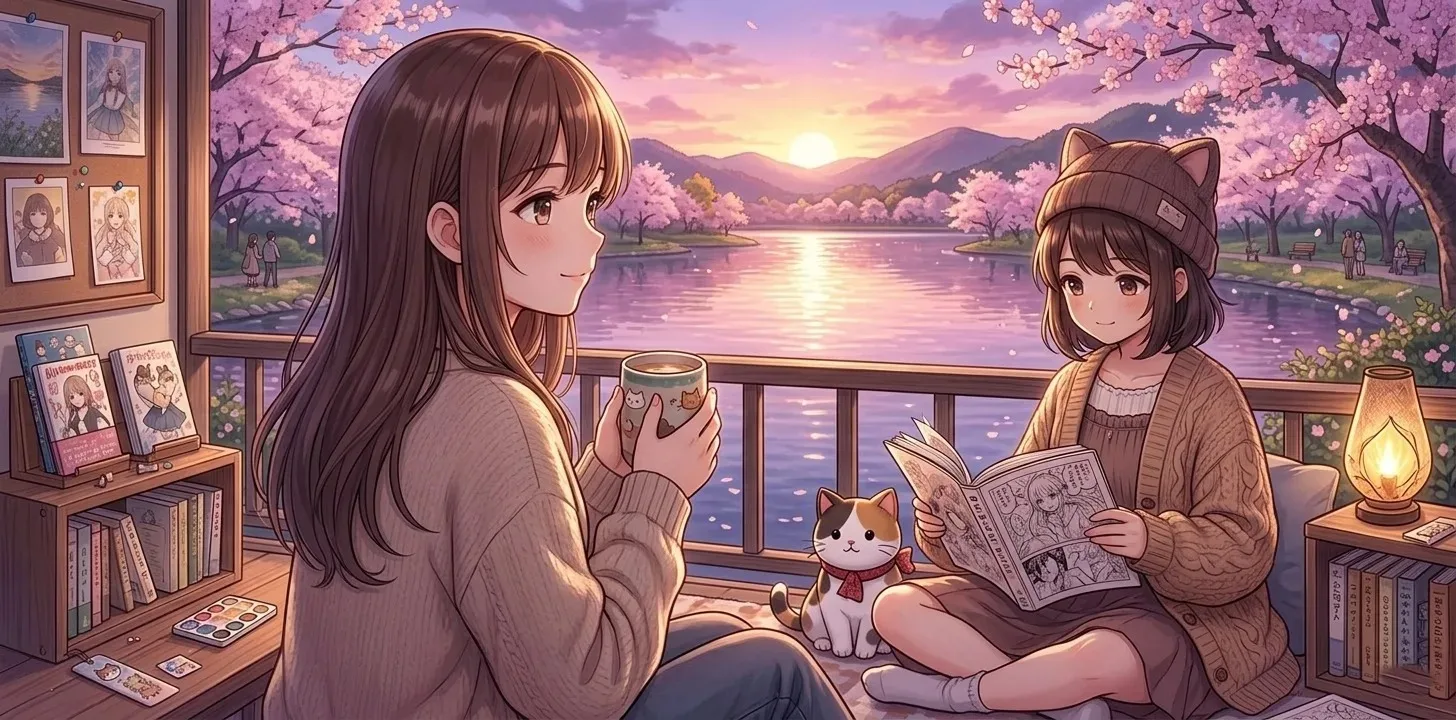
Japanese manga and anime culture includes far more than commercially published comics and professionally produced animation. Across Japan and international fan communities, independent artists, writers, illustrators, and creators produce their own stories, characters, artwork, and publications. Much of this creative activity is connected with the concept of doujinshi, a form of self-published work that gives creators opportunities to share ideas outside conventional publishing channels.
Another important term in anime and manga discussions is moe. It describes an emotional response of affection or attachment that a fictional character may inspire in an audience. Although the word is sometimes associated with cute character designs, its meaning goes beyond physical appearance. Personality, behaviour, vulnerability, relationships, and storytelling can all influence how audiences respond to fictional characters.
Doujinshi and moe are related through Japanese fan culture, but they do not mean the same thing. Doujinshi describes a form of independent creative publishing, while moe describes a particular kind of emotional response to fictional characters. Understanding this distinction makes it easier to explore their history, artistic qualities, and influence on modern manga and anime communities.
This guide explains what doujinshi and moe mean, how they developed, where the two concepts overlap, and what readers should understand about independent fan-created publications.
What Is Doujinshi?
Doujinshi (同人誌) is a Japanese term commonly used for independently published creative works. The word originally referred to publications produced by people who shared similar interests, ideas, or creative goals. Today, it is widely associated with independently produced manga, comics, illustrations, novels, and other forms of fan and original creative work.
Although manga is one of the best-known forms of doujinshi, the term is not limited to comics. Independent writers may publish short stories, criticism, research, essays, and collections of original writing. Creators may also produce independent games, music, and other media as part of the wider doujin creative culture.
The Japanese Ministry of Economy, Trade and Industry has explored the history of doujinshi and Comic Market through its cultural presentation on Google Arts & Culture. It explains how the practice developed from group publications into a wider form of individual and community-based self-expression. You can read its overview of dōjinshi and the Comic Market for additional historical context.
The Meaning Behind the Word Doujinshi
The word combines two Japanese elements. Doujin refers to people who share common interests or belong to the same creative circle, while shi is associated with a publication or magazine. Together, the term describes a publication created by people connected through a shared interest or creative purpose.
Historically, a group of people might work together to prepare and distribute a publication. As printing technology became more accessible, individual creators increasingly gained the ability to publish their own work. This development helped expand the range of material associated with doujinshi.
Today, an independent artist may create an entire comic without belonging to a large publishing company. Another creator may collaborate with friends to produce an illustrated collection, a fictional story, or a fan publication. Both examples can fit within the broader doujinshi culture.
Is Doujinshi Always Fan-Made Manga?
No. This is one of the most common misunderstandings about the term. Some doujinshi use characters or settings from existing anime, manga, games, and other fictional works, but others feature completely original characters and stories.
For example, an artist might create a comic based on a popular anime series as a personal fan project. Another writer might publish an original fantasy story with characters and a setting that have never appeared in a commercial franchise. Both can be examples of independent creative publishing.
Doujinshi can also include reviews, commentary, experimental storytelling, and artistic collections. The important characteristic is the independent publishing context rather than one particular genre, art style, or subject.
What Is Moe in Japanese Anime and Manga Culture?
Moe (萌え) is a Japanese pop-culture term used to describe an affectionate emotional response to a fictional character. It is commonly discussed in anime, manga, video games, and related fan communities.
The feeling can develop because of a character’s personality, behaviour, appearance, relationships, or memorable moments. A character may appear shy, thoughtful, determined, awkward, kind, or emotionally vulnerable. These characteristics can encourage audiences to feel affection or a strong personal connection.
Moe does not have one universally accepted definition. Researchers have discussed the difficulty of explaining it through a single English word because its meaning can vary across audiences and cultural contexts. In his academic article, Beyond Maids and Meganekko: Examining the Moe Phenomenon, Michael R. Bowman examines how moe functions within anime and manga fandom.
Moe Is More Than Just Cuteness
Moe is often confused with kawaii, the Japanese concept associated with cuteness and charm. Although the two ideas can overlap, they describe different things.
Kawaii generally relates to something perceived as cute, charming, or visually appealing. Moe is more concerned with the emotional response a fictional character creates in an individual. A character can have a cute appearance without necessarily inspiring a strong moe response.
For example, an audience member might become emotionally attached to a character because of their determination during a difficult situation. Another person may appreciate a character’s quiet personality or kindness toward others. These reactions depend on the viewer’s preferences and experiences.
This means that moe cannot be identified through a fixed checklist of physical features. A character’s design may contribute to the response, but the emotional connection is an important part of the concept.
Why Moe Can Be Difficult to Translate
Some Japanese cultural terms do not have exact English equivalents. Moe is one example because it combines ideas related to affection, admiration, emotional attachment, and character appeal.
Different audiences may use the word in slightly different ways. Some focus on a character’s personality, while others discuss visual design or the emotional atmosphere created by a particular scene.
Academic discussions also recognise that the concept is not always used consistently. Therefore, it is more accurate to describe moe as a cultural and emotional concept than to present it as a precise psychological category.
The History of Doujinshi in Japan
The development of doujinshi is closely connected to Japan’s wider publishing and fan culture. Independent creative publications existed before modern anime fandom became internationally recognised. Writers, artists, and people with shared interests used small publications to exchange ideas and present work outside major commercial channels.
As manga became increasingly popular, independent creators found new opportunities to share their illustrations and stories. Fan communities also began organising events where creators could meet readers directly, exchange publications, and build relationships with other artists.
The growth of these communities helped doujinshi become an important part of Japanese popular culture.
Early Independent Publishing
Before doujinshi became strongly associated with anime and manga fandom, the term was connected with literary and artistic groups. People with similar interests could contribute to shared publications, allowing them to distribute their work without depending entirely on established publishers.
These early creative communities were important because they provided space for experimental ideas. Writers and illustrators could explore subjects that might not have fitted the commercial publishing market.
The development of printing services gradually made independent publishing more accessible. Individuals and small groups could prepare their own material and distribute it to interested readers.
This created the foundation for the diverse doujinshi culture recognised today.
The Establishment of Comic Market
One of the most important events in doujinshi history is Comic Market, commonly known as Comiket. Its first event took place in Tokyo on December 21, 1975. It was established to provide independent creators with a place to share and distribute their publications.
The event became an important meeting point for artists, writers, manga fans, and other creative communities. Rather than functioning like a conventional commercial publishing exhibition, it focused on self-produced material and direct interaction between creators and audiences.
The official Comic Market website provides information about the event and its history. Its overseas attendee information also explains its purpose as a marketplace for independently produced books, music, films, software, and other creative works.
How Comiket Helped Independent Creators
Comiket gave creators an organised environment where they could present their work to people who were already interested in independent publications. Artists could distribute comics, receive feedback, meet other creators, and develop relationships within the wider community.
The event also helped make fan publishing more visible. As the number of participating creators and visitors increased, doujinshi became an increasingly recognised part of Japan’s manga and anime culture.
The development of specialist printing companies and independent distribution channels further supported the growth of this creative environment.
Doujinshi in the Digital Age
Digital technology changed how independent creators produce and share their work. Artists can now use illustration software, digital publishing tools, online portfolios, and social platforms to reach audiences beyond their local communities.
Some creators still prefer printed publications and physical events, while others distribute digital comics, illustrations, and stories. Many use a combination of both methods.
Online communities also make it easier for independent artists to receive feedback and find collaborators. However, digital distribution introduces additional considerations involving copyright, permissions, platform rules, and the ownership of creative material.
The basic principle of independent expression remains important, even as the tools and distribution methods continue to change.
How Did Moe Develop in Japanese Popular Culture?
Moe became increasingly visible in Japanese anime and manga discussions during the late twentieth century and gained wider attention around the turn of the millennium. Its development was connected with changing character designs, fan communities, animation trends, and the growing commercial visibility of anime-related merchandise.
However, identifying one exact starting date or a single creator responsible for the concept would be misleading. Academic researchers have noted that the term’s origins and precise meaning are difficult to establish.
Instead, moe is better understood as a cultural idea that developed through different forms of Japanese popular entertainment and audience participation.
The Role of Anime Characters
Anime characters are often designed with distinctive personalities, appearances, motivations, and emotional experiences. These characteristics can help viewers form connections with fictional individuals.
A character’s appeal may come from their kindness, humour, determination, uncertainty, or relationships with other characters. Small moments can sometimes create a stronger emotional response than dramatic events.
For example, a character who struggles with confidence but continues trying to achieve a goal may inspire affection among viewers. Another character may be appreciated for helping friends or showing compassion during difficult situations.
These examples demonstrate why moe cannot be reduced to one visual formula.
Character Relationships and Emotional Storytelling
Relationships are another important element of character appeal. A story may develop a character’s personality through friendships, family relationships, personal challenges, or everyday experiences.
When viewers understand a character’s motivations, they may become more emotionally invested in the story. This connection can continue beyond a single episode or chapter.
Some anime and manga place considerable attention on ordinary activities, personal development, and interpersonal relationships. These stories can provide an environment where audiences become familiar with characters over time.
Moe may be part of how fans describe the affection they develop toward those fictional personalities.
How Are Doujinshi and Moe Connected?
Doujinshi and moe are related because independent creators can explore character-focused storytelling without following all the commercial expectations of mainstream publishing. An artist may produce a short comic, illustration collection, or story that focuses on the qualities fans appreciate in a fictional character.
However, the relationship is not automatic. Not every doujinshi includes moe-related themes, and not every moe-focused work is a doujinshi.
The two concepts describe different aspects of creative culture. Doujinshi relates to how a work is produced and published, while moe relates to the emotional appeal of fictional characters.
Independent Creators Have More Creative Flexibility
Independent publishing can provide creators with opportunities to experiment with subjects, visual approaches, and storytelling formats. They may choose to explore a character’s daily life, develop an alternative storyline, or create an original fictional world.
This freedom does not mean that every independent publication is completely unrestricted. Creators still need to consider copyright law, platform policies, and the rights of other artists.
Nevertheless, independent publishing can provide more room for personal creative expression than some conventional commercial projects.
Character-Focused Stories
A doujinshi creator may choose to focus on a character’s personality rather than building a large action-driven storyline. The publication could explore friendships, humour, everyday activities, emotional challenges, or an alternative interpretation of an existing fictional world.
When readers already feel connected to the characters, these stories can provide a different way to engage with them.
The emotional appeal may be described as moe, depending on the subject and audience. This is one way the two concepts can overlap without becoming identical.
Original Works Can Also Include Moe
Moe is not restricted to fan-created publications. A professionally published manga, commercial anime, or original independent comic may feature characters who inspire the same emotional response.
Likewise, a doujinshi can contain original characters without relying on an established franchise. The publishing context and the emotional style are separate considerations.
Common Types of Doujinshi
Doujinshi covers a broad range of independent creative publications. The following categories are useful for understanding the variety of work found within this culture. They are descriptive examples rather than a complete or universally fixed classification system.
1. Fan-Made Manga
Fan-made manga uses characters, settings, or ideas inspired by existing fictional works. Creators may develop alternative stories, explore supporting characters, or imagine events that do not appear in the original series.
These publications can appeal to readers who want to explore a fictional world from a different perspective. However, the creator should consider the intellectual property rights associated with the original material.
2. Original Manga
Original doujinshi features characters and stories created independently by the artist or writing team. These publications may explore fantasy, science fiction, romance, mystery, comedy, or everyday life.
Original work allows creators to establish their own fictional worlds and storytelling approaches. It can also help independent artists build a portfolio and develop an audience.
3. Illustration Collections
Some creators produce collections of artwork instead of traditional comic narratives. These publications may include character illustrations, concept art, visual experiments, and themed collections.
An illustration collection can showcase an artist’s drawing skills and personal style. It may contain original designs or permitted fan-created interpretations.
4. Literary Doujinshi
Not all doujinshi is visual. Some publications focus on written material, including short fiction, essays, poetry, reviews, criticism, and research.
Literary doujinshi reflects the broader origins of independent publishing and demonstrates that the culture is not limited to manga or anime artwork.
5. Experimental and Collaborative Publications
Creators sometimes work together on themed collections or experimental publications. Different contributors may provide illustrations, stories, essays, or other material for one shared project.
These collaborations can bring together artists with different skills and perspectives. They also help independent creators build relationships within fan communities.
6. Games and Other Independent Media
The wider doujin creative environment includes independent games, music, and other media. These works may be distributed digitally or through specialist events and marketplaces.
Although not every independent game or music project is technically a doujinshi publication, it can belong to the broader doujin creative culture.
Common Moe Character Characteristics
Moe does not have a fixed character template. Different people respond to different personalities and storytelling details, so a character that inspires affection in one audience member may not create the same response in someone else.
Still, several qualities are frequently discussed in anime and manga communities when people describe characters they find emotionally appealing.
Kindness and Compassion
Characters who show kindness toward others may create a positive emotional connection with audiences. Their willingness to help friends, support family members, or show understanding can make them memorable.
These qualities can also contribute to character development by demonstrating how someone responds to difficult situations.
Shyness and Awkwardness
A shy or socially awkward character may be appealing because their behaviour feels recognisable or relatable. They might struggle to express their thoughts, become nervous in unfamiliar situations, or find it difficult to make new friends.
When these characteristics are developed thoughtfully, they can create moments of humour, vulnerability, and personal growth.
Determination and Courage
Moe is not limited to quiet or timid characters. A determined individual who continues working toward a goal can also inspire strong affection.
Audiences may appreciate a character who faces setbacks, learns from mistakes, and continues trying. This kind of development can make fictional personalities feel more meaningful.
Humour and Everyday Behaviour
Small habits and everyday interactions can contribute to a character’s appeal. A character may have an unusual hobby, a distinctive way of speaking, or a funny reaction to ordinary situations.
These details can make fictional personalities easier to remember. They may also encourage fans to create illustrations and independent stories focused on familiar character traits.
Emotional Vulnerability
A character’s struggles can sometimes encourage empathy. When a story shows someone dealing with uncertainty, loneliness, or personal challenges, audiences may become more invested in their experiences.
However, vulnerability is not a requirement for moe. The concept is broad, and its interpretation depends on the viewer and the surrounding cultural context.
Doujinshi vs. Fan Art vs. Fanfiction
These terms are often used together, but they do not describe exactly the same thing. Understanding the differences helps readers identify the type of creative work they are exploring.
Doujinshi refers to independently published material. It may include manga, written stories, illustration collections, and other publications created by individuals or groups.
Fan art generally describes artwork created by fans using characters, themes, or visual elements from existing media. It may be shared online, displayed in a portfolio, or included in a publication.
Fanfiction refers to stories written by fans using existing fictional characters or worlds. These stories may explore alternative events, relationships, character backgrounds, or different endings.
The categories can overlap. For example, an independently published doujinshi may contain fan art and fanfiction in comic form. However, fan art shared as a single online illustration is not automatically a doujinshi.
The distinction becomes clearer when the format and publishing method are considered separately from the subject matter.
Doujinshi and Moe vs. Kawaii
Kawaii and moe are sometimes used as if they mean the same thing, but they have different cultural meanings.
Kawaii is associated with cuteness, charm, and qualities that people find visually or emotionally appealing. It can describe characters, objects, clothing, illustrations, and many other things.
Moe is more closely connected with an affectionate emotional response to fictional characters. The feeling may develop through a character’s personality, behaviour, appearance, or story.
Doujinshi, meanwhile, describes independent publishing rather than a specific emotional or visual quality.
A simple comparison makes the distinction easier to understand:
| Term | General meaning | Main focus |
|---|---|---|
| Doujinshi | Independent or self-published creative work | Publishing and creator communities |
| Moe | Affectionate response to fictional characters | Emotional connection |
| Kawaii | Cuteness or charm | Appearance and perceived qualities |
| Fan art | Artwork created by fans | Artistic interpretation |
| Fanfiction | Stories written by fans | Fictional storytelling |
A single illustration can be kawaii, while a character in a dramatic story may inspire moe without having an especially cute appearance. Similarly, an independent doujinshi can use either approach or neither.
Where Do Fans Discover Doujinshi?
Doujinshi is shared through different channels, depending on the creator, publication format, and audience. Physical events remain important, while online platforms provide additional ways to present and distribute independent work.
Comic Market and Independent Events
Comiket is one of the best-known events associated with doujinshi. It provides a place where independent creators can display and distribute their publications directly to visitors.
Other specialist events and local conventions also support independent artists and fan communities. Their size, organisation, participation rules, and available publications can vary.
People planning to attend an event should consult its official website for current dates, venue information, entry requirements, and creator participation rules.
Online Art Communities
Digital art communities allow illustrators and writers to share their work with audiences around the world. Artists may upload illustrations, comic previews, character designs, and updates about upcoming publications.
Online platforms can also help creators find collaborators and receive feedback. However, users should review each platform’s terms, copyright rules, and content policies before sharing or downloading material.
Independent Creator Websites
Some artists maintain their own websites or online stores. These can provide information about their work, publication schedules, commissions, and available products.
Buying directly from a creator can help readers understand the source of a publication and support independent creative work. Always check that a website is genuine and that the seller provides clear information about payments and delivery.
Copyright and Responsible Doujinshi Creation
Copyright is an important subject in doujinshi culture, particularly when creators use characters, artwork, or fictional settings owned by other companies or individuals.
Independent publishing does not automatically grant permission to reproduce copyrighted material. A fan-created comic may be made for personal expression, but its legal position can depend on the content, jurisdiction, rights holder, and circumstances of distribution.
Japan has its own copyright framework, while creators publishing or selling work internationally may also need to consider the laws that apply in other countries.
Original Work and Copyright
Creators who develop their own characters, stories, and artwork generally have greater control over the material they produce, subject to applicable laws and agreements.
They should keep records of their creative work and review the terms of any platform or publisher they use. If they collaborate with other artists, written agreements can help clarify ownership and distribution rights.
Fan Works and Existing Characters
Fan-created works based on established franchises can involve additional copyright considerations. Some rights holders may tolerate or provide guidance for certain fan activities, while others may restrict particular uses.
Creators should not assume that a work is legally permitted simply because similar material is available online. Reviewing official fan-content policies and seeking appropriate legal advice may be necessary when commercial distribution is involved.
Responsible Reading and Sharing
Readers should use legitimate sources when purchasing or accessing independent publications. They should respect creators’ ownership, avoid redistributing paid work without permission, and follow the rules of the platforms they use.
It is also important to recognise that doujinshi includes material intended for different audiences. Some publications may contain mature or adult themes, while others are suitable for general readers. Users should check content labels and age restrictions before accessing a publication.
How to Explore Doujinshi and Moe as a Beginner
People new to Japanese fan culture may find the terminology confusing at first. A useful approach is to start with the basic concepts and explore different types of independent work gradually.
Begin With the Main Terms
Understand the difference between doujinshi, moe, kawaii, fan art, and fanfiction before exploring specific publications.
This makes it easier to recognise whether a website is discussing independent publishing, character design, emotional appeal, or fan-created stories.
Explore Original and Fan-Created Works
Try comparing an original independent comic with a fan-created publication. Notice how each creator approaches characters, storytelling, visual design, and themes.
This can help readers understand the creative range within doujinshi rather than assuming that every publication follows the same format.
Learn About Comiket
Reading about Comiket provides useful context for the development of independent publishing communities in Japan.
Its history shows how creators and readers built a space for sharing self-produced work outside conventional commercial channels. The event also demonstrates the importance of direct communication between artists and audiences.
Follow Artists Through Official Channels
If you discover an artist whose work you enjoy, look for their official website or verified social profile. This can help you find their latest projects and understand the conditions under which their work may be shared.
Avoid websites that distribute publications without permission or provide unclear information about their creators.
Respect Different Interpretations of Moe
Not every audience member responds to the same character traits. Some people appreciate humour, others prefer emotional storytelling, and some are drawn to particular visual designs.
Moe is a flexible cultural concept, so it is useful to approach it with an open mind rather than expecting every example to follow one definition.
The Influence of Doujinshi on Modern Anime and Manga Culture
Doujinshi has contributed to the development of a creative environment in which independent artists can experiment with storytelling and connect directly with audiences.
The culture provides opportunities for creators who may not have access to conventional publishing channels. It also allows established artists to explore personal projects and communicate with fans in different ways.
Supporting New Creative Voices
Independent publishing can help artists develop their skills and build a body of work. Some creators use small publications to test ideas, experiment with formats, and receive feedback.
This experience can contribute to their artistic development, although participating in doujinshi does not guarantee a professional career in manga or animation.
Encouraging Creative Experimentation
Independent creators may explore unusual subjects, alternative storytelling structures, and distinctive illustration styles. They can also produce short projects that would be difficult to develop through a conventional commercial process.
This flexibility makes doujinshi an interesting part of Japan’s broader creative environment.
Strengthening Fan Communities
Doujinshi events and online communities bring people together through shared interests. Visitors can meet creators, discover new work, exchange recommendations, and participate in discussions.
These interactions can make fandom more active by giving people opportunities to contribute creatively rather than only consuming commercially released material.
Connecting Local and International Audiences
Digital platforms have made independent creative work easier to discover outside Japan. International readers can follow artists, learn about publications, and participate in discussions across geographical boundaries.
However, translation, cultural context, copyright, and platform access can influence how material is shared internationally.
Frequently Asked Questions About Doujinshi and Moe
1. What does doujinshi mean?
Doujinshi refers to independently published creative work associated with people or groups who share common interests. It commonly includes manga, comics, novels, illustrations, criticism, and other publications. It can feature original material or fan-created interpretations of existing fictional works.
2. What does moe mean in anime?
Moe describes an affectionate emotional response that a fictional character may inspire in an audience. The feeling can develop through personality, behaviour, appearance, relationships, or storytelling. It is commonly discussed in anime, manga, and video game communities.
3. Are doujinshi and moe the same thing?
No. Doujinshi describes a form of independent publishing, while moe describes an emotional response to fictional characters. A doujinshi may include moe-related characters or storytelling, but not every doujinshi is focused on moe.
4. Is all doujinshi adult content?
No. Doujinshi includes many different subjects and age categories. Publications may feature comedy, fantasy, science fiction, romance, criticism, original stories, and fan-created comics. Some works contain mature material, but adult content is not a defining requirement of doujinshi.
5. What is Comiket?
Comiket, short for Comic Market, is a major Japanese event associated with independently published creative work. It gives individuals and groups an opportunity to present and distribute their own publications. Its first event took place in Tokyo in December 1975.
6. What is the difference between moe and kawaii?
Kawaii generally relates to cuteness and charm, while moe is more concerned with an emotional response to fictional characters. The two ideas can overlap, but they are not interchangeable.
7. Can doujinshi feature original characters?
Yes. Doujinshi is not limited to fan-created stories based on existing franchises. Independent creators can publish original characters, fictional settings, comics, novels, and illustration collections.
8. Is doujinshi only available in Japan?
No. Although the culture has strong historical connections with Japan, independent fan publications are also created and shared internationally. Online communities, digital stores, and conventions allow creators to reach audiences in different countries.
9. Can anyone create doujinshi?
People can create independent publications if they have the necessary creative skills and resources. However, creators should understand copyright requirements when using material owned by someone else. Original work generally gives creators more control over their content.
10. Does moe always involve female characters?
No. Although some discussions of moe have focused heavily on female anime characters, the concept is not restricted to one gender. Audiences may develop affectionate responses to different fictional characters depending on their preferences and cultural context.
11. Is doujinshi the same as manga?
Not exactly. Manga describes a form of comics or graphic storytelling, while doujinshi describes an independent publishing context. A doujinshi may contain manga, but it can also include written stories, illustrations, and other forms of creative work.
12. Why is doujinshi important to Japanese fan culture?
Doujinshi provides independent creators with opportunities to share work, experiment with ideas, and connect directly with audiences. It also supports fan communities and offers creative material outside conventional commercial publishing.
Final Thoughts
Doujinshi and moe are two important concepts for understanding different aspects of Japanese anime and manga culture. Although they frequently appear together in discussions about fan creativity, they represent separate ideas. Doujinshi relates to independent publishing and self-produced creative work, while moe describes an affectionate emotional response that fictional characters may inspire.
The history of doujinshi shows how independent writers and artists developed communities where they could share their work outside conventional publishing systems. Events such as Comiket helped make these creative activities more visible and provided opportunities for direct interaction between creators and readers.
Moe adds another dimension to this culture by helping fans describe the emotional connections they develop with fictional characters. It can involve personality, relationships, humour, vulnerability, or visual appeal, rather than one specific character design.
Together, these concepts demonstrate the variety of creative expression within Japanese popular culture. Whether someone is interested in independent manga, original illustrations, fan publications, or anime character development, understanding the difference between doujinshi and moe provides a useful starting point for exploring this diverse creative world.
For readers interested in more entertainment and popular-culture coverage, explore the Celebrity News section at Zents Magazine.