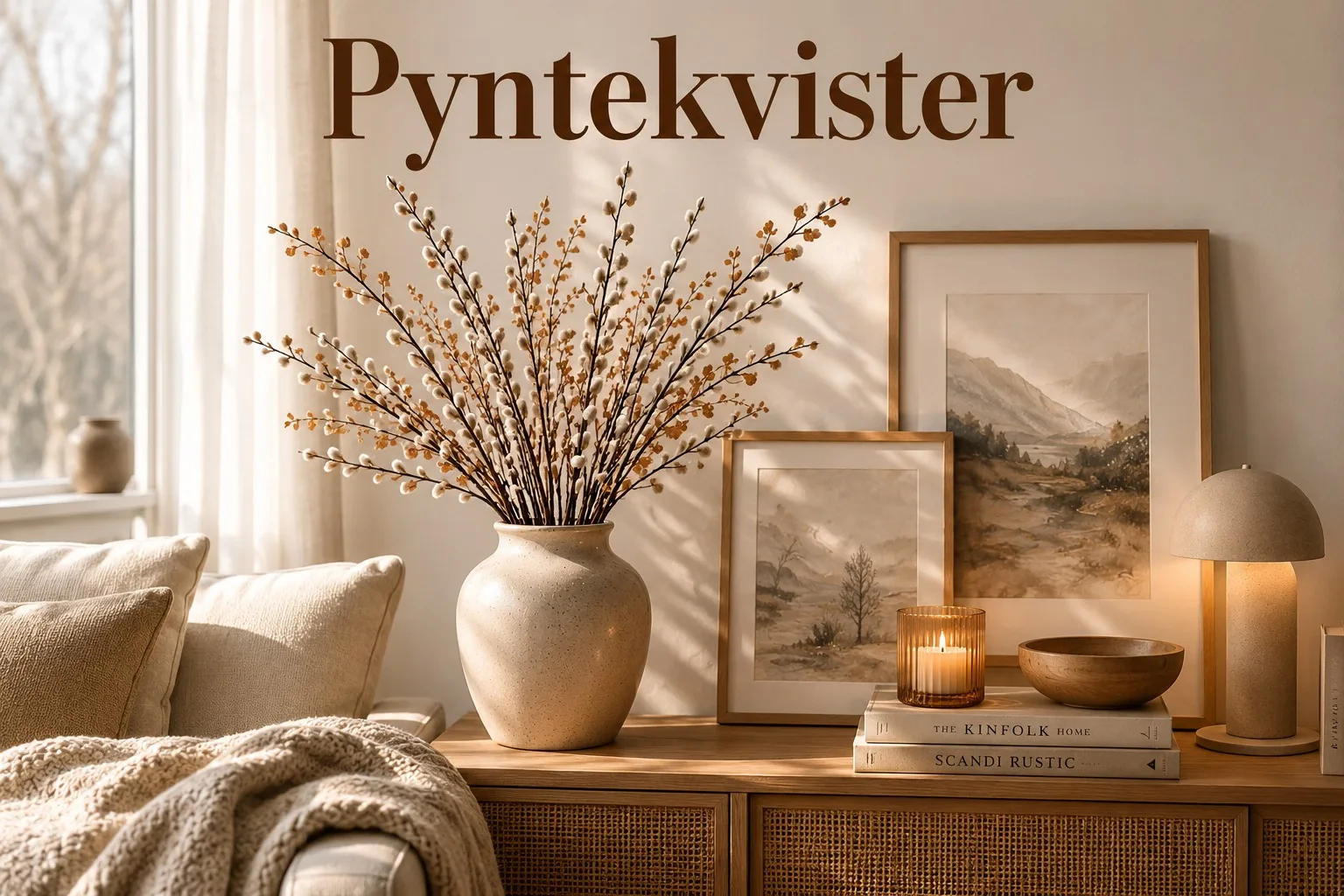
Natural decoration can make a home feel warmer, calmer, and more connected to the outdoors without requiring expensive furniture or complicated design changes. Sometimes, a few carefully selected branches in a suitable vase can create more visual interest than a shelf filled with decorative accessories. This simple approach is closely associated with the idea of Pyntekvister, a term commonly used online to describe decorative twigs and branches arranged inside the home.
The appeal comes from the natural shapes, textures, and seasonal details that branches bring into an interior. Some arrangements use bare twigs with interesting curves, while others feature fresh buds, leaves, blossoms, or small seasonal decorations. They can work in living rooms, bedrooms, dining areas, hallways, and other spaces where a natural decorative feature is welcome.
The word also has a Scandinavian language connection. Norwegian dictionaries record pynte as a verb meaning to decorate or make something more attractive, while kvist means a small, thin branch. However, it is important to distinguish the meanings of these individual words from the claim that Pyntekvister is a formally established name for an ancient Scandinavian design tradition.
This guide explains the meaning behind Pyntekvister, its connection with Scandinavian-inspired decoration, suitable branch varieties, styling techniques, seasonal ideas, and practical care tips. It also separates documented Norwegian customs from broader modern interior-design interpretations.
What Is Pyntekvister?
Pyntekvister is commonly used in online home-decoration content to describe decorative twigs or branches arranged for visual appeal. The idea is straightforward: instead of relying entirely on manufactured ornaments, homeowners use the natural shape and appearance of branches to introduce an organic decorative element into a room.
An arrangement can be as simple as one interesting branch placed in a tall vase or several smaller stems grouped together in a container. Some people prefer completely bare branches, while others choose flowering stems, leafy twigs, dried branches, or arrangements with suitable seasonal ornaments.
The overall appearance depends on the type of branch, its shape, the container, and the surrounding interior. A tall arrangement can add height to an empty corner, while a smaller display can bring texture to a dining table, shelf, or sideboard.
What Does the Word Pyntekvister Mean?
The word can be understood by looking at two Norwegian language elements. According to Bokmålsordboka, pynte means to decorate, adorn, or make something look more attractive. The dictionary also uses examples involving decorating a room and making a home more attractive.
The second element, kvist, refers to a small, thin branch or twig. Its plural form is kvister, meaning twigs or branches. These meanings provide a reasonable explanation for why Pyntekvister is used online to describe decorative branches.
However, the complete expression should be treated carefully. The individual words are documented in Norwegian dictionaries, but that does not automatically establish Pyntekvister as a formally recognised dictionary term, an official decorating method, or the name of a single historical tradition.
In practical home-decoration discussions, the most useful English interpretation is decorative branches or decorative twigs.
Is Pyntekvister a Scandinavian Decorating Tradition?
Pyntekvister is frequently presented online as a Scandinavian decoration idea because the use of natural materials and simple arrangements fits comfortably with Nordic-inspired interiors. However, the specific term should not be confused with a documented historical tradition that has one fixed origin, inventor, or set of rules.
There are genuine Scandinavian customs involving branches and seasonal decorations. Norway, for example, has traditions involving birch twigs decorated with feathers and other ornaments during the period leading up to Easter. These customs have their own names and cultural contexts, which should not automatically be replaced with the general online label Pyntekvister.
The Norwegian Easter tradition known as fastelavnsris is one relevant example. It involves bundles of twigs, often birch or pussy willow, decorated with colourful feathers. The Norwegian American has discussed this custom and its continued use in Norwegian homes.
For more information, readers can explore The Norwegian American’s explanation of fastelavnsris.
The Difference Between a Real Custom and a Modern Decorating Description
A branch arrangement can be inspired by Scandinavian interiors without being part of a specific traditional ceremony. This distinction is important because many modern home-decoration ideas combine natural materials, minimalist styling, and seasonal displays from different sources.
A vase containing bare branches, for example, may fit a Nordic-inspired living room. That does not mean the exact arrangement represents an ancient Norwegian custom or follows a traditional cultural rule.
Similarly, a decorated Easter branch may have a connection with a specific seasonal practice. Its cultural meaning should be explained using sources that actually document that custom.
Understanding this difference makes it easier to enjoy the decorative idea without repeating unsupported claims about its history.
Why Are Decorative Branches Popular in Scandinavian-Inspired Interiors?
Scandinavian-inspired interiors often place importance on practical spaces, natural materials, comfortable surroundings, and a balanced use of decoration. Branches can complement these qualities because they introduce an organic shape without requiring a large number of accessories.
A branch has its own natural lines, bends, and smaller offshoots. These features create visual movement, particularly in rooms where furniture and architectural elements have straight edges. Even a simple arrangement can make an otherwise empty surface look more thoughtfully styled.
Natural Shapes Add Visual Interest
Unlike manufactured ornaments with identical shapes, natural branches have individual characteristics. Some are straight, while others have curves, forks, or irregular patterns that make them interesting to look at.
These variations can create a focal point without making a room feel crowded. A single branch with a distinctive shape may be enough for a small side table, while several stems can create a more noticeable arrangement in a larger space.
Simple Decoration Can Feel More Balanced
A room does not always need many decorative objects to look complete. A carefully selected branch arrangement can provide height and texture while leaving enough open space around it.
This is particularly useful in minimalist interiors, where excessive decoration may compete with furniture, lighting, and architectural details. Choosing a suitable container and a small number of branches can create a more controlled appearance.
Natural Materials Complement Different Textures
Branches can work alongside wood, stone, linen, ceramics, glass, and other materials commonly used in home interiors. Their natural surface and irregular form can soften the appearance of more structured furniture.
A wooden sideboard with a simple ceramic vase, for example, can provide a suitable setting for a few bare branches. The arrangement does not need to match every item in the room; it simply needs to complement the overall colour and texture combination.
10 Types of Branches You Can Use for Pyntekvister
The type of branch you choose has a major influence on the final arrangement. Some varieties offer attractive bare shapes, while others are selected for their buds, leaves, flowers, or distinctive foliage.
Availability depends on the local climate, season, and what grows in your area. Before cutting or collecting branches, make sure you have permission and avoid damaging trees or plants.
1. Birch Branches
Birch branches are a popular choice for natural arrangements because they often have slender shapes and attractive bark. Their lighter appearance can work well in neutral interiors, particularly when the arrangement is kept simple.
Bare birch branches can be displayed in a tall vase or combined with smaller stems for additional texture. They can also be used in seasonal displays when suitable decorations are added.
2. Willow Branches
Willow offers several decorative possibilities, depending on the variety. Pussy willow branches are especially recognisable because of their soft, furry buds, which can provide texture before leaves appear.
Curved willow stems may also create an interesting silhouette in a vase. Their flexible shapes make them suitable for certain decorative arrangements, although the container should provide enough support.
3. Cherry Branches
Cherry branches are often selected for their seasonal blossoms. When suitable cut branches are brought indoors under the right conditions, their buds may develop and open.
Flowering cherry stems can create a delicate display in a dining area or living room. However, flowering results are not guaranteed, as they depend on the plant variety, timing, and condition of the branches.
4. Apple Branches
Apple branches can provide a natural arrangement with buds, flowers, or small leaves depending on the season. Their appearance can change as the branches develop, making them interesting for people who enjoy displays that evolve over time.
Choose healthy branches and avoid cutting major structural growth from a tree. If you are using branches from an orchard or garden, check that pruning is appropriate for the plant.
5. Hazel Branches
Hazel branches can offer an attractive combination of thin stems and natural curves. They work well in arrangements where the branch structure is intended to remain visible rather than being covered with decorations.
Their shape can complement rustic, contemporary, and natural-looking interiors. A few carefully selected stems are often enough to create a balanced display.
6. Dogwood Branches
Certain dogwood varieties are valued for their colourful stems, particularly during the colder months. Depending on the variety, branches may display red, orange, yellow, or other distinctive stem colours.
This can be useful when an interior needs a small amount of colour without relying on flowers or elaborate ornaments. Check the variety before collecting branches because the appearance differs between species and cultivars.
7. Magnolia Branches
Magnolia branches can be selected for their large buds and distinctive leaves. Depending on the species and season, they may provide a more substantial appearance than delicate twig arrangements.
Their size means they usually need a suitable vase with enough stability. Avoid overcrowding the container, as large leaves and buds can make an arrangement feel heavy.
8. Eucalyptus Stems
Eucalyptus is commonly used in modern interior arrangements because of its distinctive leaves and muted green appearance. Some varieties have rounded leaves, while others have longer and narrower foliage.
It can be displayed on its own or combined with suitable branches and flowers. However, eucalyptus should not automatically be considered pet-safe, so households with animals should check the specific plant’s safety before bringing it indoors.
9. Forsythia Branches
Forsythia is known for its bright yellow flowers, which generally appear before or around the development of leaves. Its branches can create a noticeable seasonal display when flowering conditions are suitable.
The colour can work well against neutral walls and simple furniture. A few stems may provide enough visual interest without requiring additional ornaments.
10. Dried Natural Branches
Dried branches are useful for people who want an arrangement that does not depend on fresh water or flowering. Their appearance can be simple, textured, and suitable for many different interior styles.
Before using dried branches, check for loose bark, insects, mould, or brittle sections. Very fragile branches may shed pieces during handling, so choose material that is suitable for indoor display.
How to Style Pyntekvister in Different Areas of Your Home
The best location for a branch arrangement depends on its size, shape, and the function of the room. A large arrangement can become a focal point, while a smaller one can provide a finishing detail without taking up too much space.
The container is just as important as the branches. It should support their weight, suit the scale of the display, and complement the room’s existing materials.
Living Room Styling
The living room is a practical place for a larger branch arrangement because it often contains sideboards, console tables, empty corners, and other surfaces that can accommodate decorative features. A tall vase with a few carefully selected branches can create height without occupying the same visual space as a large piece of furniture.
Choose a position where the arrangement does not obstruct walkways, television screens, windows, or frequently used seating areas. If the room already contains several decorative objects, keep the branch display relatively simple to avoid unnecessary visual clutter.
For a neutral interior, natural branches in a ceramic or glass container can create a subtle contrast. In a room with darker furniture, lighter branches may provide a more noticeable visual feature.
Bedroom Styling
A bedroom usually benefits from decoration that feels calm rather than overly busy. Smaller branch arrangements can work on a dresser, bedside table, or shelf, provided they do not interfere with everyday use of the space.
Bare branches can provide an understated look, while a few leafy stems may introduce a softer appearance. Avoid branches with sharp tips or heavy decorations near sleeping areas, especially where children or pets may come into contact with them.
The size of the container should remain proportionate to the furniture. A small display is often more suitable than an arrangement that dominates the room.
Dining Table Arrangements
Decorative branches can add height and natural texture to a dining area. However, a centrepiece should not obstruct conversation or block the view between people sitting opposite each other.
Shorter branches in a stable vase may be a better option for everyday dining. For special occasions, a slightly taller arrangement can be positioned where it does not interfere with serving dishes, table settings, or movement around the table.
Avoid placing loose decorations or fragile stems where they can easily fall into food or drinks. Practical positioning is just as important as appearance.
Hallways and Entryways
An entrance can benefit from a natural decorative feature because it often contains a console table, a narrow shelf, or an unused corner. A tall arrangement may make the space feel more complete without requiring additional furniture.
However, hallways are also high-traffic areas. Choose a stable container and make sure branches do not extend into walking routes or catch on coats, bags, and doors.
If the entrance is small, a narrow arrangement may work better than a wide display. The aim is to introduce decoration without making the area difficult to use.
Bathroom Decoration
Some branches can be used in bathrooms as decorative features, particularly dried or artificial varieties that are suitable for the environment. A small arrangement can add natural texture to a vanity or shelf.
Bathrooms often have higher humidity and regular temperature changes, so fresh or dried branches may not behave the same way as they would in a dry living room. Avoid placing delicate dried material in areas where it can become damp or develop mould.
Also consider ventilation, water splashes, cleaning products, and available space. Keep natural materials away from direct contact with wet surfaces unless they are suitable for those conditions.
How to Create Your Own Pyntekvister Arrangement at Home
Creating a decorative branch arrangement does not require professional interior-design experience. A few suitable branches, a stable container, and some attention to proportion can be enough to produce an attractive display.
The most important part is choosing healthy material and arranging it in a way that suits the available space. Avoid collecting branches from protected areas or cutting them from trees without permission.
Step 1: Choose the Right Branches
Start by deciding whether you want a fresh, flowering, leafy, or dried arrangement. Fresh branches can provide changing seasonal details, while dried branches are generally easier to maintain over longer periods.
Look for interesting natural shapes, healthy stems, and branches that are appropriate for the size of your container. Avoid material that appears diseased, mouldy, heavily damaged, or infested with insects.
Step 2: Select a Suitable Vase
The vase should be stable enough to support the weight and height of the branches. A tall arrangement usually needs a container with sufficient weight and a base that will not tip over easily.
Glass, ceramic, and other suitable containers can all work, depending on the design. The opening should allow the stems to spread naturally without forcing them into an overcrowded position.
Step 3: Clean and Prepare the Branches
Inspect the branches before bringing them indoors. Remove loose debris and check for insects, mould, damaged sections, or unwanted material that could affect the arrangement.
If you are using fresh branches in water, trim the lower ends using a clean, suitable cutting tool. Remove leaves that would sit below the waterline, as submerged foliage can deteriorate and affect water quality.
Step 4: Arrange Different Heights
Place the largest or most visually distinctive branch first, then add smaller stems around it. Varying the heights and directions can make the arrangement feel more natural than placing every branch at the same angle.
Step back occasionally to view the arrangement from a distance. This helps identify areas that look too crowded or unbalanced.
Step 5: Keep the Display Simple
Avoid adding decorations simply because there is space available. The natural branch structure should remain the main feature unless you are intentionally creating a seasonal display.
If you choose to add ribbons, small ornaments, lights, or other details, make sure they are lightweight and securely attached. A few carefully selected additions usually look more balanced than a large collection of accessories.
Seasonal Pyntekvister Ideas for Different Times of the Year
One advantage of decorative branches is that their appearance can change with the seasons. You can use different natural materials throughout the year or adapt a basic arrangement with small decorative additions.
The following ideas are modern styling suggestions, not a claim that every arrangement represents a traditional Scandinavian custom.
Spring Branch Arrangements
Spring is a suitable time to explore flowering and budding branches. Cherry, apple, forsythia, and pussy willow may provide attractive seasonal details, depending on local availability and the plant’s flowering cycle.
A simple vase with a few stems can introduce colour without requiring a large floral arrangement. Keep the surrounding decoration relatively light so that the buds and flowers remain the main focus.
Summer Branch Arrangements
During warmer months, leafy branches can create a fresh appearance. Green stems can complement natural fabrics, wooden furniture, and neutral interiors.
Choose branches that remain suitable for indoor display and avoid collecting material that is protected or belongs to someone else. Fresh greenery may need water and regular attention to remain attractive.
Autumn Branch Arrangements
Autumn offers opportunities to use branches with changing leaves, interesting bark, and suitable berries. Warm colours can complement seasonal interiors without requiring extensive decoration.
Check all natural materials carefully before bringing them inside. Some berries and plants may be toxic if eaten, while damp leaves can deteriorate quickly in indoor containers.
Winter Branch Arrangements
Bare branches can be particularly effective in winter because their shape and structure become the main decorative feature. A simple arrangement may work well with neutral colours, warm lighting, and natural textures.
Evergreen stems can also be used where appropriate. If adding lights or ornaments, choose products designed for the intended indoor use and follow their safety instructions.
Easter-Inspired Branch Displays
Norwegian Easter decorations provide a documented example of seasonal branch styling. The custom of using decorated birch twigs, including fastelavnsris, is associated with the period before Easter and can involve colourful feathers and other decorations.
The Norwegian American’s article on Norwegian Easter customs discusses the use of birch branches and feathers in Norwegian homes. This is a specific seasonal custom, rather than proof that every decorative branch arrangement belongs to one historical tradition.
How to Care for Fresh and Dried Decorative Branches
The maintenance requirements depend on whether the arrangement uses fresh, dried, preserved, or artificial material. A fresh flowering branch needs different care from a dried stem that is intended to remain in a vase for several months.
Understanding these differences helps prevent unnecessary deterioration and keeps the display looking tidy.
Caring for Fresh Branches
Fresh branches intended for a vase may need clean water and occasional attention. Remove leaves that sit below the waterline, as submerged foliage can break down and affect the water.
Check the container regularly and replace the water when it becomes cloudy or dirty. If the branches begin to develop an unpleasant smell, visible mould, or signs of decay, remove them rather than trying to preserve damaged material.
The lifespan varies according to the plant species, condition of the branches, temperature, and indoor environment. There is no single duration that applies to every arrangement.
Caring for Dried Branches
Dried branches generally require less attention because they do not depend on water. Keep them away from excessive humidity and areas where they may be repeatedly knocked or handled.
Dust can be removed gently with a soft brush or a suitable low-pressure cleaning method. Avoid using too much force because brittle material may break or shed.
If the branches become mouldy or develop signs of insect activity, remove them from the indoor display. Do not assume that dried material will remain suitable indefinitely under all conditions.
Caring for Artificial Branches
Artificial branches can provide a consistent appearance without the maintenance associated with fresh plants. They may be useful in areas where natural material would deteriorate quickly or where regular replacement is inconvenient.
Check the product material before cleaning it. Some artificial branches can be wiped with a soft cloth, while others may be damaged by water or household cleaning products.
Keep artificial materials away from heat sources and follow any manufacturer instructions concerning cleaning and placement.
Choosing the Right Vase and Container for Pyntekvister
A vase does more than hold branches in place. Its shape, colour, material, and proportions influence the appearance of the complete arrangement.
A suitable container should support the stems and complement the surrounding interior without becoming more visually dominant than the branches themselves.
Ceramic Vases
Ceramic containers can provide a solid base for taller arrangements. Their range of colours and finishes makes them suitable for both understated and decorative interiors.
A matte ceramic vase may complement natural wood and neutral textiles, while a more colourful design can create contrast in a simple room. Make sure the base is sufficiently stable for the size of the branches.
Glass Vases
Glass containers allow the stems and water to remain visible. They can create a lighter appearance and work well with fresh branches where the condition of the water can be checked easily.
However, transparent glass also makes the lower parts of the arrangement more visible. Keep stems clean and remove unwanted leaves or debris to maintain a tidy display.
Stoneware and Textured Containers
Textured containers can add another natural element to the arrangement. Their surfaces may complement branches with visible bark and irregular shapes.
Choose a container that does not compete too strongly with the branch pattern. A highly decorative vase combined with a very detailed arrangement can make a small display look unnecessarily busy.
Common Mistakes to Avoid When Styling Decorative Branches
Even a simple arrangement can look unbalanced if the branches, container, and location are not considered together. A few practical decisions can make the difference between a display that feels intentional and one that looks like a random collection of twigs.
Choosing Branches That Are Too Large
A large branch may look attractive in isolation but can overwhelm a small room or container. Consider the height of the ceiling, the width of the furniture, and the amount of available space before selecting stems.
An arrangement should provide visual interest without blocking windows, walkways, or useful surfaces. If the branches extend too far in different directions, trim or reposition them where appropriate.
Using an Unstable Vase
Tall branches can become surprisingly heavy, particularly when several stems are grouped together. A narrow or lightweight container may tip over if the arrangement is not properly balanced.
Choose a stable vase with an appropriate base and enough internal space to support the stems. This is especially important in homes with children, pets, or busy walking areas.
Overcrowding the Arrangement
Adding too many branches can hide their individual shapes and create a dense appearance. Leave enough space between stems for the natural lines to remain visible.
Start with fewer branches and add more only when necessary. It is easier to build a balanced display gradually than to correct an arrangement that has become too crowded.
Ignoring Plant Safety
Not every branch or plant is suitable for indoor use. Some species may be toxic to pets or children, while others have sharp thorns, irritating sap, or berries that should not be eaten.
Identify the plant before collecting it, and check reliable safety information when there are children or animals in the home. When the species cannot be identified confidently, choose a known, suitable alternative.
Collecting Branches Without Permission
Branches should be collected responsibly. Do not cut from private property, protected areas, or public trees where removal is prohibited.
If you have a garden, use suitable material from routine pruning where possible. Local garden centres and florists may also offer branches intended for decorative use.
Is Pyntekvister Suitable for Every Interior Style?
Decorative branches are flexible, but their appearance should suit the room rather than being added automatically. The same branch can look very different depending on the container, arrangement, surrounding materials, and amount of decoration.
Minimalist Interiors
Minimalist rooms often benefit from a restrained arrangement with only a few stems. A simple vase and an interesting branch can provide a focal point without adding unnecessary visual clutter.
Choose natural shapes and neutral containers when the rest of the room has a limited colour palette. Keep enough open space around the arrangement to maintain the clean appearance of the interior.
Scandinavian-Inspired Interiors
Scandinavian-inspired spaces often combine practical furniture, natural textures, and a balanced use of decorative objects. Decorative branches can complement these elements by introducing an organic shape and subtle seasonal detail.
A simple arrangement may work alongside wooden furniture, neutral textiles, and understated lighting. However, Pyntekvister should be treated as a modern descriptive decoration idea rather than a formally documented design movement.
Rustic Interiors
Rustic rooms often include visible wood, textured materials, natural colours, and traditional furniture. Branches with interesting bark and irregular shapes can fit comfortably into this environment.
A sturdy ceramic or stoneware container may complement the surrounding materials. Avoid making the display too polished if the room is intended to retain a relaxed, natural appearance.
Contemporary Interiors
Contemporary interiors can use decorative branches as a contrast to smooth surfaces, metal fittings, glass, and geometric furniture. A carefully selected arrangement may soften the overall appearance without changing the room’s main design.
Choose a container that relates to the room’s colours and materials. The goal is to create a visual connection rather than introduce an unrelated decorative feature.
Is Pyntekvister an Affordable Home Decoration Idea?
Decorative branches can be a relatively inexpensive way to add natural detail to a room, particularly when suitable material is already available in a garden or can be obtained through routine pruning. A simple arrangement does not necessarily require expensive flowers, elaborate containers, or specialist decorating products.
However, the overall cost depends on the type of branches, whether they are purchased or collected, the container, and any additional decorations. Preserved or artificial branches may cost more initially, but they can be reused in different arrangements over time.
If you collect branches yourself, remember that permission, plant identification, and responsible pruning matter. A free material is not automatically a suitable or safe material for indoor use.
A practical approach is to begin with a container you already own and a small number of suitable stems. You can then decide whether the arrangement needs additional branches or a different vase.
Frequently Asked Questions About Pyntekvister
1. What does Pyntekvister mean?
Pyntekvister is commonly used online to describe decorative twigs or branches arranged for home decoration. The explanation is based on Norwegian language elements: pynte, meaning to decorate, and kvister, the plural form associated with twigs or small branches. The complete term should not automatically be treated as the official name of a historical decorating tradition.
2. Is Pyntekvister a Norwegian word?
The word is commonly explained through Norwegian components, and both pynte and kvist are documented in the official Norwegian dictionary resources. However, this does not by itself prove that Pyntekvister is a formally established standalone dictionary entry. It is safest to describe it as an online term for decorative branches.
3. Is Pyntekvister an ancient Scandinavian tradition?
There is not enough reliable evidence to establish Pyntekvister itself as an ancient Scandinavian tradition with one documented origin or fixed set of practices. However, specific customs involving decorated branches are documented in Norway, including fastelavnsris. These should be discussed using their actual cultural names and historical context.
4. Which branches are best for Pyntekvister?
Birch, willow, pussy willow, hazel, cherry, apple, dogwood, and forsythia can all be considered for decorative arrangements, depending on availability and suitability. The best choice depends on the desired appearance, season, container size, and whether you want fresh, flowering, leafy, or dried material. Always identify the plant before bringing it indoors.
5. Can Pyntekvister be made with dried branches?
Yes. Dried branches can be used in decorative arrangements and are generally easier to maintain than fresh flowering stems. They do not require water, but they should be kept away from excessive moisture and handled carefully because some dried material can become brittle. Inspect them for mould, insects, and loose bark before displaying them.
6. Do decorative branches need water?
Fresh branches may need water depending on the plant species and the intended display. Dried branches do not normally require water, while artificial branches should be maintained according to the manufacturer’s instructions. If you use water, keep the container clean and remove leaves that would sit below the waterline.
7. How long do Pyntekvister arrangements last?
There is no single lifespan for every arrangement. Fresh branches may remain attractive for different lengths of time depending on their species, condition, temperature, and care. Dried branches can last much longer when stored in a suitable environment, although they may become brittle or dusty over time.
8. Can I use Pyntekvister in a modern living room?
Yes. Decorative branches can work in modern living rooms because they introduce natural shapes and textures alongside contemporary furniture. A simple vase with a few well-selected stems may be enough to create a focal point. Choose a container and arrangement that complement the room rather than competing with its other features.
9. Is Pyntekvister suitable for small apartments?
Yes, provided the arrangement is proportionate to the available space. A small vase with a few short branches can add natural detail to a shelf, side table, or console. Avoid wide or unstable arrangements that obstruct walkways or take up too much usable surface area.
10. Can decorative branches be used for Easter?
Yes. Decorated branches are associated with certain seasonal customs, including Norwegian fastelavnsris, which commonly involves birch or other twigs decorated with colourful feathers. Other Easter branch displays may use eggs and lightweight ornaments. These customs should be distinguished from the broader modern use of decorative branches throughout the year.
11. Are all branches safe to use indoors?
No. Some plants contain toxic substances, irritating sap, sharp thorns, or berries that may be harmful if eaten. Check the identity and safety of a plant before collecting it, particularly if children or pets live in the home. If you cannot identify a branch confidently, do not use it.
12. Can Pyntekvister be used throughout the year?
Yes. Decorative branches are not limited to one season. Bare or dried branches can work throughout the year, while fresh leaves, buds, flowers, and seasonal decorations can change the appearance of an arrangement. Choose suitable material and adjust the display to the room and the time of year.
13. What type of vase is best for decorative branches?
The best vase depends on the size and weight of the branches. Tall arrangements usually need a stable container with a sufficiently wide or heavy base, while smaller stems can work in compact ceramic or glass vases. The opening should support the branches without forcing them into an overcrowded position.
14. Is Pyntekvister the same as Scandinavian interior design?
No. Pyntekvister is commonly used to describe decorative branches, while Scandinavian interior design is a much broader approach to arranging and furnishing spaces. Branches can complement Scandinavian-inspired interiors, but they do not represent the entire design style. It is more accurate to describe them as one possible natural decorative element.
15. Can artificial branches be used instead of natural ones?
Yes. Artificial branches can provide a consistent appearance and may be useful in areas where fresh material would deteriorate quickly. They do not need water, but they can collect dust and should be cleaned according to their material and manufacturer’s instructions. Choose products that look appropriate for the room and avoid placing them near heat sources.
Final Thoughts
Pyntekvister is a useful search term for exploring the simple idea of decorating interiors with branches and twigs. Its appeal comes from the natural shapes, textures, and seasonal details that these materials can bring into a home. Whether you prefer bare birch stems, soft willow buds, flowering branches, or dried natural pieces, a carefully arranged display can add character without requiring complicated decoration.
The Scandinavian connection deserves a little care when explaining the subject. Norwegian dictionaries document the meanings of pynte and kvist, while specific Norwegian customs such as fastelavnsris provide genuine examples of decorated branches in seasonal settings. However, those facts should not be stretched into unsupported claims that Pyntekvister is an ancient, formally recognised design tradition.
For a practical arrangement, focus on suitable branches, a stable container, balanced proportions, and responsible plant selection. Consider the room’s size, the safety of the material, and whether you want a fresh, dried, or artificial display. With these details in mind, decorative branches can become a simple and adaptable feature in many different types of homes.
For more useful guides and everyday topics, explore Zents Magazine.