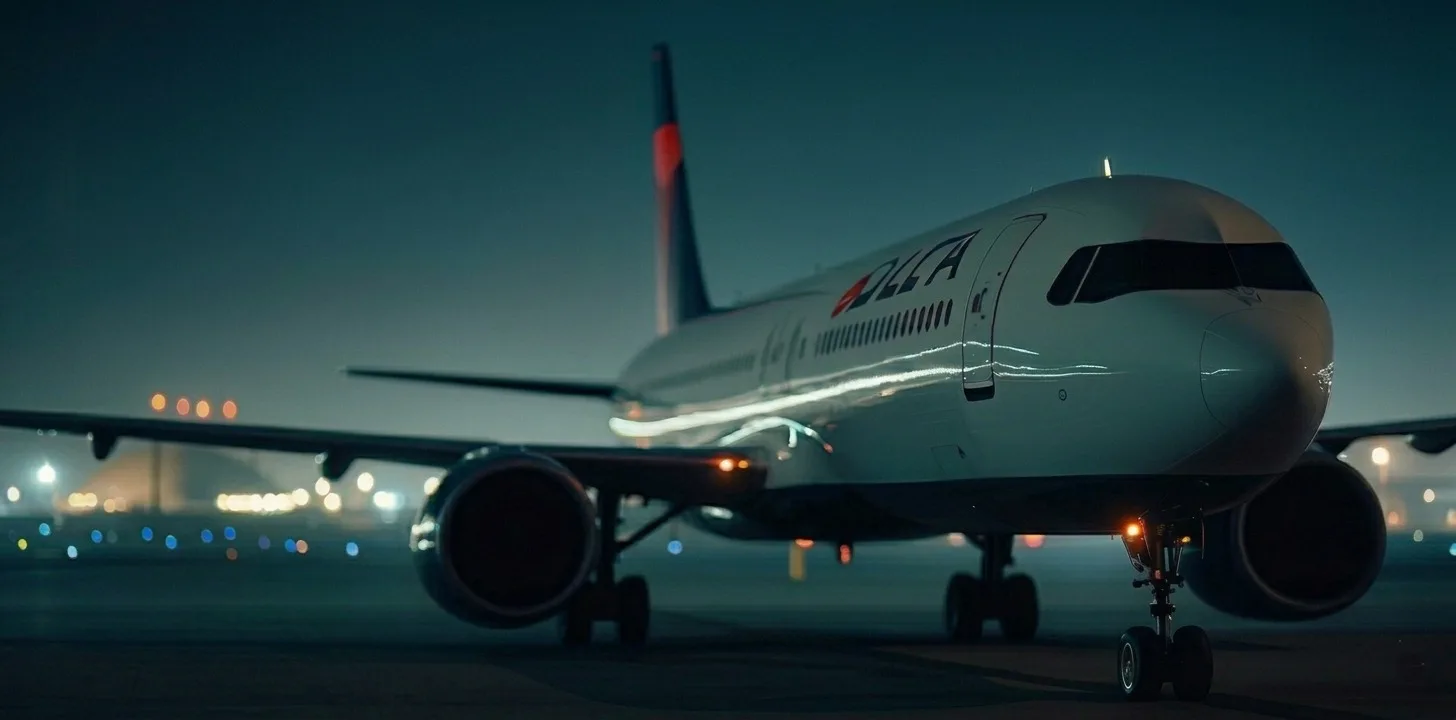
You boarded a plane in Detroit expecting to wake up in Tokyo. Thirteen hours of ocean, a few movies, some turbulent sleep. Standard.
Then, somewhere over the Bering Sea in the dead of night, the flight map on your screen shows the plane banking south. Hard. Not toward Japan. Toward Los Angeles.
That is exactly what 287 passengers experienced on May 27-28, 2025, when delta flight dl275 diverted lax in one of the most-discussed aviation incidents of the year.
No one was hurt. No emergency was declared. But the story behind that sudden turn reveals how modern aviation safety actually works at 38,000 feet over one of the loneliest stretches of ocean on Earth.
Quick Facts: Delta Flight DL275 Diverted LAX
| Detail | Information |
| Flight Number | Delta Air Lines DL275 |
| Route | Detroit Metropolitan (DTW) → Tokyo Haneda (HND) |
| Aircraft | Airbus A350-900, registration N508DN |
| Engine Type | Rolls-Royce Trent XWB |
| Incident Date | May 27-28, 2025 |
| Diversion Point | ~620 nautical miles SW of Anchorage, Alaska |
| Diversion Airport | Los Angeles International Airport (LAX) |
| Runway | 06R |
| Landing Time | 1:38 AM PDT, May 28, 2025 |
| Passengers Onboard | 287 |
| Injuries | Zero |
| NTSB Investigation Opened | No |
| Estimated Cost to Delta | ~$5.9 million |
What Is Delta Flight DL275?
Delta Flight DL275 is a daily international service operated by Delta Air Lines between Detroit Metropolitan Wayne County Airport (DTW) and Tokyo Haneda Airport (HND).
The route crosses the North Pacific Ocean and normally takes around 13 hours to complete.
The aircraft assigned is the Airbus A350-900, registration N508DN , a long-range commercial aircraft powered by Rolls-Royce Trent XWB engines.
The A350-900 is purpose-built for ultra-long-range routes, carrying up to 306 passengers across three cabin classes: Delta One (business), Premium Select, and Main Cabin.
This route matters for business travelers, Japanese-Americans visiting family, tourists, and university students.
It is one of Delta’s core connections between the American Midwest and East Asia. Most people who fly it consider it routine , though nothing about a 13-hour trans-Pacific crossing is truly routine when something goes wrong.
The Aircraft Behind the Flight
The Airbus A350-900 is not a typical plane. It uses carbon-fiber composite materials for roughly 53% of its structure, making it lighter and more fuel-efficient than older widebodies.
The Rolls-Royce Trent XWB engines that power it are among the most technologically advanced turbofans ever built, with sensor systems capable of generating over 10 gigabytes of data per flight.
Delta holds ETOPS-180 and ETOPS-370 certification on this route , approval to fly extended distances from diversion airports under strict alternate airport selection criteria.
ETOPS (Extended-range Twin-engine Operational Performance Standards) essentially governs how far a twin-engine aircraft can stray from a diversion airport.
That certification matters enormously in understanding why the crew had to act when they did.

When Delta Flight DL275 Diverted LAX: What Happened on May 27, 2025
On May 27, 2025, the aircraft took off in the afternoon, after a departure delay caused by a late inbound aircraft. Passengers anticipated a standard 13-hour journey to Japan.
The flight DL275 departed Detroit gate A46 for the 13-hour flight to Tokyo Haneda Airport. While flying over the Bering Sea, the crew decided to turn around.
Aviation tracking site AIRLIVE, which first reported the event, noted the turnaround was initially described as occurring for an unknown reason. That answer would come later.
Passengers who had settled in for a 13-hour journey from Detroit found themselves disembarking at LAX in the early morning hours, 12 hours and 15 minutes after departure and more than 6,000 miles from where they expected to be.
For anyone monitoring Flightradar24 that night, the sight of an Airbus A350 making a wide arc over the North Pacific was striking. Reddit threads lit up. Aviation forums tracked the registration number N508DN in real time.
The Exact Moment the Crew Made Their Decision
Delta Flight DL275 diverted to LAX on May 28, 2025 because a Rolls-Royce Trent XWB engine anti-ice system generated sensor anomalies over the North Pacific that the crew could not verify would hold through eight more hours of cold oceanic flight. They turned the aircraft around 620 nautical miles from Anchorage.
That precise location matters. At 620 nautical miles southwest of Anchorage, the aircraft was deep into Extended Operations (ETOPS) airspace.
Continuing meant eight more hours over open ocean, with temperatures dropping below -50°C outside the fuselage. The math was simple: the risk of pressing on far outweighed the inconvenience of turning back.
The Real Cause: Why Delta Flight DL275 Diverted LAX
The reason was a technical malfunction involving the anti-ice system of one of the Rolls-Royce Trent XWB engines powering the Airbus A350.
Originally cruising at 38,000 feet over the North Pacific, the aircraft was approximately 620 nautical miles southwest of Anchorage when flight crews made the call.
What the Engine Anti-Ice System Actually Does
Think of it this way. When you fly at cruising altitude, the air outside your window is far colder than most people on the ground ever experience. Temperatures regularly reach -50°C to -65°C.
The engine anti-ice system works by circulating hot bleed air from the compressor around the engine inlet lip, keeping it warm enough to prevent ice crystals from forming and entering the engine core.
At high altitudes over cold regions , such as the North Pacific and Bering Sea , ice can form even in clear skies, and the system keeps engine surfaces warm to counter this.
When the cockpit received the warning, the pilots were not looking at a catastrophic failure. They were looking at sensor anomalies , readings they could not fully verify.
The Rolls-Royce Trent XWB is sophisticated enough to generate that kind of warning before anything physically fails. But here is the critical point: the crew had no way to confirm the system would remain stable for the next eight hours over the Pacific.
Why This Warning Cannot Be Ignored
The anti-ice system is essential for safe flight at high altitudes and cold temperatures. It prevents ice formation on engine components and other critical parts of the aircraft.
When such systems show irregular behavior, pilots must consider alternative actions to avoid potential risks.
Ice ingestion into a jet engine can reduce thrust, trigger surges, or in extreme cases cause an engine to flame out.
On a twin-engine aircraft over open ocean, losing one engine is manageable. But the risk of further degradation over thousands of miles of water, with no airport within safe reach, is a risk no responsible crew accepts.
How the Crew Followed Aviation Protocol Step by Step
- The crew identified the anti-ice anomaly on the Rolls-Royce Trent XWB engine
- They consulted the Aircraft Flight Manual (AFM) and Minimum Equipment List (MEL)
- They contacted Delta Air Lines Operations Control Center (OCC)
- They assessed diversion airport options using ETOPS criteria
- They selected LAX as the safest, best-equipped option
- They informed passengers calmly and began the turn
- Air traffic controllers coordinated the new routing
Why the Crew Chose LAX for Delta Flight DL275 Diverted LAX
Many people assume pilots pick the closest airport. That is not how it works. Pilot training and airline operations procedures require selecting the safest and most capable airport, not just the nearest one.
Los Angeles International Airport was selected because it is a major Delta hub with robust maintenance and logistic capabilities.
The airport supports 24/7 Rolls-Royce engine specialist access for engines like the Trent XWB. Specialized tooling and parts inventories are available at this hub, minimizing the time needed to diagnose and repair the system.
Anchorage, which was geographically closer at the point of diversion, does not have the same depth of A350 maintenance infrastructure or Rolls-Royce Trent XWB specialist access.
Seattle-Tacoma (SEA) was another option, but Delta’s largest West Coast maintenance presence sits at LAX.
Air traffic controllers at LAX and other airports along the flight path played an essential role in coordinating the diversion.
The handoff between oceanic airspace (managed by Oakland ARTCC for the North Pacific) and domestic air traffic control is a structured process, and the crew executed it precisely.
The Flight Path Back to LAX
After initiating the turn over the Bering Sea, the aircraft flew approximately five hours back toward the California coast.
The Airbus A350-900, with registration N508DN, flew for five hours to reach Los Angeles Airport, landing on runway 06R.
That means the total flight time , Detroit to the Pacific and back to LAX , came to roughly 12 hours and 15 minutes. Passengers spent most of that time in the air without knowing exactly what the technical issue was.
Complete Timeline: Delta Flight DL275 Diverted LAX
Here is the verified sequence of events on May 27-28, 2025:
- Afternoon, May 27: DL275 pushes back from Gate A46 at Detroit Metropolitan Wayne County Airport, delayed by a late inbound aircraft
- Several hours into flight: Aircraft reaches cruise altitude of approximately 38,000 feet over the North Pacific
- Over the Bering Sea: Crew detects abnormal sensor readings from the Rolls-Royce Trent XWB engine anti-ice system, approximately 620 nautical miles southwest of Anchorage
- Immediately after detection: Crew follows aircraft procedures, contacts Delta OCC, evaluates diversion options
- Decision made: Aircraft turns south toward Los Angeles
- ~5 hours later: Aircraft approaches Southern California
- 1:38 AM PDT, May 28: Airbus A350-900, registration N508DN, touches down on Runway 06R at LAX
- Post-landing: Maintenance crews meet the aircraft; passengers are assisted with hotels, meals, and rebooking
No emergency was declared, no emergency services were deployed on the runway, and the aircraft landed normally on Runway 06R.
What Passengers Experienced When Delta Flight DL275 Diverted LAX
The passenger experience during a mid-ocean diversion is something few travelers ever anticipate. It unfolds in stages: confusion, notification, anxiety, and then relief.
Passengers who had settled in for a 13-hour journey from Detroit found themselves disembarking at LAX. Aviation tracking sites lit up.
Reddit threads started filling with people monitoring the flight in real time. Many travelers discovered the diversion by checking Flightradar24 on their phones before the captain made any announcement.
Cabin crew maintained communication during the diversion, which helped keep travelers informed. The captain’s tone matters enormously in these situations.
When a pilot speaks clearly and calmly, explaining a “precautionary diversion” rather than using alarming language, passengers tend to follow the crew’s composure.
What Delta Offered Passengers After Landing
After landing, Delta offered assistance including ground transportation support and customer service updates.
Delta’s proactive handling of the situation, including transparent communication, helped ease passengers’ concern, even though travel plans were disrupted.
At 1:38 in the morning, LAX is not exactly bustling. But Delta’s ground teams were ready. Passengers received hotel accommodations, meal vouchers, and rebooking on the next available Detroit-to-Tokyo or LAX-to-Tokyo services.
Some passengers who lived near LAX chose to simply go home. One passenger flew back to Detroit and took the next day’s DL275 flight to Tokyo.
The True Cost of the Delta Flight DL275 Diverted LAX Incident
The incident cost Delta approximately $5.9 million , a significant figure, but one that reflects the full weight of duty of care obligations, maintenance infrastructure, and passenger rebooking at scale.
That number breaks down across several categories:
- Extra fuel: Flying five additional hours back to LAX burned tens of thousands of pounds of jet fuel
- LAX landing and handling fees: Wide-body aircraft generate significant airport charges
- Hotel rooms: 287 passengers at LAX hotels, at short-notice rates, adds up fast
- Meal vouchers and ground transport: Standard disruption care costs
- Rebooking: Re-accommodating passengers on international routes involves expensive seat purchases on alternate carriers
- Aircraft grounding: N508DN was pulled from service for inspection and maintenance, removing it from Delta’s schedule
- Crew repositioning: The flight crew reached duty-hour limits, requiring replacement crews
$5.9 million is a steep price. But consider the alternative cost of pressing forward with an unverified engine warning across eight hours of ocean. Delta made the only financially and morally rational decision.
Was This an Emergency Landing? Setting the Record Straight
A controlled, precautionary diversion. No emergency was declared, no emergency services were deployed on the runway, and the aircraft landed normally on Runway 06R. An emergency landing implies immediate, acute danger to the aircraft.
This distinction matters enormously for how the incident is understood. A “MAYDAY” declaration, which signals immediate danger, was not issued.
A “PAN-PAN” (urgency, not immediate danger) may have been used to expedite routing. The aircraft’s engines continued to function normally throughout. The landing was, by all accounts, smooth and routine.
No NTSB accident investigation was opened, confirming the event was classified as a precautionary diversion rather than an emergency.
The National Transportation Safety Board in the United States investigates accidents and serious incidents.
The absence of an NTSB investigation is perhaps the clearest official confirmation that delta flight dl275 diverted lax as a precautionary measure, not in response to an acute crisis.
How the Aviation Safety System Worked Exactly as Designed
Here’s the thing that often gets lost in stories like this. People see “flight diverted” and immediately think something went terribly wrong. But in reality, this story is about the system working exactly the way it should.
The Rolls-Royce Trent XWB did not fail. It flagged an anomaly. The cockpit warning system generated an alert before any physical consequence occurred.
The pilots, trained extensively in engine systems and ETOPS procedures, evaluated the situation correctly. Delta’s Operations Control Center supported the decision. Air traffic control coordinated the routing. LAX ground teams were ready.
That is a safe ecosystem functioning at its best.
What This Means for Long-Haul Aviation in 2025 and Beyond
As travel ramps up in 2025, airlines need to double down on in-flight monitoring technologies, crew training, and maintenance forecasting. The DL275 incident may have ended safely, but its lessons will resonate across the skies.
Predictive maintenance is the next frontier. Systems that analyze engine sensor data continuously can detect trends that point toward future anomalies, sometimes days before a flight.
If that technology had been deployed on N508DN’s rotation, the anti-ice anomaly might have been caught on the ground in Detroit. The flight would have been delayed, not diverted.
Airlines including Delta, Lufthansa, and Singapore Airlines have been investing in digital maintenance platforms built around real-time sensor analysis.
The DL275 incident is exactly the kind of case study that drives investment in those systems.
Is Delta Flight DL275 Still Flying? Status as of 2026
As of early 2026, FlightAware tracking data confirms DL275 continues operating the Detroit Metropolitan Airport to Tokyo Haneda route on its regular schedule without further reported diversions. N508DN is back in service.
The route is healthy, the aircraft is cleared, and the engine issue has been resolved. Passengers booking DL275 in 2026 are flying on the same registration, N508DN, which returned to trans-Pacific service after passing a full maintenance inspection at LAX.
What to Do If Your Flight Is Ever Diverted
Most travelers never think about this until it happens. Here is what actually helps:
- Stay calm and listen to the crew: Cabin staff are trained for this exact situation
- Check the airline app immediately: Delta’s app will update your rebooking options faster than queuing at a service desk
- Save all receipts: Hotel, food, and transport costs incurred because of the diversion are typically reimbursable
- Ask specifically about compensation: Delta’s Contract of Carriage outlines what passengers are owed during irregular operations
- Call the airline’s elite line if you have status: Wait times at loyalty lines are far shorter than general service lines
- Know your rights: Under U.S. Department of Transportation rules, airlines must offer refunds if a diversion results in a significantly different itinerary that you choose not to accept
FAQ: Delta Flight DL275 Diverted LAX
What caused delta flight dl275 diverted lax?
Delta Flight DL275 diverted to LAX because a Rolls-Royce Trent XWB engine anti-ice system generated sensor anomalies over the North Pacific that the crew could not verify would hold through eight more hours of cold oceanic flight. The diversion was precautionary, not the result of a catastrophic failure.
When did Delta flight dl275 diverted lax happen?
On May 27-28, 2025, Delta Air Lines Flight DL275, operating from Detroit to Tokyo Haneda, turned around mid-journey and diverted to Los Angeles International Airport. The aircraft landed at 1:38 AM PDT on May 28.
How many passengers were on DL275 when it diverted?
All 287 passengers landed safely at Los Angeles International Airport. No injuries were reported to any passenger or crew member.
Was the DL275 diversion a real emergency?
No. No NTSB accident investigation was opened, confirming the event was classified as a precautionary diversion rather than an emergency. The aircraft landed normally, with no emergency services deployed on the runway.
Why did the pilots choose LAX over Anchorage?
Los Angeles International Airport was selected because it is a major Delta hub with robust maintenance and logistic capabilities, 24/7 Rolls-Royce engine specialist access, and specialized tooling and parts inventories. Anchorage lacks the same depth of A350 and Trent XWB infrastructure.
What did Delta do for passengers after the diversion?
Delta provided hotel accommodations, meal vouchers, and rebooking on alternate Tokyo services. Some passengers received hotel vouchers; others chose to fly home and try again the next day.
Under Delta’s irregular operations policy, passengers could also request full refunds if they chose not to continue to Tokyo.
How much did the diversion cost Delta Airlines?
The incident cost Delta approximately $5.9 million, reflecting duty of care obligations, maintenance infrastructure, and passenger rebooking at scale.
Is the Airbus A350-900 N508DN safe to fly?
Yes. As of early 2026, FlightAware tracking data confirms DL275 continues operating the Detroit to Tokyo Haneda route on its regular schedule without further reported diversions. N508DN is back in service.
Is delta flight dl275 diverted lax still happening in 2026?
No. The May 2025 diversion was a single incident. DL275 resumed normal operations after the aircraft’s anti-ice system was inspected and cleared at LAX. Travelers booking DL275 in 2026 are flying the same route under normal circumstances.
How common are trans-Pacific diversions like this?
Trans-Pacific diversions are rare but not unprecedented. Over 150,000 flights are diverted globally every year. In the U.S. alone, technical issues cause nearly 30% of all diversions.
Given that thousands of transpacific flights operate monthly, a technical diversion represents a small fraction of overall operations.
Can passengers track a flight diversion in real time?
Yes. Free tools like Flightradar24 allow you to track any flight live. Many users spotted the DL275 diversion on Flightradar24 before official news came out. Aviation tracking site AIRLIVE also reported the event in real time on May 27, 2025.
Conclusion
The story of delta flight dl275 diverted lax is not a story about aviation going wrong. It is a story about aviation going exactly right.
On May 27-28, 2025, a Rolls-Royce Trent XWB engine on Airbus A350-900 registration N508DN flagged a sensor anomaly over the Bering Sea.
The crew followed procedure. They turned 287 people around. They flew five hours back across the Pacific and put the aircraft down cleanly on Runway 06R at LAX at 1:38 in the morning.
Nobody got hurt. The NTSB never opened a file. The plane was fixed and returned to service.
What the incident gives us is something more valuable than drama: a clear window into how modern long-haul aviation actually works.
Sensor systems catch problems before they escalate. Crews are trained to make conservative, safety-first decisions under pressure.
Airlines absorb enormous costs, in this case $5.9 million, rather than gamble with passenger safety. And the infrastructure at major hubs like LAX exists precisely for moments like this.
Every passenger who has ever wondered whether their pilot would make the right call over a cold, dark ocean now has their answer.
Learn more about how aviation safety standards are set and maintained by visiting the ETOPS and long-range operations framework on Wikipedia.
Read More: Kotora Melnkalne: The Complete Guide to Kotor, Montenegro’s Most Captivating Destination