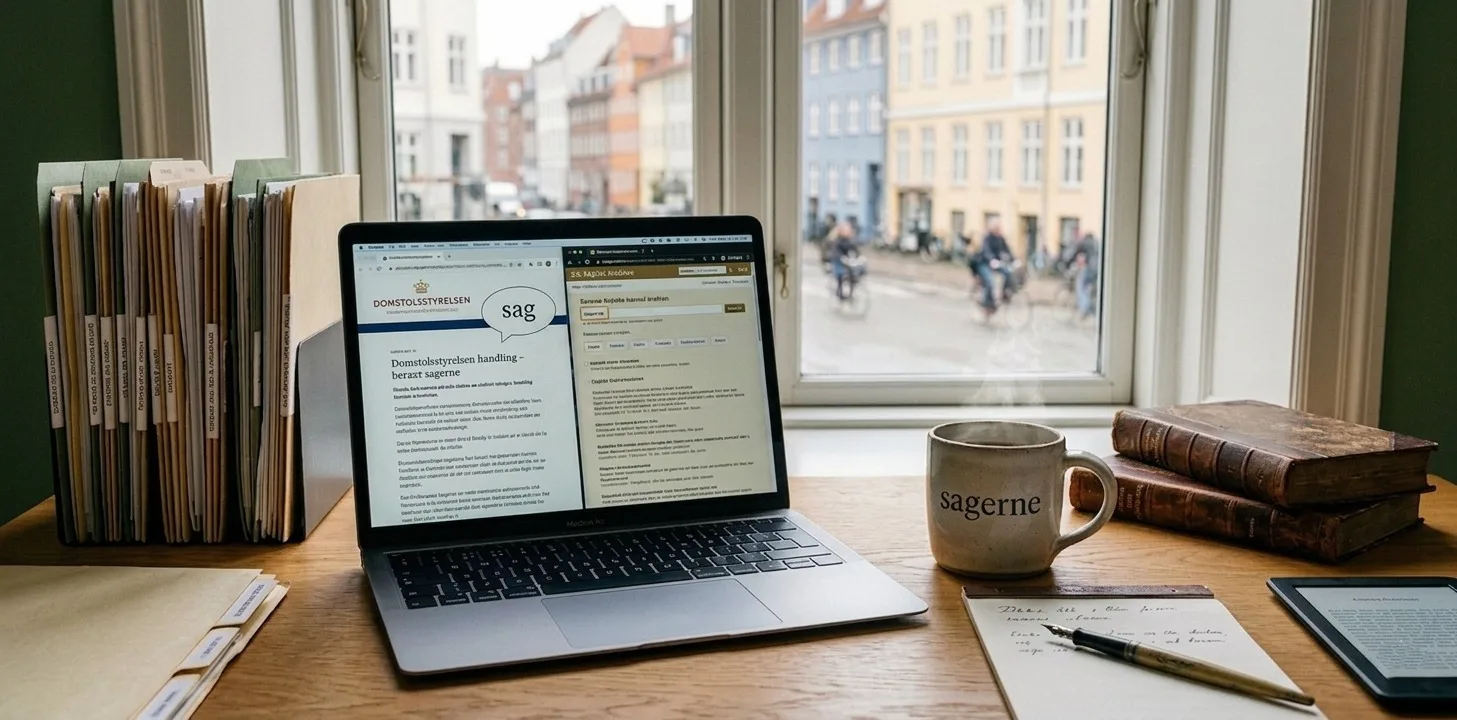
You encounter the word sagerne in a Danish news headline, a legal document, or a Netflix subtitle. You pause. You search. You find vague definitions that circle the same narrow point without telling you anything useful. That is exactly the problem this article fixes. Sagerne is a Danish word that translates most directly to “the cases,” “the matters,” or “the issues.”
It is the definite plural form of “sag,” and it always refers to specific, already-identified matters within a shared conversation or context. Within the first sentence it appears, sagerne signals that both the speaker and the listener know precisely which issues are on the table. That built-in clarity is what makes it so powerful, and so worth understanding deeply.
What Sagerne Actually Means: The Direct Answer
Sagerne means “the cases,” “the matters,” or “the issues” in Danish. It is not a brand, a name, or a technical concept. It is a grammatically definite, plural noun built from the base word “sag,” which means a single case or matter. The word always carries a definite, specific meaning, telling the reader or listener that the matters being discussed are already known to everyone involved.
This is one of those compact Danish words that carries more information per syllable than most English equivalents manage in an entire phrase. When someone in Copenhagen says “vi skal afslutte sagerne inden fredag” (we need to finish the cases by Friday), every person in the room already knows which cases they mean. Sagerne does the job of “those specific known matters we all have in mind” in a single word.
The Fascinating Linguistic Roots of Sagerne
Where the Word Sag Comes From
To understand sagerne fully, you need to trace its ancestry. The root word “sag” comes from Old Norse “sak,” which meant a cause, a lawsuit, or a matter. Old Norse was the language spoken by the Vikings and early Scandinavian peoples from roughly 800 CE to 1300 CE. It gave birth to the modern North Germanic languages: Danish, Swedish, Norwegian, Icelandic, and Faroese.
Proto-Germanic linguists trace “sak” even further back to the Proto-Germanic root “sakō,” which carried the idea of a thing, an affair, or a legal dispute. This makes sagerne part of a deep and ancient linguistic family.
The Germanic Cognates That Prove It
Here is something most articles on sagerne completely skip: this word has clear relatives across multiple European languages. Look at this pattern:
| Language | Word | Meaning |
| Danish | sag / sagerne | case / the cases |
| German | Sache | thing, matter, case |
| Dutch | zaak | case, affair, business |
| Swedish | sak | thing, matter |
| Norwegian | sak | case, matter |
| English | sake | purpose, behalf (archaic affair) |
English itself carries a fossilized form of this root in expressions like “for your own sake” or “for the sake of argument.” The word “sake” in English once meant an affair or cause, directly parallel to Danish “sag.” This linguistic family connection stretches back over 2,000 years and links sagerne to a vast tradition of European legal and civic vocabulary.
The Saga Connection
There is one more connection that is culturally rich and almost never discussed in articles about sagerne: the word “sag” shares its root with the famous Old Norse word “saga.” Sagas were the great narrative traditions of medieval Scandinavia, prose stories that recorded legal disputes, family conflicts, heroic deeds, and political matters. Works like Njáls saga, written around 1270 CE in Iceland, are among the most detailed legal narratives in medieval literature, built around cases, disputes, and resolutions that shaped communities.
The connection is not a coincidence. In Old Norse thought, cases and stories were the same thing. A “sag” was a matter worth narrating. Sagerne, then, carries an echo of that tradition: these are not just abstract issues. They are matters with context, history, and human stakes.
Danish Grammar Made Simple: Sag, Sagen, Sager, Sagerne
How Danish Definiteness Works
One of the most disorienting things about Danish for English speakers is that “the” does not come before the noun. Instead, it is attached to the end. English says “the case.” Danish says “sagen.” The “-en” suffix on the singular, or “-ne” on the definite plural, does the work of the definite article.
This system is called postpositional definiteness, and it is a hallmark of the Scandinavian languages. It makes Danish words more compact but requires learners to understand the ending before they can understand the word’s full meaning.
The 4-Form Table Every Reader Needs
Here is the complete picture of how “sag” changes form across all four grammatical states:
| Form | Danish | English |
| Singular indefinite | sag | a case / a matter |
| Singular definite | sagen | the case / the matter |
| Plural indefinite | sager | cases / matters |
| Plural definite | sagerne | the cases / the matters |
Sagerne sits in the bottom-right of this table. It is always plural, and it is always definite. There is no version of sagerne that refers to vague, unspecified matters. The “-ne” ending guarantees specificity every single time.
Why This Grammar Rule Matters in Practice
Imagine a journalist at DR (Danmarks Radio, Denmark’s national public broadcaster) writing about ongoing investigations into government spending. They write “sagerne er stadig under efterforskning,” which translates to “the cases are still under investigation.” The word sagerne tells readers these are the specific, known cases they have been following, not some newly mentioned set of cases. It creates continuity, focus, and journalistic precision in a single word.
How to Pronounce Sagerne Correctly
Pronunciation trips people up because Danish phonology does not map neatly onto English instincts. The word sagerne is pronounced roughly as “SAH-yer-neh.” In IPA notation, it is approximately /ˈsæˀɐnə/.
Breaking it down:
- SA sounds like the “a” in “father,” but slightly more open
- yer involves a soft Danish “g,” which in spoken Danish often sounds like a “y” glide rather than a hard “g”
- neh is the ending, light and unstressed
The soft “g” in Danish is one of the language’s most distinctive features. In words like “sager” and “sagerne,” the g has been reduced to a glide over centuries of phonological change. This is why the word sounds closer to “SA-yer-neh” than to a hard-g pronunciation you might expect from the spelling.
Sagerne in Real Life: 5 Contexts Where You Will Encounter It

1. Legal and Court Settings
In Denmark’s court system, Domstolsstyrelsen (the Danish Court Administration), which administers all levels of the Danish judiciary, handles thousands of cases annually. Legal professionals use sagerne constantly. A judge reviewing a backlog might say “sagerne er fordelt til de relevante dommere,” meaning the cases have been assigned to the relevant judges. The word carries weight and formality here, pointing to official proceedings with legal consequence.
2. Journalism and Danish Media
Denmark has a strong journalistic culture. Publications like Politiken, Berlingske, and Jyllands-Posten regularly use sagerne in headlines and articles about political scandals, public investigations, or ongoing crises. When multiple related news stories are being tracked together, sagerne groups them efficiently. A headline might read “Sagerne mod politikerne vokser” (the cases against the politicians are growing), pulling several separate but connected stories under one precise word.
3. Government and Public Administration
Danish municipalities and government ministries handle “sager” constantly. A civil servant at a ministerium (ministry) might email a colleague saying “kan du tjekke sagerne fra last week?” meaning can you check the cases from last week? Public administration in Denmark runs on the organized handling of sager, making sagerne one of the most practically used words in government offices across the country.
4. Workplaces and Corporate Settings
In Danish offices, sagerne tends to mean tasks, projects, or pending items. A project manager in a Copenhagen tech firm might open a Monday meeting with “lad os gennemgå sagerne fra sidste sprint,” translating to “let’s review the matters from the last sprint.” It functions similarly to how “action items” or “open issues” might be used in English-speaking workplaces, but with more grammatical precision.
5. Everyday Personal Conversations
At its most casual, sagerne can mean nothing more than the things, the errands, or the stuff you need to deal with. A Danish parent might tell a partner “jeg ordner sagerne i morgen,” meaning “I’ll sort out the things tomorrow,” referring to a collection of known household tasks neither of them needs to list explicitly. This is the word’s most informal register, and it shows just how deeply embedded it is across all levels of Danish communication.
The Clever Phrase “Orden i Sagerne” and What It Reveals
One of the most culturally revealing phrases built around sagerne is “orden i sagerne,” which means getting your matters in order or having things sorted. This phrase is used across Danish life, from personal finance conversations to political commentary.
When a politician is said to have “orden i sagerne,” it signals competence, reliability, and control. When someone lacks it, the same phrase used critically implies chaos, negligence, or failure. The phrase reached wider international awareness during various Scandinavian governance debates, where commentators across Europe noted Denmark’s relatively high institutional trust, often linked to how Danish public administration emphasizes thorough handling of sager at every level.
“Orden i sagerne” is also commonly heard in personal advice contexts. A financial advisor telling a client to get “orden i sagerne” means organizing accounts, paying overdue bills, and creating clarity. The phrase works as a three-word life philosophy: know what your cases are, and have them under control.
Why Sagerne Confuses Non-Danish Readers (And How to Fix That Instantly)

The 3 Most Common Mistakes
Most non-Danish readers who stumble on sagerne make predictable errors. First, they assume it is a proper noun, a brand name, a person’s name, or the title of a specific publication. The capital letter and unusual spelling pattern both push readers toward this interpretation. It is incorrect.
Second, readers assume the word has only one meaning and apply their first translation universally. Seeing sagerne in a legal text and learning “it means cases,” they then misapply that translation in a casual conversation where it just means “the things I need to deal with.” Context is everything.
Third, readers try to translate sagerne in isolation without reading the surrounding sentence. This is the most damaging error. Sagerne derives all its specific meaning from what comes before and after it. Strip away the context and you strip away the precision.
The 3-Second Context Check
When you encounter sagerne, run this quick mental check:
- What is the overall topic of the text? (Legal? Professional? Personal? News?)
- Are there specific items already mentioned that sagerne might be referring back to?
- Is the tone formal or casual?
These three questions take three seconds and eliminate 90 percent of the confusion. Formal tone plus prior mention of legal proceedings: sagerne means “the cases.” Casual tone plus mention of weekend plans: sagerne means “the things/stuff.” Professional tone plus mention of project deadlines: sagerne means “the tasks/matters.”
Sagerne Across Scandinavian Languages: How Close Are the Cousins?
Danish, Swedish, and Norwegian are so closely related that speakers of one can often understand the others with moderate effort. The equivalent of sagerne in each language is instructive. In Norwegian Bokmål, the parallel form is “sakene,” meaning the cases. In Swedish, the equivalent would be “sakerna.”
The grammatical logic is identical across all three: a base word for case or matter, made plural and definite through suffixation. The Danish “-ne” ending, the Norwegian “-ne,” and the Swedish “-na” are all doing the same grammatical job with the same conceptual result. This cross-Scandinavian consistency shows that sagerne is not a Danish oddity.
It is part of a deep, shared grammatical heritage across the entire North Germanic language family, a family whose roots stretch back to the same communities and territories that produced the sagas, the runes, and the Viking Age legal assemblies called “things” (þing), which were themselves assemblies for handling cases and disputes.
Why Sagerne Is Gaining Attention Online
Interest in sagerne has grown noticeably in recent years, driven by several converging forces. The global expansion of Danish television and film, particularly through streaming platforms that carry series like “The Killing” (Forbrydelsen), “Borgen,” and “The Bridge” (Broen), has introduced millions of non-Danish speakers to Danish vocabulary through subtitles.
These shows heavily feature legal, political, and investigative content, precisely the contexts where sagerne appears most often. Denmark’s growing international profile in areas like sustainable urban planning (Copenhagen has consistently ranked among the world’s most livable cities since at least the 2010s), design, food culture, and governance has also increased global interest in Danish language and concepts.
As international media cover Danish institutions, Danish words enter global vocabulary. Additionally, the rise of AI translation tools means more people encounter Danish text without a fluent translator to explain nuances. Tools like DeepL and Google Translate handle sagerne adequately in isolation but can struggle with contextual precision, leading curious users to search for deeper explanations.
How to Use Sagerne Correctly If You Write in Danish
If you are learning Danish or writing content that incorporates Danish phrases, using sagerne correctly requires two things: definiteness and shared context. Only use sagerne when the matters you are referring to have already been established. If you are introducing a new set of cases for the first time, use “sager” (the indefinite plural).
Once those cases are established and known to your audience, switch to “sagerne” to refer back to them with precision. Think of it this way: “sager” opens a conversation. “Sagerne” continues it. The first time you mention the cases, they are sager. Every subsequent reference to those same cases becomes sagerne. This pattern mirrors how “a case” and “the case” work in English, scaled up to the plural.
(FAQs)
What does sagerne mean in English?
Sagerne means “the cases,” “the matters,” or “the issues” in English. It is the definite plural form of the Danish word “sag.” It always refers to specific, already-known matters within a conversation or text, not to vague or newly introduced topics.
Is sagerne a name, brand, or product?
No. Sagerne is a regular Danish word, not a proper noun, brand, company name, or technical term. Its unusual appearance to English eyes causes many readers to mistake it for a name, but it is grammatical vocabulary used in everyday Danish communication.
What language does sagerne come from?
Sagerne comes from Danish, a North Germanic language spoken primarily in Denmark and by approximately 6 million people worldwide. Danish belongs to the same language family as Swedish, Norwegian, Icelandic, and Faroese, all descended from Old Norse.
How is sagerne pronounced?
Sagerne is pronounced approximately as “SAH-yer-neh.” The “g” in Danish has softened over centuries into a glide sound, so the middle of the word sounds like “yer” rather than a hard “g.” In IPA notation, it is approximately /ˈsæˀɐnə/.
What is the difference between sag, sagen, sager, and sagerne?
These are the four grammatical forms of the same root word. “Sag” is a single, indefinite case. “Sagen” is the single, definite case. “Sager” has multiple, indefinite cases. “Sagerne” is multiple, definite cases, meaning the specific cases already known within the conversation.
Why does sagerne always mean “the” cases instead of just cases?
Because the suffix “-ne” in Danish acts as a definite article attached to the end of the word. Danish does not place a separate “the” before the noun. Instead, definiteness is built directly into the word through its ending. The “-ne” suffix on a plural noun makes it definite every time.
Where does the word sag come from historically?
Sag comes from Old Norse “sak,” which meant a cause, matter, or lawsuit. It traces back to Proto-Germanic “sakō,” meaning a thing, affair, or legal dispute. This same root produced the German “Sache,” the Dutch “zaak,” and the English word “sake” (as in “for the sake of”). The root is over 2,000 years old.
Is there a connection between sagerne and Viking sagas?
Yes, indirectly but meaningfully. The Old Norse word “sak” (the ancestor of sag) shares its conceptual territory with the tradition of sagas, narrative accounts of legal disputes, family conflicts, and important matters. Sagas like Njáls saga, written around 1270 CE, were essentially records of cases and their resolution. In Old Norse culture, matters worth resolving were matters worth narrating, which is why sag (case/matter) and saga (narrative) come from the same linguistic and cultural root.
Can sagerne be used in casual conversation or only in formal contexts?
Sagerne is used across all registers of Danish communication, from formal legal documents to casual weekend conversations. A judge uses it about court cases; a parent uses it about household errands. The word itself is neutral in register. Only the context around it determines the level of formality.
Why are people suddenly searching for sagerne online?
Several factors drive growing interest. Danish TV dramas like “Borgen” and “Forbrydelsen” (The Killing) have exposed international audiences to Danish vocabulary through subtitles. AI translation tools sometimes translate sagerne ambiguously, prompting readers to search for better explanations. Denmark’s rising global profile in governance, design, and sustainability has also increased general interest in the Danish language and its distinctive features.
A Word That Does More Than It Appears
Sagerne is a small word with a long history, a precise grammar, and a surprisingly wide range of uses. It is not complicated. It does not require a language degree to understand. But it rewards anyone who takes the time to understand it properly rather than settling for a quick, shallow translation.
The cases, the matters, the issues. Whichever English phrase fits the moment, sagerne carries it with a specificity that English needs an entire phrase to replicate. That compactness, that clarity, and that context-dependence are exactly what makes it a word worth knowing. Once you understand it, you will spot it everywhere Danish language appears, and you will understand not just the word, but the precision of thought behind it.
For a deeper understanding of Danish grammar and the North Germanic language family from which sagerne comes, the Danish language article on Wikipedia provides a thorough linguistic foundation.
Read More: Pam Adkisson: 7 Incredible Truths About Kevin Von Erich’s Devoted Wife