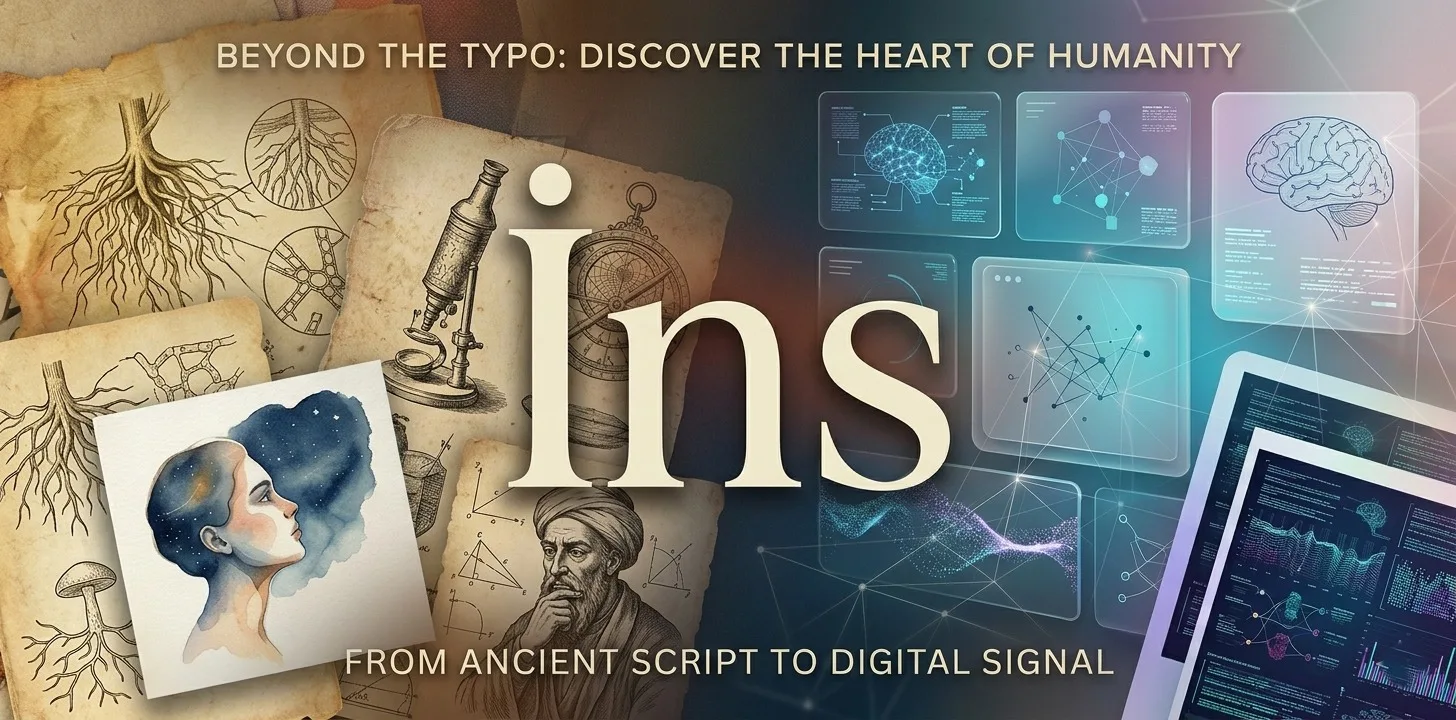
You see three letters and think nothing of it. Then you look again, and something shifts. That small dotted “i” is not a typo. The word İns carries centuries of meaning, a philosophical root that touches Arabic scripture,
Turkish language, and the very definition of what it means to be human. In 2026, people across social media, design communities, and creative spaces use İns as a quiet but powerful marker of identity.
This guide explores exactly what İns means, where it truly comes from, why it resonates with millions, and how you can use it thoughtfully in your own life.
What İns Actually Means (The Direct Answer)
İns is a shortened, modernized form of the Arabic and Turkish word insan (إِنْسَان), which translates directly to “human being” or “person.”
The word has been used in Arabic literature, the Quran, Turkish poetry, and Malay philosophy for over a thousand years.
Today, it travels through the internet as a minimal, clean symbol of humanity, presence, and authenticity. When someone writes İns in a bio or caption, they are essentially saying: I am here. I am human. This is real.
The Ancient Linguistic Roots of İns
Understanding İns properly means following a trail through several languages spanning at least 1,400 years of recorded use.
The Arabic Origin: إِنْسَان (Insaan)
The word at the heart of İns is the Arabic insaan (إِنْسَان). Classical Arabic scholars have traced it to two possible root words. The first is anisa (أنس), meaning “to be companionable, to love, to relate.”
The second is nasiya (نسي), meaning “to forget.” This duality reveals something profound: humans are both deeply social by nature and perpetually forgetful of their higher purpose. Both meanings together describe the human condition more honestly than most words in any language.
The word insaan appears multiple times in the Quran, making it one of the most spiritually charged terms in Islamic theology.
Scholar Ibn Abbas, the cousin of the Prophet Muhammad and one of the earliest Islamic commentators, interpreted the name as a direct reference to human forgetfulness.
The Egyptian poet Suzy Kassem captured this beautifully, noting that if you remove the letter “n” from insan, you get insa, which means “to forget.” That single letter holds the whole difference between being human and forgetting to be.
How Insan Moved Into Turkish
The word was borrowed into Ottoman Turkish from Arabic as insān, eventually becoming the modern Turkish insan. Over centuries of use, Turkish absorbed this word fully. Today, it remains a cornerstone of everyday Turkish speech.
In Malay and Indonesian, insan carries a more spiritual, philosophical, or poetic tone than the alternative word manusia, emphasizing the nature or soul of the human being.
The path from classical Arabic to Ottoman Turkish to modern Turkish is well documented. The word passed through Central Asia, across trade and religious networks, into the vocabularies of dozens of languages, including Urdu, Persian, Indonesian, Azerbaijani, and Tatar.
The Special Dotted İ: Why It Matters
Here is where a small detail becomes deeply important. The “i” in İns is not the plain Latin letter used in English. It is the dotted İ from the Turkish alphabet, a distinct letter with its own sound and identity.
In Turkish, the dotted İ/i and the undotted I/ı are not the same letter. They have different pronunciations. The dotted İ/i sounds like “ee” in “cheese,” while the undotted I/ı sounds closer to the last ‘a’ in “sofa.”
Turkish orthography is highly regular, and dotted and dotless I are separate letters, each with its own uppercase and lowercase forms. The lowercase form of I is ı, and the lowercase form of İ is i.
This matters for İns because writing it with the dotted İ is not decoration. It is linguistic accuracy. It signals the word’s true Turkish and Arabic heritage.
In software development, the Turkish alphabet is known for requiring special logic, particularly due to the varieties of i and their lowercase and uppercase versions. When you see İns written with care, you know the writer understands what they are writing.
The Philosophical Weight Behind İns
The concept packed into İns is not small. Across multiple traditions, the word insan has carried enormous philosophical weight.
İns in Islamic Thought
As a concept, insan has historical significance in Islamic philosophy and theology. It is central to the understanding of human nature, responsibility, and the relationship between humanity and God.
The Arabic word appears throughout the Quran, used by God to address and describe human beings. Some scholars say the word comes from the Arabic root anisa, meaning “to be companionable or friendly.”
Others say it comes from nasiya, meaning “to forget.” What we can understand from this is that humans are intrinsically social beings who may sometimes forget their purpose in life.
This tension is what gives İns such emotional depth. It holds a contradiction inside it. Humans are creatures of connection and of forgetting.
Creatures of dignity and of failure. Writing İns is a small acknowledgment of that full, honest human experience.
İns in Urdu and South Asian Contexts
In Urdu and related South Asian languages, insaan (انسان) is one of the most commonly used words in literature, poetry, and everyday speech. Urdu poets from the Mughal era onward used it to explore themes of loss, longing, and humanity.
In Pakistani ghazals, in Hindi film songs from the 1960s through to today, and in the poetry of writers like Faiz Ahmed Faiz and Mirza Ghalib, the insaan sits at the center of emotional expression.
For millions across Pakistan, India, Bangladesh, and the diaspora, İns is not just a modern internet word. It is an ancient emotional home.
A Complete Breakdown of İns Across Languages
| Language | Word | Meaning | Notes |
| Arabic | إِنْسَان (Insaan) | Human being, person | Root: anisa (to relate) or nasiya (to forget) |
| Turkish | İnsan | Human, human being | Dotted İ is a distinct letter; not the same as I |
| Urdu | انسان (Insaan) | Human being | Central to poetry and daily speech |
| Malay/Indonesian | Insan | Human, soul of a person | Carries spiritual and poetic tone |
| Azerbaijani | İnsan | Human being | Related Turkic language, same word |
| Persian | انسان (Ensaan) | Human | Used in classical Persian literature |
How İns Became a Digital Identity Symbol
The journey from ancient scripture to Instagram bio is not as strange as it sounds. Language has always migrated to wherever humans gather. In 2026, humans gather online.
The Rise of Minimal Expression
Gen Z and millennial creators have been moving away from long taglines and personal statements for years. Platforms reward brevity.
Aesthetic culture values clean, quiet design. In that environment, a word like İns fits perfectly. It has three characters. It says everything. It asks nothing.
Social media bios are prime real estate for İns. You will find it in:
- Personal bios on Instagram and X (formerly Twitter) as a self-identification marker
- TikTok captions where creators want to express emotional honesty without explanation
- Discord servers and digital communities as a shared cultural shorthand
- Minimalist design and art portfolios as a gentle signature
- Small tattoo choices for people who want a permanent but quiet mark of humanity
İns as Resistance to Performative Culture
There is something quietly radical about using İns online. Social media has been pushed toward performance, polish, and curated perfection for over a decade.
The backlash since roughly 2020 has been building. BeReal launched in 2020 and peaked in user interest in 2022 specifically because people wanted something raw and unfiltered.
Finsta accounts, “photo dump” posts, and lo-fi aesthetic communities all reflect the same hunger: people want to see the human being, not the highlight reel.
İns plugs directly into that desire. It does not advertise. It does not perform. It says: this is a human being, not a brand.
İns and the Psychology of Identity
Why Short Symbols Carry Big Meaning
Psychologists who study online identity have noted a consistent pattern: the shorter and more symbolic the self-label, the more emotionally significant it tends to be for the person using it.
A long bio describes. A short symbol declares. The difference matters enormously in how identity is experienced and expressed.
İns functions as a declaration. It does not explain or justify. It simply asserts presence. For people who feel unseen, misunderstood, or boxed into categories that do not fit, that single word can carry enormous personal weight.
İns in Creative Communities
Art communities, photographers, writers, and musicians are among the most enthusiastic users of İns. In these spaces, the word functions as a kind of aesthetic and ethical commitment.
It signals a preference for authenticity over polish, for meaning over virality, for connection over followers.
A photographer who signs their work İns is not just tagging a post. They are saying their images are rooted in genuine human experience.
A poet who begins a collection with İns is grounding their words in the shared, fallible, beautiful human condition that insan has always described.
İns in Branding, Design, and Modern Business
Why Marketers Are Paying Attention to İns
Brands have been chasing the authenticity signal for years. The term “authentic marketing” appeared in Harvard Business Review as early as 2006, and it has only grown more relevant since then.
By 2026, consumers are deeply skeptical of corporate warmth. They can identify manufactured relatability within seconds.
İns offers something rare: a symbol that carries genuine historical and philosophical weight. It was not invented by a marketing team. It did not emerge from a focus group. Its resonance is real because its roots are real.
For startups in the wellness space, mindful tech, creative tools, and personal identity platforms, İns is a natural fit. It is short enough for a logo.
It is meaningful enough to build a brand narrative around. It carries no negative cultural associations. And the dotted İ gives it a visual distinctiveness that stands out in any font.
How Designers Use İns
In visual design, İns works because of its proportions and character. The dotted İ creates a unique focal point. The symmetry of three short letters sits comfortably in most layouts.
Designers working in minimalist, Japanese-influenced, or Scandinavian aesthetic traditions find it particularly useful because it is clean without being cold.
You will find İns appearing in:
- Wordmark logos for independent creative studios
- Book and album covers with soft, typographic designs
- Poster art in urban cultural spaces from Istanbul to London to Karachi
- Tattoo lettering, where its compactness and meaning make it popular
İns in South Asian Culture: A Special Resonance
It is worth pausing on one geography where İns carries particular cultural weight. Across Pakistan, India, and Bangladesh, the Urdu and Hindi word insaan is woven into everyday emotional language in a way that has no easy English equivalent.
When a Lahori grandmother says “insaan bano” (“become human”), she means something closer to “develop your moral character.”
When a Bollywood song from 1970 asks “insaan hoon main” (“I am a human being”), it is making an existential claim about dignity in the face of dehumanization. The word carries that history.
For young South Asian people building online identities in 2026, writing İns is a way of claiming that inheritance. It connects their digital present to a deep cultural and linguistic past. It is not nostalgia. It is continuity.
Misunderstandings and Honest Criticisms of İns
The Typo Confusion
The most common misunderstanding is simple: people assume the dotted İ is a typing error. Autocorrect systems in English-language operating systems frequently “correct” İ to plain I, stripping the word of its meaning.
This is genuinely frustrating for people who use it intentionally. The fix is to add İns to your personal dictionary on your device.
Cultural Dilution
A more serious concern comes from linguists and cultural commentators who note that as any word travels across the internet, it can lose the depth that gave it meaning.
When İns appears in contexts that strip out the Arabic and Turkish heritage, when it is used purely as an aesthetic choice with no awareness of what it means, something real is lost.
This is not an argument against using İns. It is an argument for using it with some awareness. Knowing that the word points toward insan, which points toward a thousand-year philosophical conversation about what it means to be human, makes the word richer, not more burdensome.
İns vs. “ins”
The plain English word “ins” (as in “the ins and outs of something”) is entirely different and unrelated. Confusing the two is understandable in writing.
Context usually makes the distinction clear, but it is worth being precise, especially in professional or publishing contexts.
How to Use İns in Your Own Life
If you want to start using İns, here are some genuine, practical ways to do it:
- In your social media bio: A simple “İns” near your name signals warmth, humanity, and cultural awareness without demanding explanation.
- In your creative work: Sign a journal, a sketchbook page, or a personal project with İns as your mark of authenticity.
- In personal branding: If you are building a solo creative or consulting brand, İns as a tagline or secondary wordmark communicates honesty without the hollow feel of “we put people first.”
- In mindfulness practice: Some people write İns at the top of a journal page as a reminder to write without performance, without polish, just as a human being thinking on paper.
- As a tattoo: The compactness and meaning of İns make it one of the more thoughtful small tattoo choices available. Unlike generic symbols, this one has a real story you can tell.
The Future of İns in a Digital World
The trajectory of İns points upward, not because it is trending, but because the need it answers is growing.
As artificial intelligence generates more content, as deepfakes blur the line between real and fabricated, as social media fills with increasingly polished unreality, the human signal becomes more valuable, not less.
İns is a human signal. It says: a person made this. A person is here. In 2026 and beyond, that will matter more, not less.
AI tools, virtual identity systems, and the emerging architecture of online spaces will increasingly need markers of genuine human presence.
İns, with its deep historical roots in the concept of humanity itself, is well positioned to serve that purpose. Not as a buzzword, but as a genuine anchor.
(FAQs)
What does İns mean in simple terms?
İns is a shortened modern form of the Arabic and Turkish word insan, which means “human being” or “person.”
People use it online as a quiet symbol of humanity, authenticity, and presence. It says: there is a real person here, and they are being honest about that.
Is İns a Turkish word or an Arabic word?
Both. The word insan (إِنْسَان) has Arabic origins and was absorbed into Turkish through Ottoman linguistic history.
The modern spelling İns, with the Turkish dotted İ, reflects its Turkish identity. But its philosophical and spiritual roots are Arabic.
Why does İns have a dot on the i?
The dotted İ is a distinct letter in the Turkish alphabet, different from the undotted I. They represent different sounds.
The dotted İ sounds like “ee” in “cheese.” Writing İns with the dot is not decorative; it correctly reflects the word’s Turkish linguistic identity.
Is İns the same as the English word “ins”?
No. The English “ins” (as in “ins and outs”) is completely unrelated. The İ in İns is a Turkish character with a different sound and a completely different etymological background.
Why do people use İns in social media bios?
Because it signals authenticity and humanity in a minimal way. Rather than writing long statements about being “real” or “honest,” a single İns communicates the same idea more elegantly. It fits the minimalist, low-noise aesthetic many creators prefer.
Does İns have a religious meaning?
Its root word insan appears in the Quran and is discussed extensively in Islamic philosophy and theology.
For many Muslims, the word carries a spiritual dimension connected to human dignity, responsibility, and the relationship between humanity and God. However, İns as used online is not exclusively religious. It is cultural and humanistic in the broadest sense.
Can brands or businesses use İns?
Yes. İns works well for brands that want to communicate warmth, authenticity, and a human-centered philosophy.
It is particularly suitable for wellness brands, creative platforms, mindful tech, and independent studios. Its visual compactness makes it practical in logos and wordmarks.
How do you pronounce İns?
The dotted İ makes an “ee” sound. So İns is pronounced roughly as “eens.” The word rhymes with “teens” or “scenes.”
Is it cultural appropriation to use İns if you are not Turkish or Arabic?
This is a nuanced question. Words travel across cultures, and language has always been a shared human inheritance.
The respectful approach is to use İns with some awareness of what it means and where it comes from.
Using it purely as an aesthetic choice with no understanding of the word is shallow. Using it with awareness of its roots in the human concept of insan is a genuine form of cross-cultural appreciation.
What is the difference between insan and İns?
Insan is the full word meaning “human being” in Arabic, Turkish, Urdu, and related languages. İns is a shortened, stylized modern adaptation used primarily in digital and creative contexts.
İns retains the meaning and essence of insan but functions as a minimal, contemporary symbol rather than a dictionary entry.
Conclusion
İns is three letters with a thousand years of meaning behind them. From the Arabic insaan in Quranic verse to Ottoman Turkish poetry, from Urdu ghazals in Lahore to minimalist Instagram bios in 2026, this word has carried the same essential truth across every context: humans are social, forgetful, dignified, and real.
The dotted İ is not a mistake. It is a signature. When you see İns written with care, you are looking at someone who chose to mark their presence in the most honest way they could.
That is not a small thing. In a digital world that increasingly produces content without humanity, İns is a quiet act of resistance. It says: this is still a person. This still matters.
For deeper context on the historical and linguistic development of the word insan across languages and cultures, see the relevant entry on Wikipedia.
Read More, Indigo Naess: Everything to Know About Diana Ross’s Grandson and Ross Naess’s Son